


Industrial photography builds trust with B2B buyers by giving them proof before they speak to you. Real images of your facility, machinery, quality checks, people, and products show capability, consistency, and honesty. The most effective sets are specific, current, and placed where buyers decide: your website, catalogue, proposals and supplier documents.
Why Trust Is the Real Product in B2B Buying
A B2B purchase is rarely a one-time impulse. Buyers are committing to delivery schedules, quality levels, and a long-term relationship, and a poor supplier choice can stall their production. They also cannot visit every supplier on their list, so the first shortlist is built from what they can see and verify online.
Photos are fast, low-effort evidence. A buyer can scan a set of real images in seconds and form a view on whether your business looks capable, organised and established. Photography does not replace certificates, references or samples, but it makes all of them easier to believe.
Who Is Judging Your Photos? Four Buyers, Four Questions
In B2B, more than one person usually has a say. Each asks a different question, and a strong photo set answers all four.
|
Who |
What they want to know |
Photos that answer it |
|---|---|---|
|
Procurement manager |
Can you deliver reliably at my volume? |
Production floor, number of lines and machines, packing and dispatch |
|
Engineer or quality head |
Can you hold the specification? |
Machinery, inspection and testing stations, close-ups of finished parts |
|
Owner or finance lead |
Is this a stable, established business? |
Facility exterior, scale of operations, team, certificates on display |
|
EHS or sustainability reviewer |
Do you operate safely and responsibly? |
PPE in use, tidy floors, signage, storage and waste areas |
7 Ways Industrial Photography Builds Trust
1. It Proves Capability Beyond Claims
A line such as "advanced CNC machining" is easy to write. A photo of the actual machines, with the parts they produce beside them, is much harder to dismiss. Specific equipment shown in real working conditions turns a claim into evidence.
2. It Shows Scale and Capacity Honestly
Buyers want to match their volume to your capacity. Wide shots of the floor, rows of machines, and stocked dispatch areas help them judge that quickly. Honest framing matters: if the photos suggest more scale than the facility has, the mismatch surfaces later and costs you the relationship.
3. It Signals Quality Control and Process Discipline
Images of inspection stations, measuring tools, test benches, labelled batches and traceability tags show that quality is a process, not a promise. These are the images that engineers and quality teams look at first.
4. It Makes Safety and Housekeeping Visible
A clean floor, marked walkways, correct PPE, and visible safety signage tell a buyer that the plant is run with discipline. For buyers who audit their suppliers, this is reassuring before the audit even begins. See our guide on PPE and EHS rules for factory visits and industrial shoots for how these standards apply during a shoot.
5. It Puts a Human Face on the Supplier
Buyers work with people. Photos of the production team, the quality lead, or the owner at the plant make the business feel real and accountable. Always get consent from the people you photograph.
6. It Represents Your Products Accurately
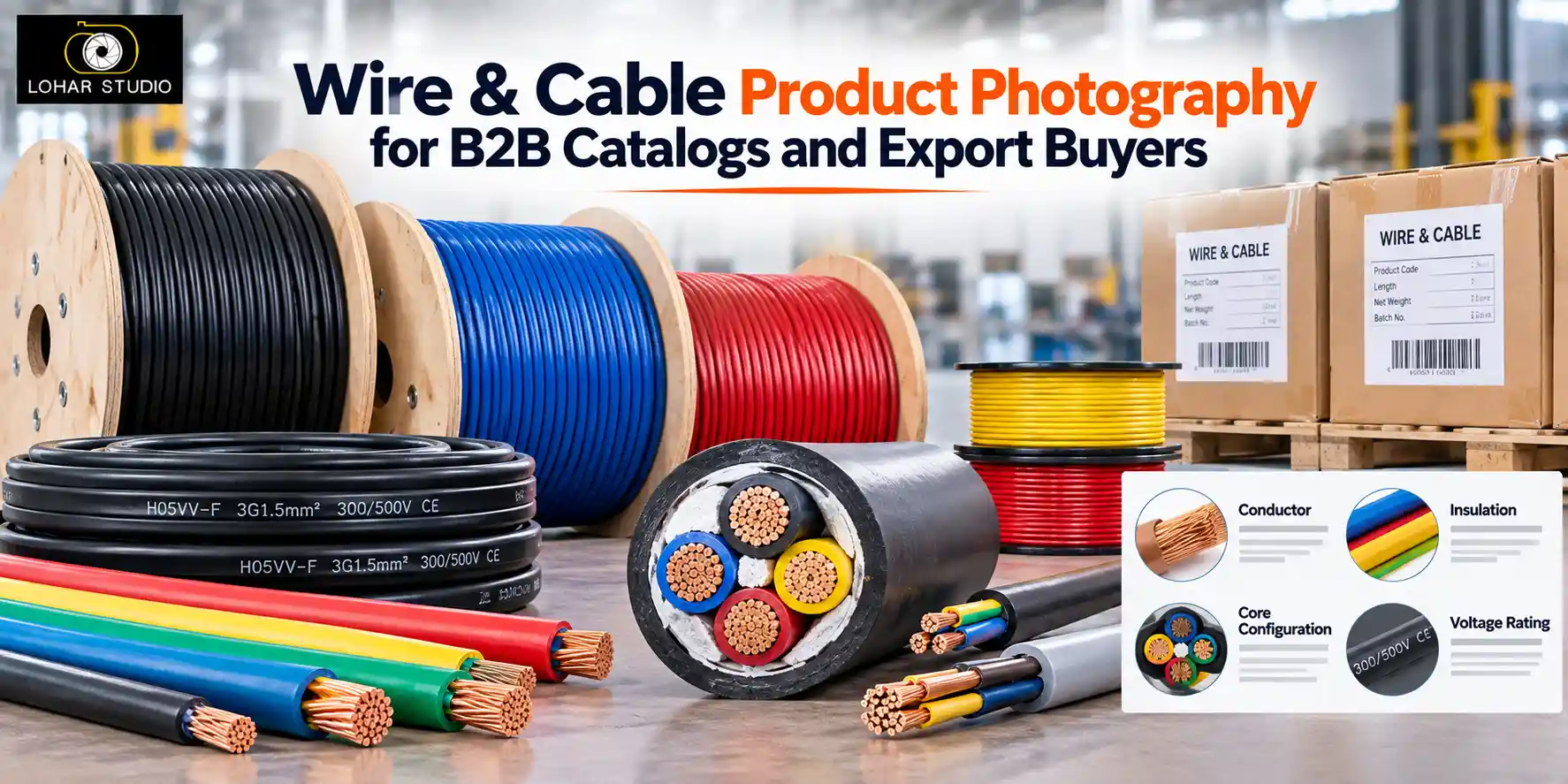
Catalogue images that show true colour, finish, dimensions, and details prevent surprises on delivery. Small and mid-sized industrial items are often shot in a studio for this reason. Our posts on wire and cable photography for B2B catalogues and studio vs on-location photography for spare parts explain how to choose the setup.
7. It Shows Consistency and Currency
Photos that match each other in style and reflect your current equipment suggest a business that is organised and still investing. Outdated images do the opposite. See how often a factory should update its photography.
What Makes Industrial Photos Believable
|
Builds trust |
Weakens trust |
|---|---|
|
Specific machinery, products and spaces from your actual plant |
Generic images that could belong to any factory |
|
Shot in normal working conditions, with people at work |
Spotless, empty scenes that look staged for one day |
|
A mix of wide shots and close-ups |
Only product shots, or only wide shots |
|
Consistent colour, exposure and style |
Heavy filters or over-processed, unnatural colour |
|
Captions that name the process, equipment or area |
Unlabelled images with no context |
|
Images that match what your website and catalogue claim |
Photos that contradict your stated capacity or capability |
Where to Use Industrial Photos in the Buyer Journey
|
Touchpoint |
What to show |
|---|---|
|
Website capability and about pages |
Facility, machinery, team, quality process |
|
Product catalogue and datasheets |
Accurate product images with scale and detail |
|
Quotations, proposals and capability decks |
Relevant process and capacity photos for that buyer's needs |
|
Supplier registration and onboarding documents |
Facility, equipment and certificate images, where the buyer asks for them |
|
LinkedIn and email outreach |
Team, plant and process highlights |
|
B2B directories and marketplace listings |
Product images and a few facility shots |
|
Video walkthroughs |
Facility highlights extended into motion |
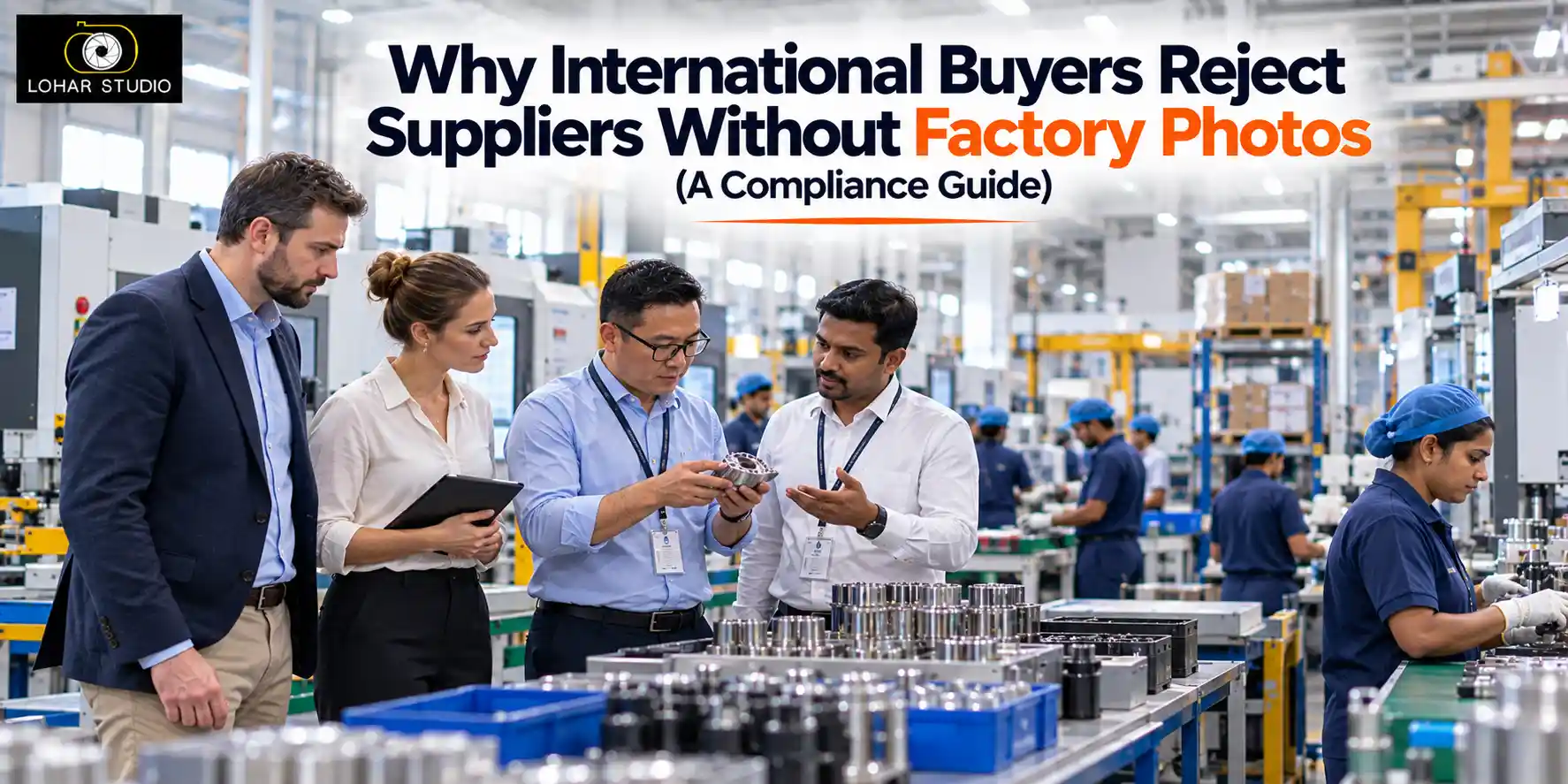
If you also sell to overseas buyers, our guide on why international buyers reject suppliers without factory photos covers the export and verification side in detail.
How to Plan a Shoot That Builds Trust
- List the claims you need to prove. For example: capacity, tolerance, certifications, delivery reliability, or safety.
- Map your buyers. Decide which of the four questions above matter most for your customers.
- Build the shot list from the claims, not from what looks impressive. Each claim should have at least one image that supports it.
- Prepare the facility. Tidy work areas, make sure PPE and signage are correct, and schedule the shoot during normal production.
- Review for confidentiality. Avoid showing proprietary processes, customer products under NDA, drawings, or screens with sensitive data.
- Caption and organise the files. Name each image by area or process so the team can reuse them across your website, catalogue and proposals.
Industry Notes: What Buyers Look For
|
Industry |
What builds trust visually |
Related guide |
|---|---|---|
|
Pharma and biotech |
Cleanliness, controlled areas and documented processes, subject to site access rules |
|
|
Chemicals and edible oil |
Storage, tanks, process lines and visible safety measures |
|
|
Electronics and semiconductors |
Assembly lines, test benches and clean working areas |
|
|
Wire and cable |
Production lines, reels, testing and packaging |
|
|
General engineering and fabrication |
Machines, finished parts, inspection and dispatch |
How to Tell If Your Photos Are Building Trust
Attribution is hard in B2B because buying cycles are long, so use several signals together:
- Quality of inquiries: are buyers asking more specific questions, with fewer basic doubts?
- Shortlisting and audit invitations: are more prospects moving to a call, sample request or visit?
- Capability page behaviour: do visitors stay longer and click through to contact?
- Direct feedback: ask new customers what convinced them. Their answers often mention what they saw.
- Sales team feedback: do salespeople reuse the images in proposals and presentations?
Common Mistakes to Avoid
- Treating photography as decoration instead of evidence for specific claims.
- Shooting only products and skipping the facility, process, and people.
- Over-staging the plant so it no longer looks like a working site.
- Leaving images uncaptioned, which wastes their proof value.
- Ignoring confidentiality and showing sensitive processes or customer items.
- Letting the set go out of date while the plant keeps changing.
Work With an Industrial Photographer
Industrial shoots need planning around production schedules, safety rules, and confidentiality. If you want a trust-focused photo set for your plant, our industrial photography service covers on-location work across industrial areas in Delhi NCR. You can also read about the main industrial hubs in Delhi NCR to see where we shoot.
Frequently Asked Questions
1. How does industrial photography build trust with B2B buyers?
Industrial photography gives B2B buyers visual proof of your capability, scale, quality process, and safety standards before they commit time to a conversation. Specific, current images of your real plant, equipment, people, and products make your claims easier to believe.
2. What do B2B buyers look for in industrial photos?
Buyers look for evidence that matches your claims: the machinery you say you run, the capacity you claim, inspection and testing steps, a tidy and safe working environment, and products shown accurately. Different decision makers look for different things.
3. Which industrial photos matter most for building trust?
The most useful images are wide shots of the production floor, close-ups of key machinery, quality inspection and testing stations, packing and dispatch areas, and accurate product images. Team photos add accountability and help buyers see the people behind the plant.
4. Are staged or stock factory photos acceptable?
They are risky. Stock or heavily staged images can look generic and may contradict what a buyer finds in a visit or audit. Real photos of your actual facility, taken during normal operations, build more trust than polished but unrelated images.
5. Can photos replace certificates and audits?
No. Photos support your certificates, references, and samples and help buyers shortlist you, but they do not replace formal verification or audits. Use them alongside accurate documentation, and make sure any certificate shown in an image is current.
6. Should I show my team in industrial photos?
Yes, when your staff agrees. Images of real people at work show that the plant is operational and put a face on the business. Make sure they are wearing the correct PPE, and get consent before using their images publicly.
7. How do I protect confidential processes in industrial photos?
Decide before the shoot what must not be shown, such as proprietary processes, customer products under NDA, drawings, and screens with sensitive data. Brief the photographer, review the images before publishing, and share only what supports your claims.
8. Where should I use industrial photos for B2B marketing?
Use them on your website's capability and about pages, in catalogues and datasheets, in proposals and capability decks, in supplier onboarding documents, on LinkedIn and in B2B directory listings. Choose different images for different buyers and stages.
9. How often should I update my industrial photography?
Update your photos whenever your equipment, facility, certificates, or product range change in a meaningful way. Outdated photos can misrepresent your current capability, so many manufacturers review their set at least once a year.
10. Are photos or video better for B2B trust?
Both help. Photos are quick to scan and easy to reuse across catalogues and proposals, while video shows process flow and people in motion. Many manufacturers start with a strong photo set and add video later. See our guides on documentary-style videos for buyer trust and industrial video production.
Final Thoughts
B2B buyers trust what they can verify. A well-planned industrial photo set turns your claims about capability, quality and safety into evidence, and keeps working across your website, catalogue and proposals. Start with the claims you most need to prove, shoot them honestly, and keep the set current.
Site access rules, safety requirements and confidentiality terms vary by plant. Please confirm these with your team and the photographer before a shoot.
If you're looking to enhance your brand’s presence on leading e-commerce platforms like Amazon, Flipkart, Myntra, Meesho, TataCliQ, Snapdeal, and Ajio, Lohar Studio is your go-to destination. Our team specializes in delivering high-quality images for fashion items, footwear, automotive products, medical photography, business headshots, and corporate shoots. We serve Delhi, Noida, Gurgaon, Faridabad, and Ghaziabad, offering professional results that boost conversions and elevate your brand’s image. Get in touch today at +91-9312070458 or visit us at A1/58, 1st Floor, Sector 6, Rohini, Delhi-110085, to schedule your next shoot!

Written from hands-on experience shooting for 4000+ brands - practical, field-tested photography advice, not just theory.