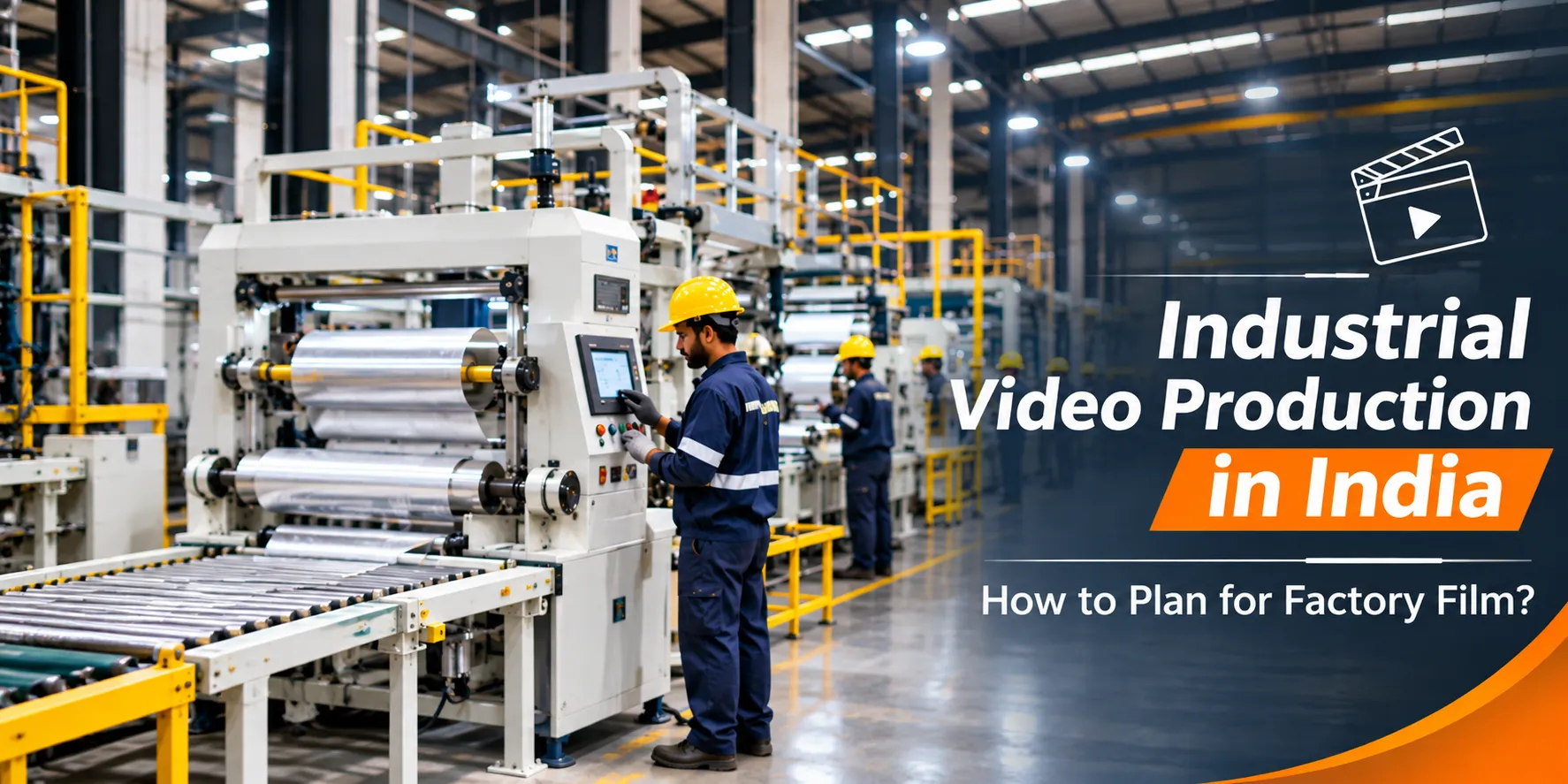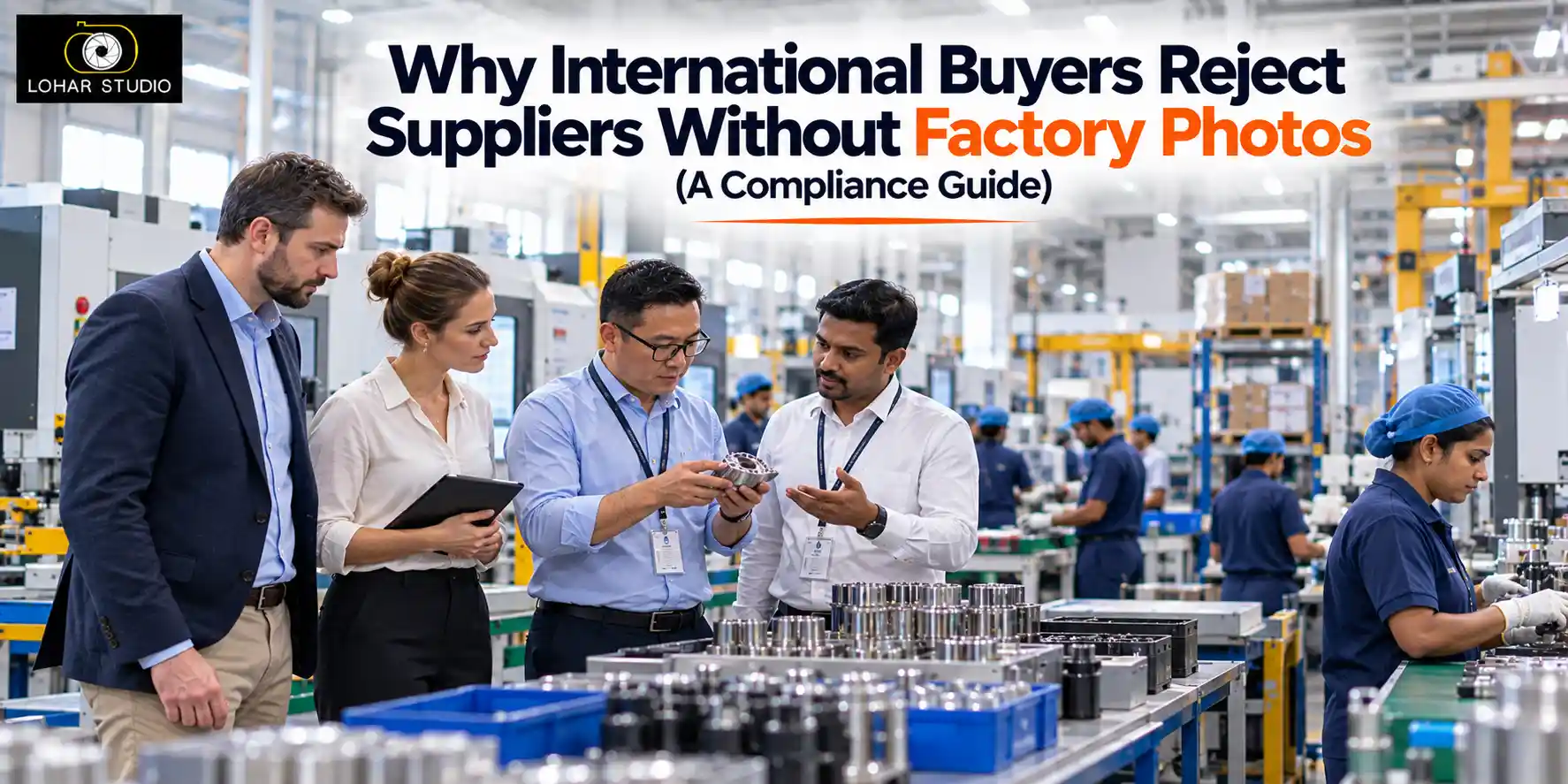



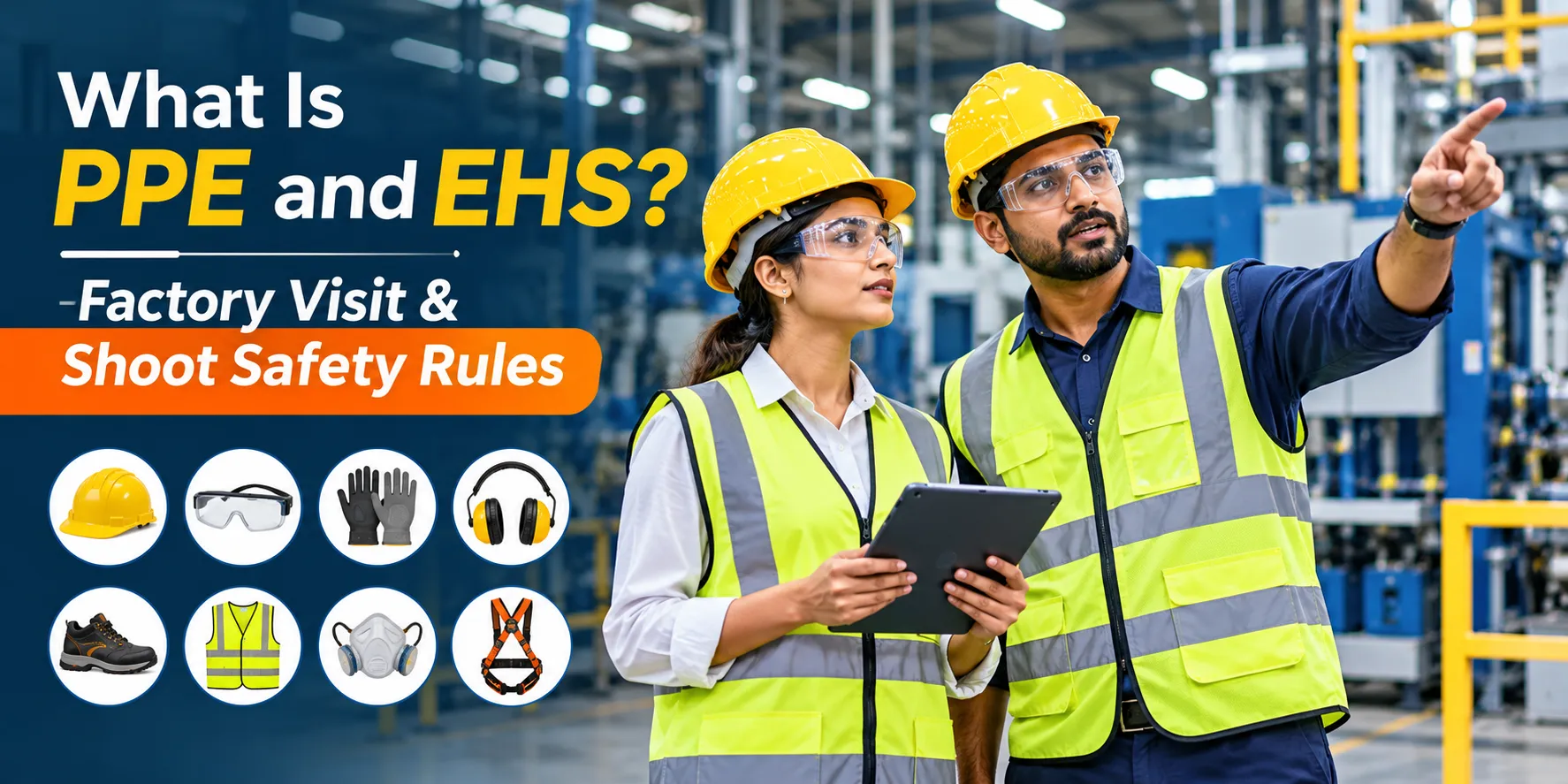
PPE stands for Personal Protective Equipment, the gear a person wears to reduce injury or exposure, such as a helmet, safety shoes, glasses, gloves, and ear protection. EHS stands for Environment, Health and Safety, the system of rules, risk checks, training and permits a plant uses to protect people, the surroundings and its own operations. In simple terms, EHS is the plan, and PPE is the last line of defence when the plan can’t remove a hazard. Anyone entering a factory in India, whether a buyer, auditor, contractor, or a photography and video crew, is expected to follow the plant’s EHS rules and wear the PPE it specifies, and those expectations now sit under India’s Occupational Safety, Health and Working Conditions (OSH) Code, 2020, in force since 21 November 2025. This guide explains both terms, the legal backdrop, what visitors must do, and the extra precautions that apply when a camera crew works on a live shop floor.
This guide is general information. Always follow your plant’s own EHS policy and ask your safety officer about legal compliance.
What Is PPE?
PPE is any equipment worn or used to protect the body from workplace hazards such as impact, noise, dust, chemicals, heat, sparks, electrical contact, and falls. It does not remove the hazard; it reduces the harm if something goes wrong.
| Protects | Common PPE | Typical hazard | Usually needed by visitors and crews? |
|---|---|---|---|
| Head | Safety helmet or hard hat | Falling objects, low beams, cranes | Yes in production, racking and crane areas |
| Eyes and face | Safety glasses, goggles, face shield | Dust, sparks, splashes | Yes in most production areas |
| Hearing | Ear plugs or ear muffs | Noisy lines, compressors, press shops | Yes where noise signs are posted |
| Lungs | Dust mask or respirator | Dust, fumes, vapours | Where dust or fumes are present |
| Hands | Cut-resistant, chemical or heat gloves | Sharp edges, chemicals, hot surfaces | When handling or near such hazards |
| Feet | Safety shoes with toe protection and slip-resistant sole | Dropped items, wet floors, sharp debris | Yes, closed-toe safety footwear |
| Body | High-visibility vest, coverall, flame-resistant clothing | Moving vehicles, sparks, heat | High-visibility vest in most plants |
| Falls | Safety harness and lanyard | Work at height | Only when work at height is approved |
What Is EHS?
EHS (also written HSE or SHE, depending on the company) is the management system a plant uses to control risks to people, health, and the environment. A working EHS system usually includes:
- A written safety policy and defined responsibilities
- Risk assessments and job safety analyses
- Permit-to-work systems for hot work, confined spaces, working at height and electrical work
- Lockout-tagout (LOTO) procedures that make machines safe before maintenance
- Induction and training for employees, contractors and visitors
- Incident and near-miss reporting
- Emergency plans, with exits, assembly points and first aid
- Environmental controls for waste, emissions and spills
Many plants also certify their systems to international standards such as ISO 45001 (occupational health and safety) and ISO 14001 (environmental management).
PPE vs EHS: How They Fit Together
| PPE | EHS | |
|---|---|---|
| What it is | Equipment worn by a person | A system of rules, training and controls |
| Role | Last line of defence | The overall safety framework |
| Example | Safety shoes, helmet, gloves | Risk assessment, permits, induction, emergency plan |
Safety professionals rank controls in a hierarchy: eliminate the hazard, substitute it with something safer, add engineering controls (guards, ventilation), use administrative controls (procedures, training, signage), and only then rely on PPE. That is why a plant with good EHS doesn’t depend on PPE alone, and why visitors are also asked to follow walkways, signs, and instructions.
Industrial Photography in Delhi
Lohar Studio has provided industrial photography in Delhi since 2010 for manufacturers, engineering firms, factory owners, and ind...
Explore Industrial Photography in DelhiThe Legal Backdrop in India: The OSH Code, 2020
The Occupational Safety, Health and Working Conditions Code, 2020 came into force on 21 November 2025, consolidating 13 central labour laws, including the Factories Act, 1948, which it repealed. For factories, the Code raises the coverage threshold to 20 or more workers with power, or 40 or more without (earlier 10 and 20). Employers must provide a safe and healthy workplace, arrange safety training, and provide required protective equipment, and for high-risk workplaces such as factories, the safety duty is understood to cover everyone present at the site, not only employees. Central rules followed in 2026, and state rules are still aligning, so plants should confirm what applies in their state with their safety or legal adviser.
Safety Rules for Factory Visitors
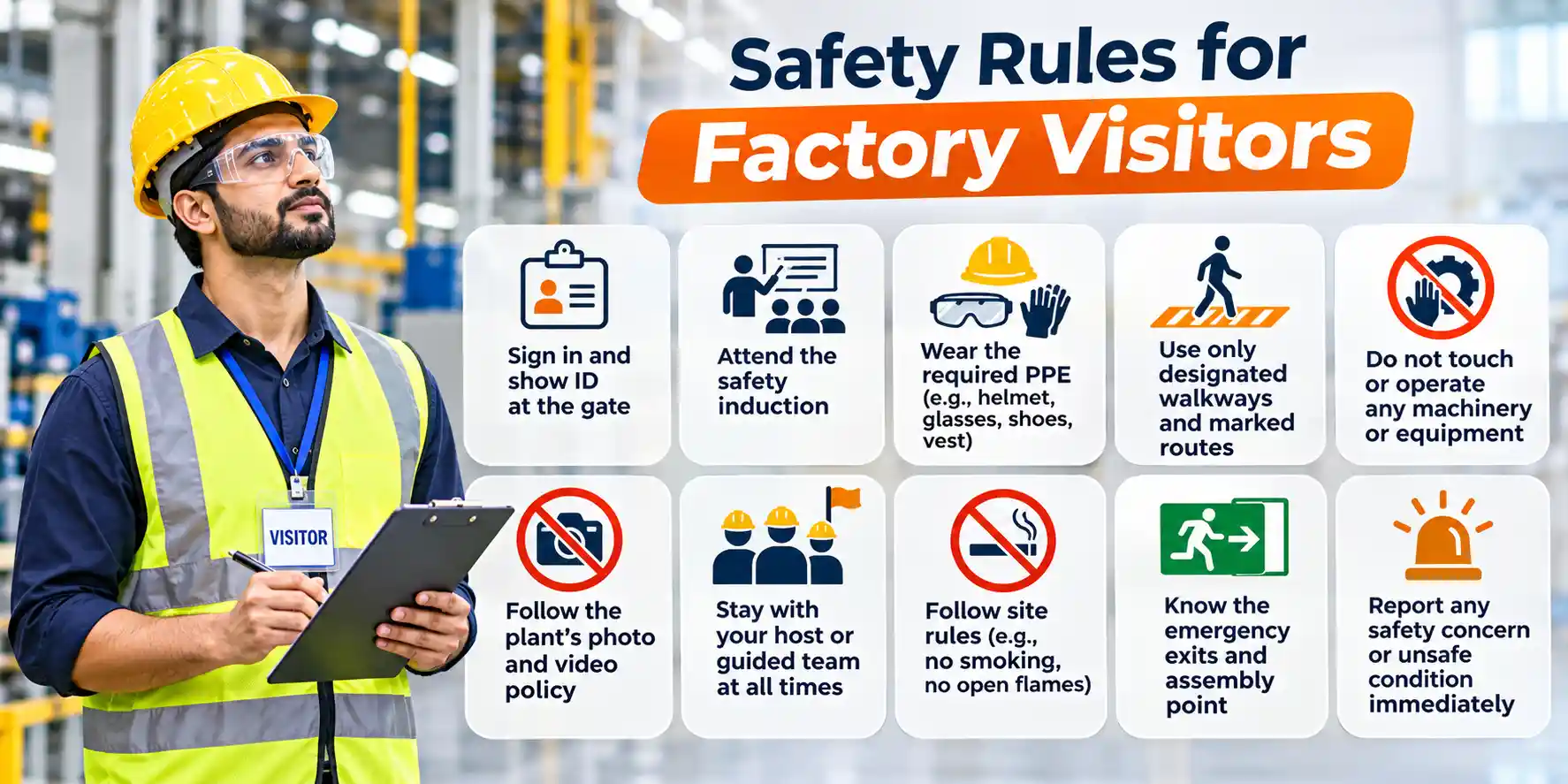
Whether you are a buyer, auditor, vendor, or guest, expect these rules:
- Sign in and show ID at the gate
- Attend the safety induction, which covers hazards, exits and the assembly point
- Stay with your escort and don’t wander into unmarked areas
- Wear the PPE you are given, even for a short visit
- Wear closed-toe, flat footwear; avoid sandals, heels and open shoes
- Tie back long hair and remove loose jewellery, scarves and dangling lanyards near moving machinery
- Use marked walkways, and look out for forklifts and cranes
- Don’t touch machines, switches or controls
- Follow signs and instructions about restricted areas, noise and hot zones
- Know the nearest exit and assembly point
- Ask before taking photos or videos; many areas, drawings, screens and processes are restricted
Extra Rules for Industrial Photo and Video Shoots
A camera crew adds equipment, cables and people to a live floor, so the plant’s EHS team and the crew should agree a plan before the first shot.
Before the shoot
- Do a recce with the plant’s EHS or production team and mark where the crew may stand and film
- Agree a shot list, timings, and restricted areas in writing
- Share the crew list and complete gate passes and induction
- Confirm who supplies the PPE (the plant, or the crew’s own)
- Identify the permit-to-work requirements for any hot work, height, or electrical area, and don’t film inside those zones without clearance
On the floor
Factory & Industrial Photography in Faridabad
For auto-ancillary plants, electrical goods manufacturers, engineering and scientific instrument producers, steel fabricators, and...
Explore Factory & Industrial Photography in Faridabad- Keep tripods, light stands and cables out of walkways and forklift routes. Weigh down stands and tape or ramp cables.
- Use a body-secured camera strap, and keep gear and loose cables away from rotating parts.
- Never approach machines under maintenance, LOTO tags, or hot work. Use a longer lens instead.
- Plan communication around noise. With ear protection on, use hand signals or an agreed signal system.
- Never film from unprotected edges, ladders, or platforms unless the plant has approved the access and fall protection.
- Keep a spotter for the crew when working near vehicles, cranes or tight aisles.
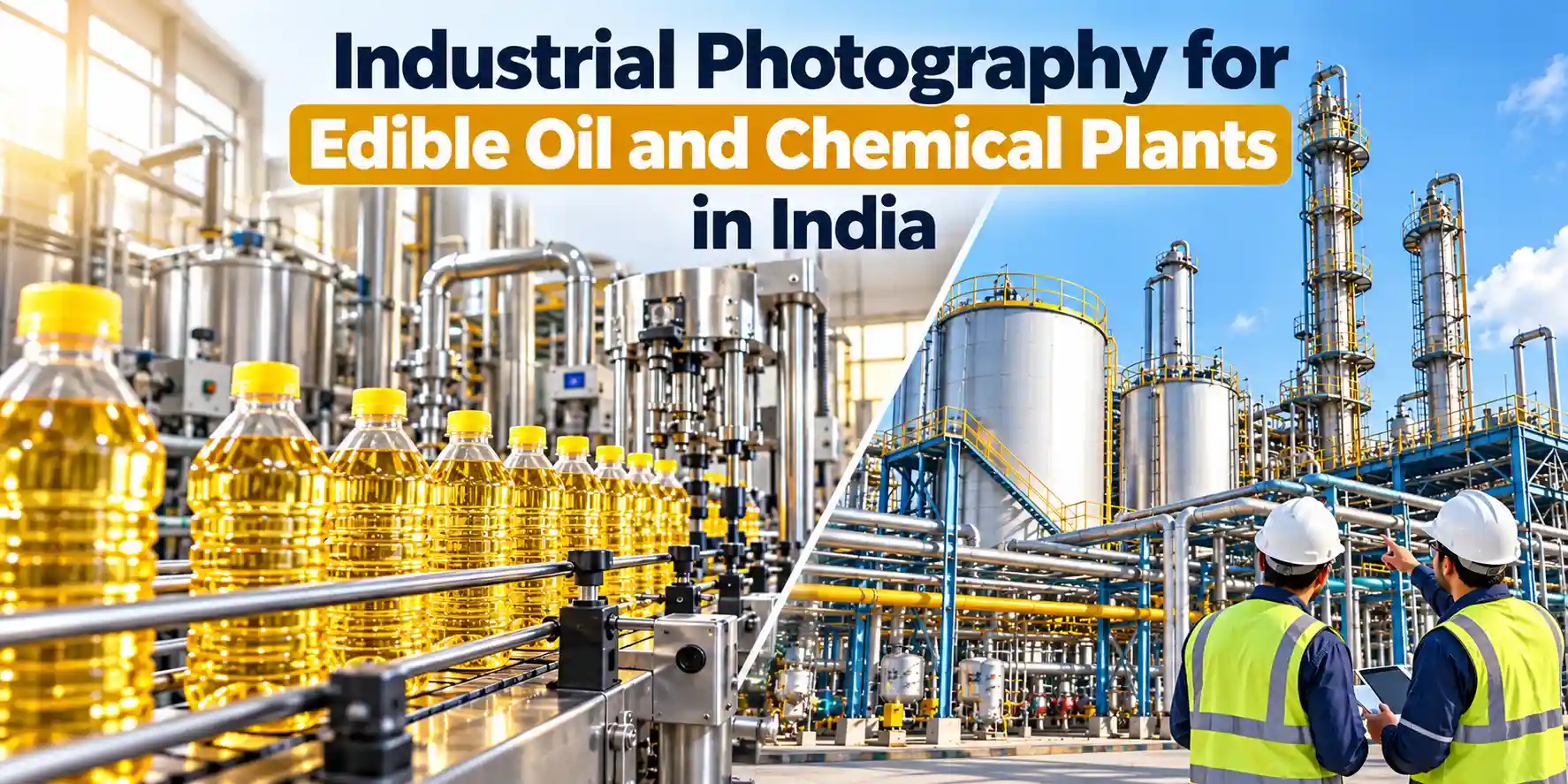
- Respect hazardous areas. In chemical, solvent, or petroleum zones, only approved, rated equipment can be used with a permit (see our note on photographing edible oil and chemical plants).
- Get consent from operators who appear on camera, and avoid ID cards, personal data, and sensitive screens.
- Outdoors, drones follow India’s Drone Rules, 2021 and the Digital Sky airspace map.
After the shoot
- Review the edit for confidential areas, drawings and customer-specific parts before publishing
PPE Expectations by Plant Type
What is needed varies by plant, so treat this as a typical guide and follow the site’s own rules.
| Plant type | Typical requirements |
|---|---|
| Engineering and fabrication | Helmet, safety shoes, safety glasses, ear protection, gloves near handling; special clothing and face protection near hot work |
| Chemical and petroleum | Flame-resistant or antistatic clothing, safety shoes, goggles, strict ignition-source control and permits |
| Food and FMCG | Hairnet, beard cover, coat or apron, plant footwear or shoe covers, no jewellery, watches or glass, hand wash |
| Pharma and cleanroom | Full gowning, gloves, mask, controlled entry and cleaned or approved camera gear |
| Textile and garment | Closed shoes, tied hair, dust mask where lint is heavy |
| Electronics assembly | ESD clothing, wrist straps or footwear |
| Warehouse and logistics | High-visibility vest, safety shoes, helmet in racking and loading areas |
Common Mistakes at Factory Visits and Shoots
- Wearing sandals, loose clothing, or dangling accessories on the floor
- Treating PPE as optional because the visit is short
- Bringing equipment into a hazardous zone without approval
- Leaving cables or stands across walkways or exits
- Ignoring noise, heat, or dust signs
- Filming people or restricted areas without permission
- Skipping the induction because the crew is in a hurry
What Plants Should Ask a Photography or Video Crew
- Have you worked on live plants before, and in which sectors?
- Will you do a recce and share a shot list and safety plan?
- Will your crew attend our induction and follow our PPE rules?
- How do you handle cables, stands, and gear around walkways and machines?
- How will you protect confidential areas and operators’ privacy?
- Who will handle drone permissions if aerial footage is needed?
Lohar Studio plans industrial and corporate photography around the plant’s own PPE and EHS rules, starting with a recce and a shared shot list.
Factory & Industrial Photography in Gurgaon
Gurgaon (Gurugram) is unlike any other industrial area in NCR. It is the region's corporate-industrial city, where auto-ancillary...
Explore Factory & Industrial Photography in GurgaonFAQs About PPE and EHS Rules
1. What is PPE?
PPE means personal protective equipment: gear such as helmets, safety glasses, gloves, ear protection, safety shoes, and high-visibility clothing that reduces the risk of injury or exposure at work.
2. What does EHS stand for?
EHS stands for Environment, Health and Safety. It is the system of policies, risk assessments, permits, training, and emergency plans a workplace uses to protect people and the environment.
3. What is the difference between PPE and EHS?
PPE is the equipment a person wears, and EHS is the overall safety management system. PPE is the last line of defence, used after hazards have been reduced through better design, engineering controls, and procedures.
4. Is PPE mandatory for visitors in an Indian factory?
In practice, most plants require visitors in production areas to wear the specified PPE and attend an induction. The employer’s duties under the OSH Code and the plant’s EHS policy set the rule, so always follow the site’s instructions.
5. What PPE do I need for a factory visit?
At minimum, expect closed-toe safety shoes, a high-visibility vest, and often a helmet and safety glasses, with ear protection where noise signs are posted. The plant tells you exactly what applies.
Factory & Industrial Photography in Noida
Noida is not just another Delhi-adjacent industrial area — it is a planned city with a distinct industrial identity built ar...
Explore Factory & Industrial Photography in Noida6. Can I take photos or videos inside a factory?
Only with the plant’s permission. Many areas, drawings, screens, and processes are restricted, and operators should consent to appearing on camera.
7. Which law governs factory safety in India now?
The Occupational Safety, Health and Working Conditions Code, 2020 has governed factory safety since 21 November 2025, replacing the Factories Act, 1948 and other central labour laws.
8. What is the hierarchy of controls?
It ranks safety measures from most to least effective: eliminate the hazard, substitute it, add engineering controls, use administrative controls such as procedures and training, and finally use PPE.
9. What extra safety steps apply to a photography or video crew?
Do a recce, attend the induction, wear the required PPE, keep cables and stands out of walkways, avoid machines under maintenance, respect hazardous-area and permit rules, and get consent before filming people.
10. Are special rules needed in food, pharma, or chemical plants?
Yes. Food and pharma plants need hygiene gowning and approved camera gear, while chemical and petroleum plants restrict ignition sources and require rated equipment under permits.
Planning a shoot inside an active plant?
Brief Lohar Studio on your plant’s safety rules. Share your site, PPE requirements, and restricted areas, and we’ll plan a recce and shot list that works with your EHS team. Whether you need industrial video production, just industrial photography services, or both.
If you're looking to enhance your brand’s presence on leading e-commerce platforms like Amazon, Flipkart, Myntra, Meesho, TataCliQ, Snapdeal, and Ajio, Lohar Studio is your go-to destination. Our team specializes in delivering high-quality images for fashion items, footwear, automotive products, medical photography, business headshots, and corporate shoots. We serve Delhi, Noida, Gurgaon, Faridabad, and Ghaziabad, offering professional results that boost conversions and elevate your brand’s image. Get in touch today at +91-9312070458 or visit us at A1/58, 1st Floor, Sector 6, Rohini, Delhi-110085, to schedule your next shoot!

Written from hands-on experience shooting for 4000+ brands - practical, field-tested photography advice, not just theory.