

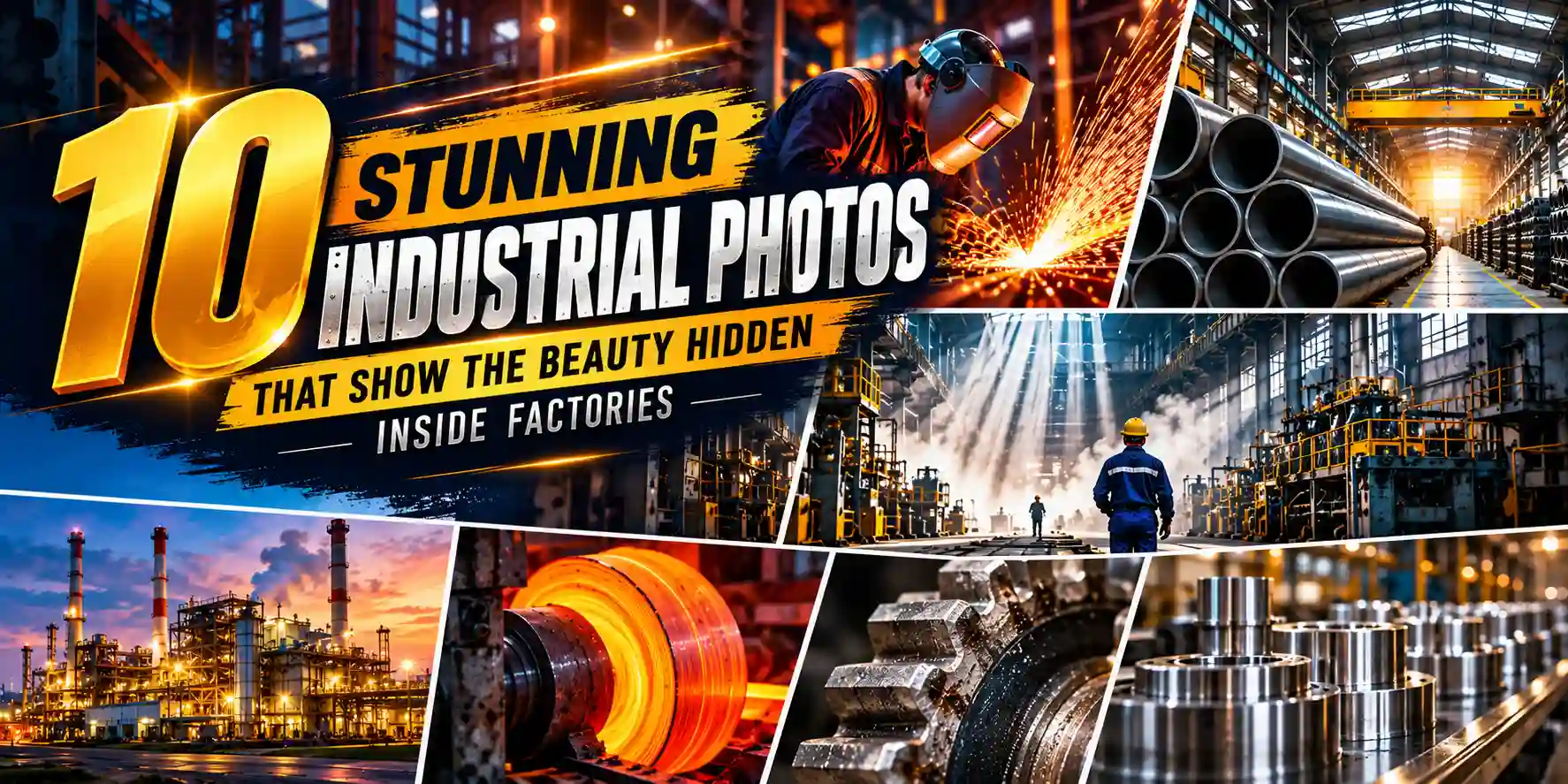
Industrial photography is often treated as purely functional — documentation for a website or catalog — but factories and manufacturing facilities hold genuine visual beauty that most companies never capture. Symmetry in machinery, light cutting through dust and steam, the texture of raw metal, the scale of a facility against a single worker — these are the kinds of shots that turn a factory from a background detail into a powerful piece of brand storytelling. Here are 10 types of industrial photography worth seeking out, and why each one works.
If you run a manufacturing facility, these are the shots that can transform how your brand is perceived — not just what it's assumed to produce.
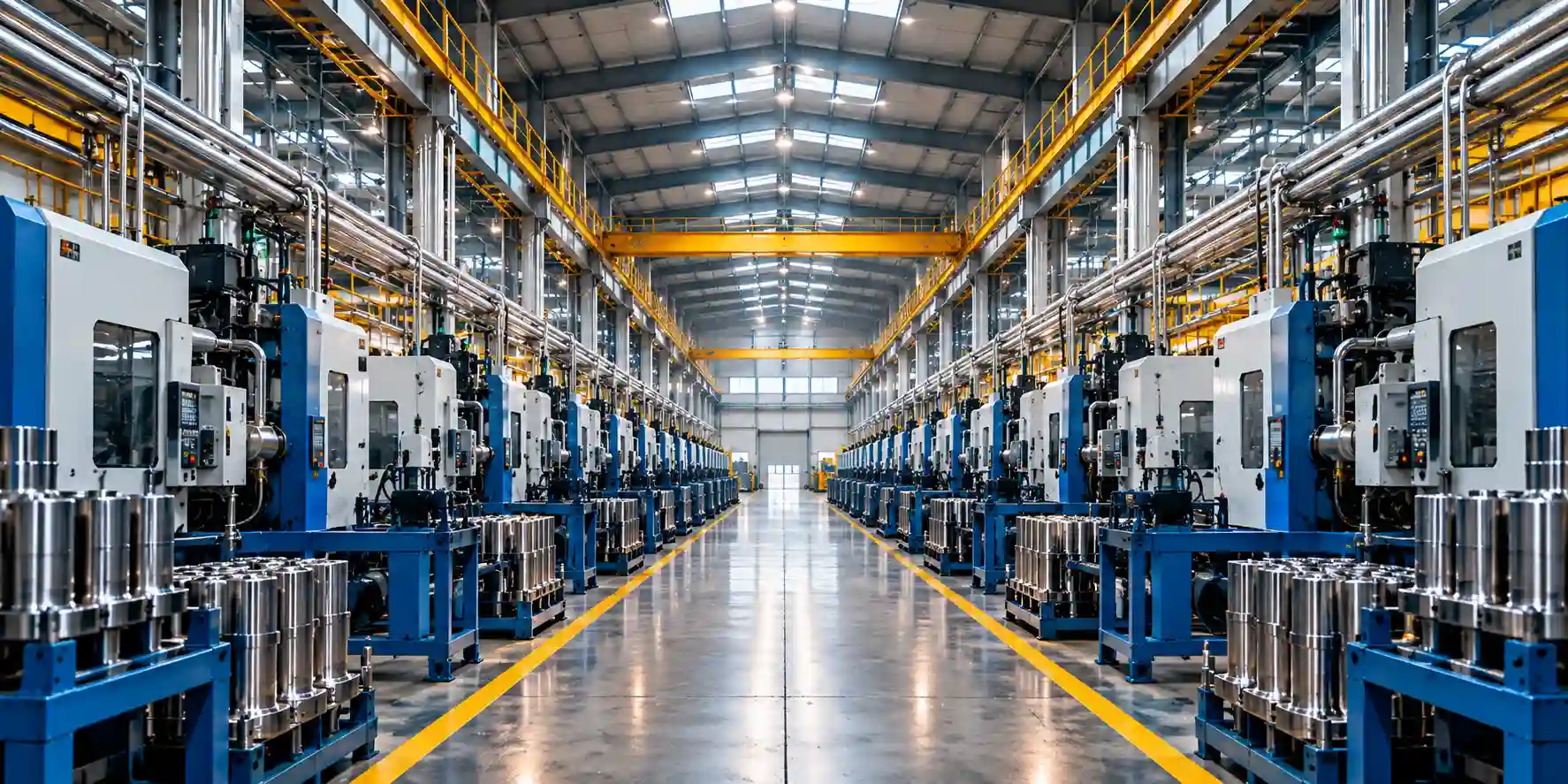
1. Symmetry and Repetition in Machinery and Pipework
There's a quiet, almost architectural beauty in industrial repetition — rows of identical machines, parallel conveyor lines, stacked pipework running in perfect alignment. Shot straight-on or from a slightly elevated angle, this kind of symmetry gives a factory the visual order of a well-composed photograph, turning something purely functional into something genuinely striking.
Why it works: Repetition creates rhythm, and rhythm is inherently satisfying to look at — it signals precision and scale at the same time.
2. Light Cutting Through Dust, Steam, or Machinery
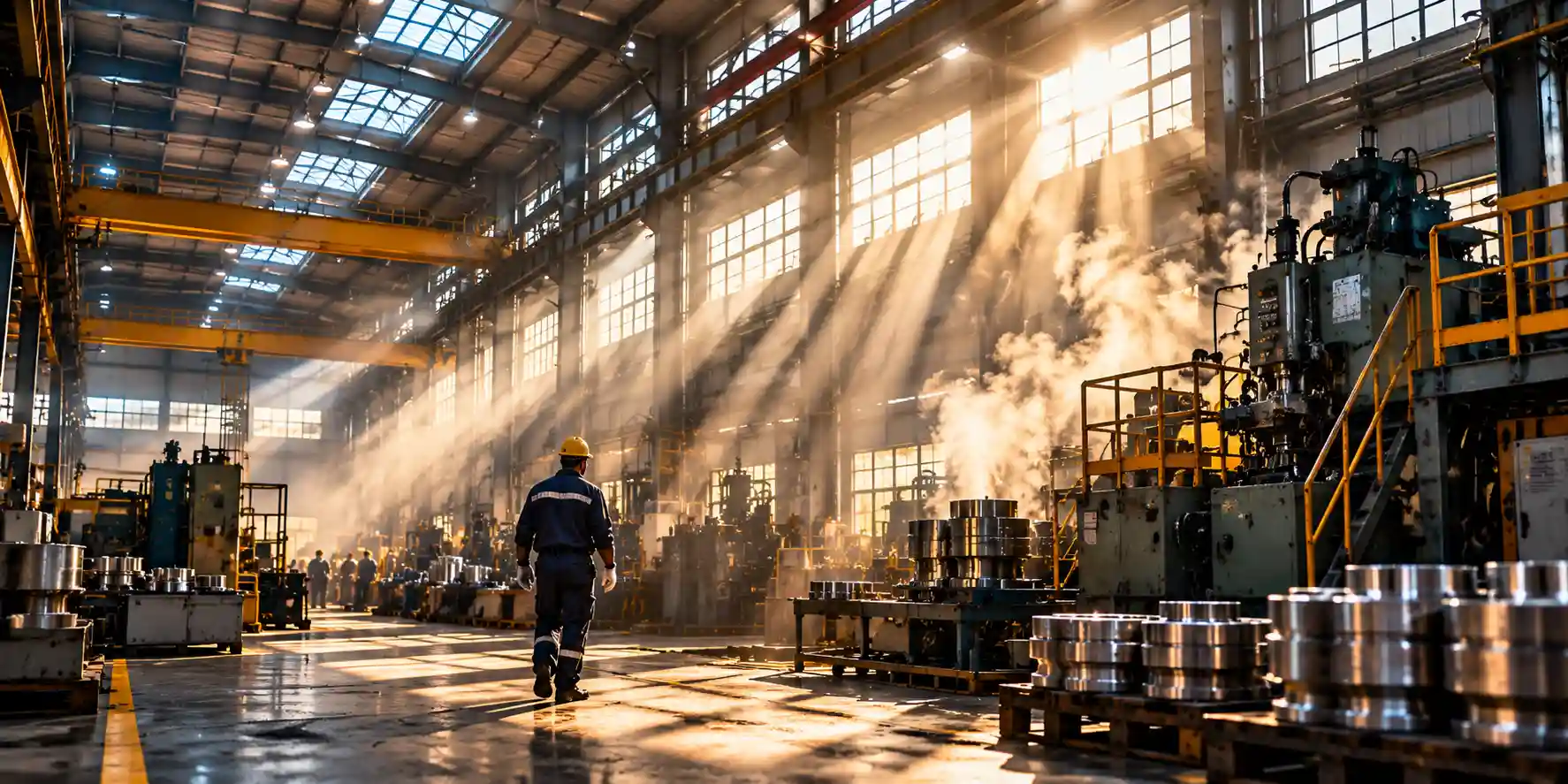
Factory interiors often have natural light entering through high windows or skylights, catching suspended dust or steam in a way that creates dramatic, almost cinematic shafts of light. This effect — sometimes called "god rays" in photography — turns an ordinary factory floor into something with real visual depth and atmosphere.
Why it works: Light shafts add a three-dimensional quality to a flat industrial space, drawing the eye naturally toward a specific point of interest in the frame.
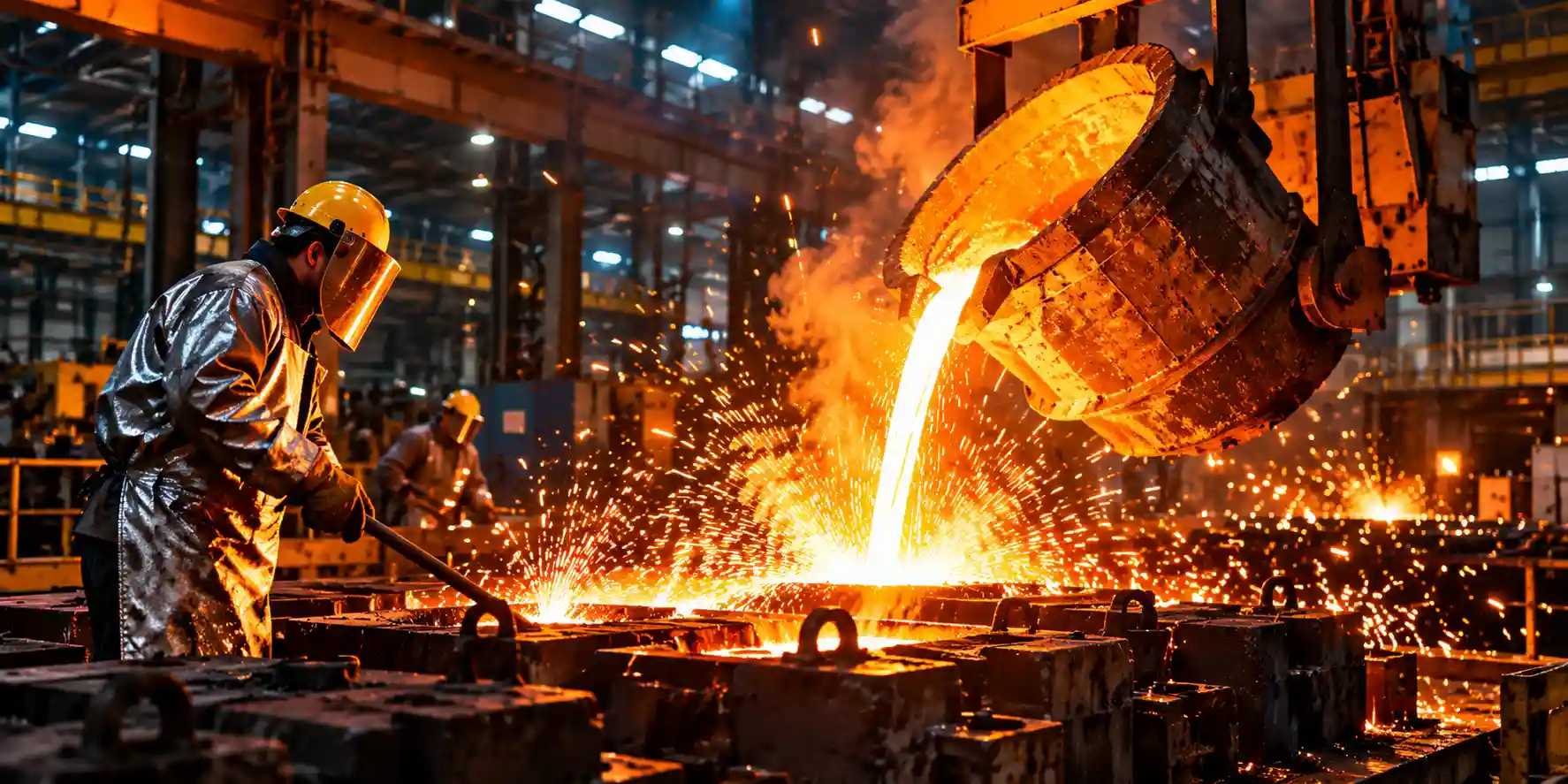
3. Sparks, Molten Metal, and Active Processes
Welding sparks, molten metal pours, or glowing heat-treated material are among the most visually dramatic subjects available in any industrial setting — vivid color, motion, and genuine intensity, all captured in a single frame.
Why it works: These shots combine color contrast (bright orange or white against a dark industrial background) with a sense of real, active process — viewers can almost feel the heat and motion in a still photograph.
Industrial Photography in Delhi
Thousands of manufacturing companies across Delhi NCR still use dark, blurry mobile phone images on their websites, brochures, and...
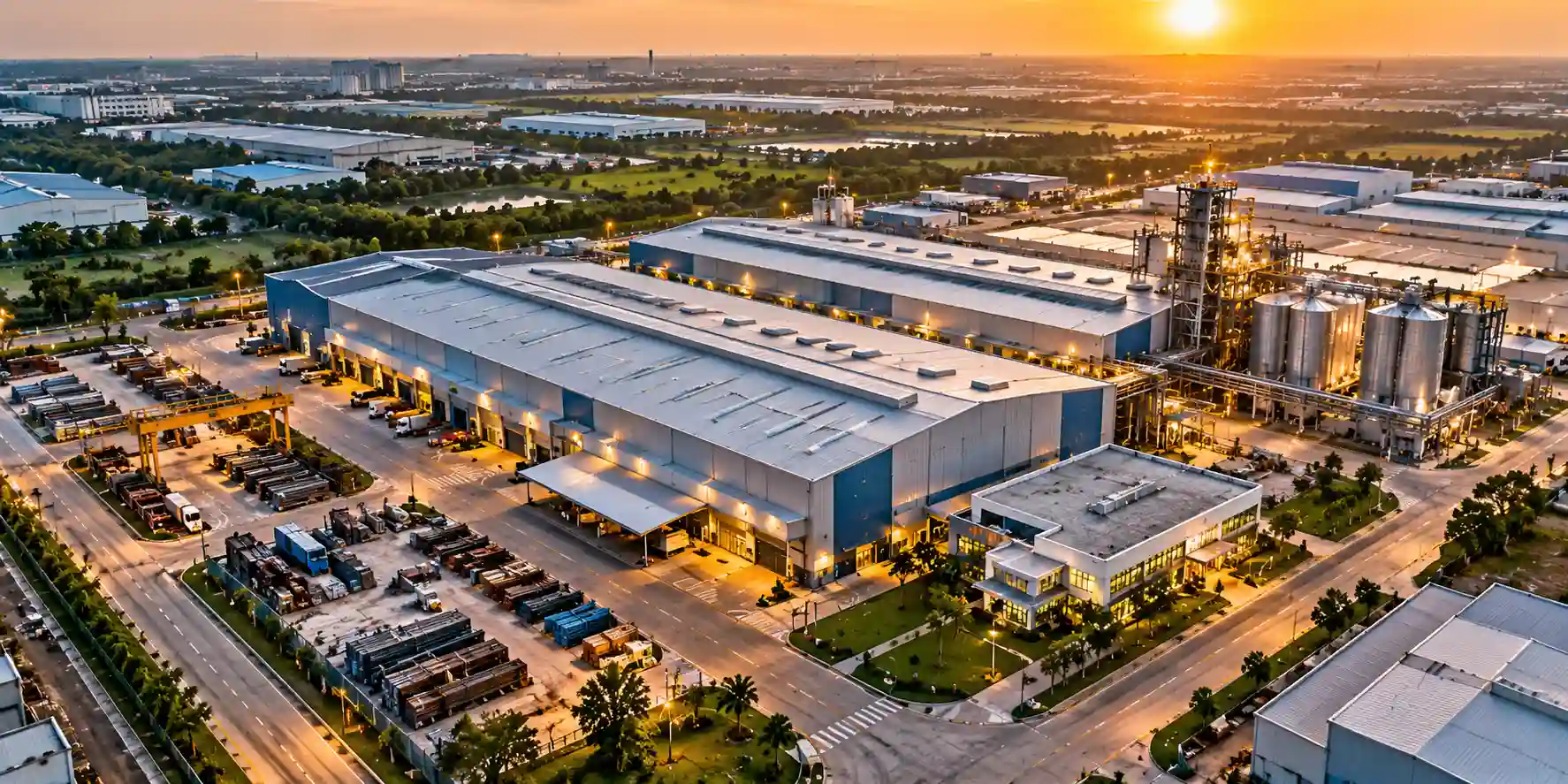
Explore Industrial Photography in Delhi4. Aerial and Drone Views of Facility Layouts
From above, a factory's layout often reveals geometric patterns invisible from ground level — the shape of storage yards, the arrangement of production lines, the scale of a facility against its surroundings. Drone photography has made this perspective far more accessible for manufacturers than it used to be.
Why it works: An aerial view instantly communicates scale and organization in a way no ground-level shot can, making it particularly effective for conveying the size and capability of a large operation.
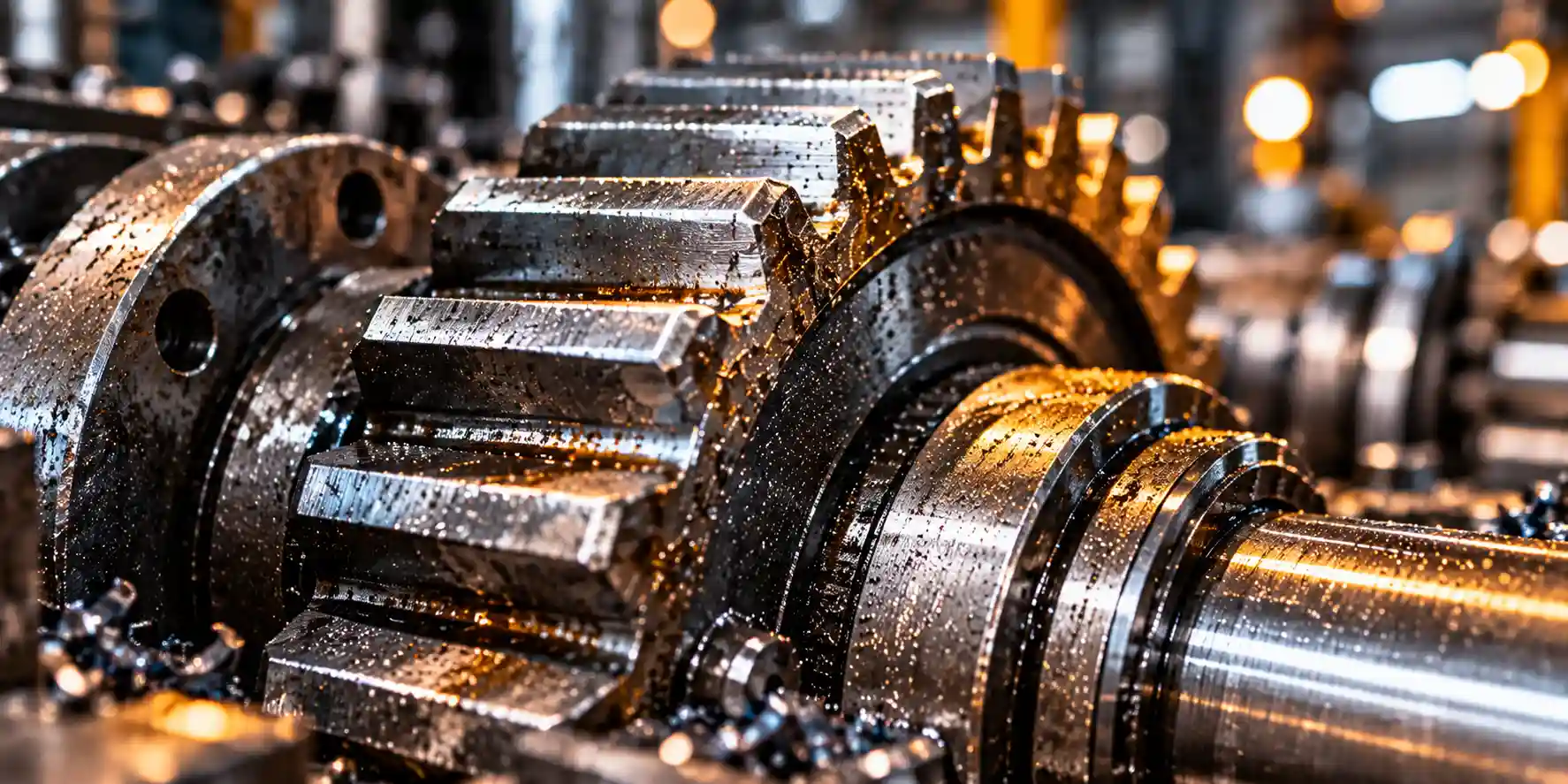
5. Macro Detail: Texture, Rust, and Metal Grain
Close-up shots of worn metal, rust patterns, gear teeth, or the fine grain of raw material surfaces reveal a texture and character that's completely invisible at normal viewing distance. These details, often overlooked, can be some of the most visually rich images a facility produces.
Why it works: Macro photography draws attention to texture and detail the eye normally skips past, creating a sense of tactile, almost artistic quality from purely functional surfaces.
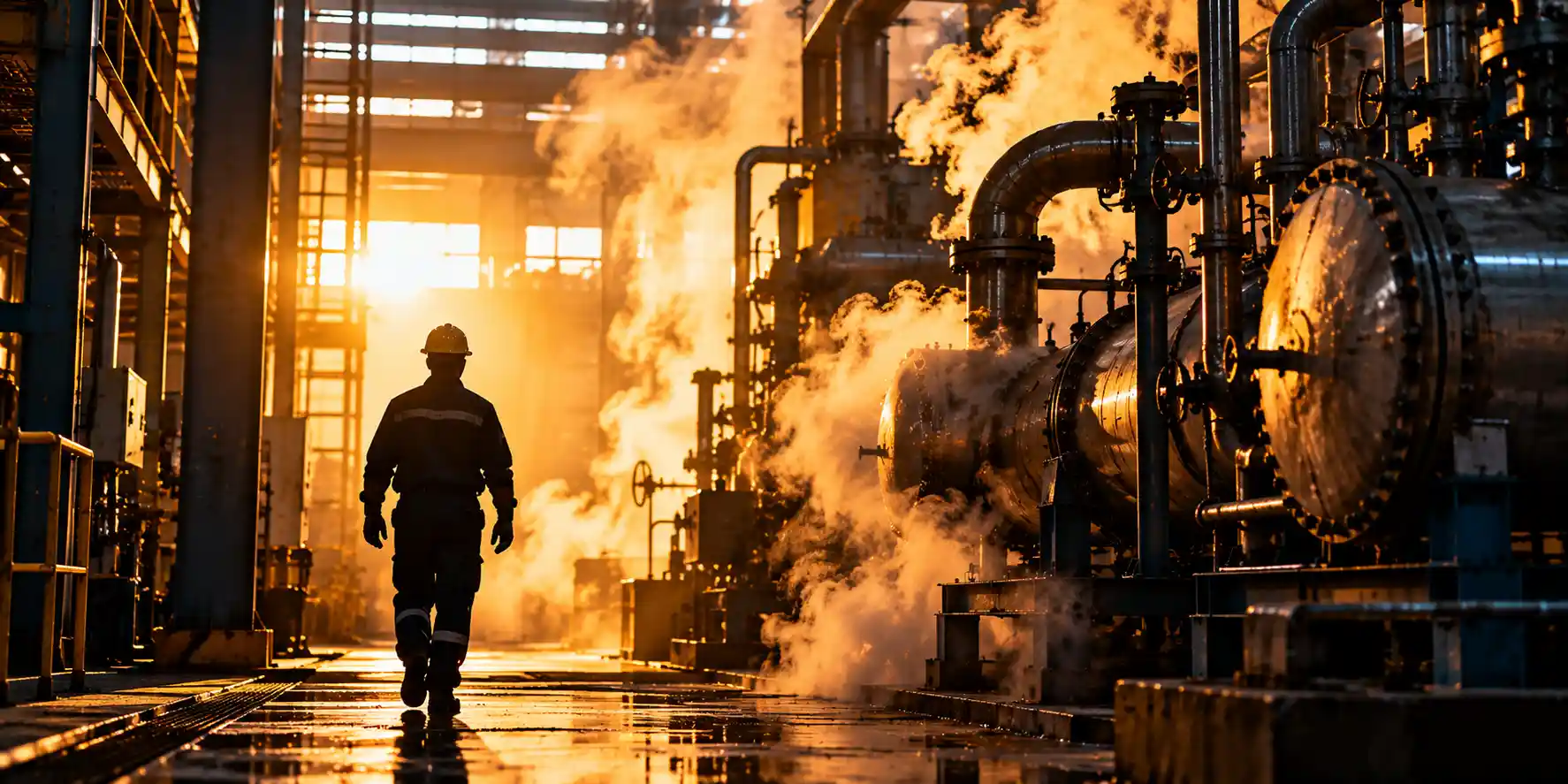
6. Human Silhouettes Against Machinery or Steam
A worker's silhouette against a bright backlit machine, or a figure partially obscured by rising steam, adds a human element to an otherwise mechanical setting — and this contrast between human scale and industrial scale is often what makes a shot genuinely memorable.
Why it works: Including a human presence — even just a silhouette — gives viewers a relatable point of reference and reminds them that real people, not just machines, drive the operation.
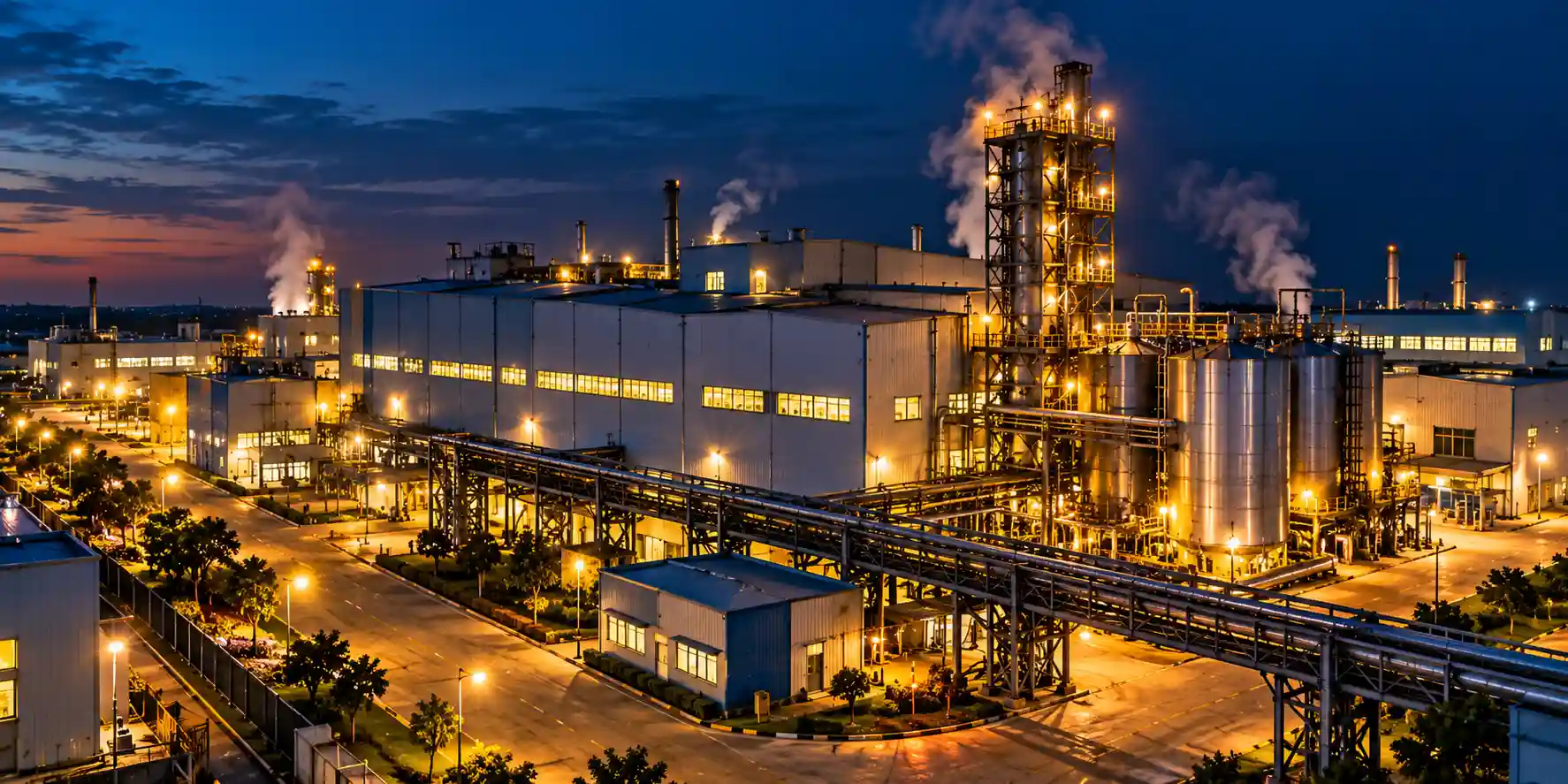
7. Night and Low-Light Facility Exteriors
A factory exterior photographed at dusk or at night, with illuminated windows, exhaust steam rising against a dark sky, and exterior lighting creating pools of warm light, has a dramatically different character than the same facility shot in flat daylight.
Factory & Industrial Photography in Mundka
Need professional visuals for your factory or manufacturing unit in Mundka? Lohar Studio provides expert industrial photography in...
Explore Factory & Industrial Photography in MundkaWhy it works: Night photography adds mood and a sense of continuous, round-the-clock operation — it suggests scale and seriousness that a standard daytime exterior shot doesn't convey as effectively.
8. Steam and Vapor Interacting With Light
Steam rising from a process, cooling tower, or exhaust vent, caught at the right angle against light, creates a soft, almost ethereal quality that contrasts beautifully with the hard, mechanical lines typically found in industrial settings.
Why it works: The softness of steam against the sharp geometry of machinery creates visual contrast, giving an image a layered, more dynamic quality than a static shot of equipment alone.

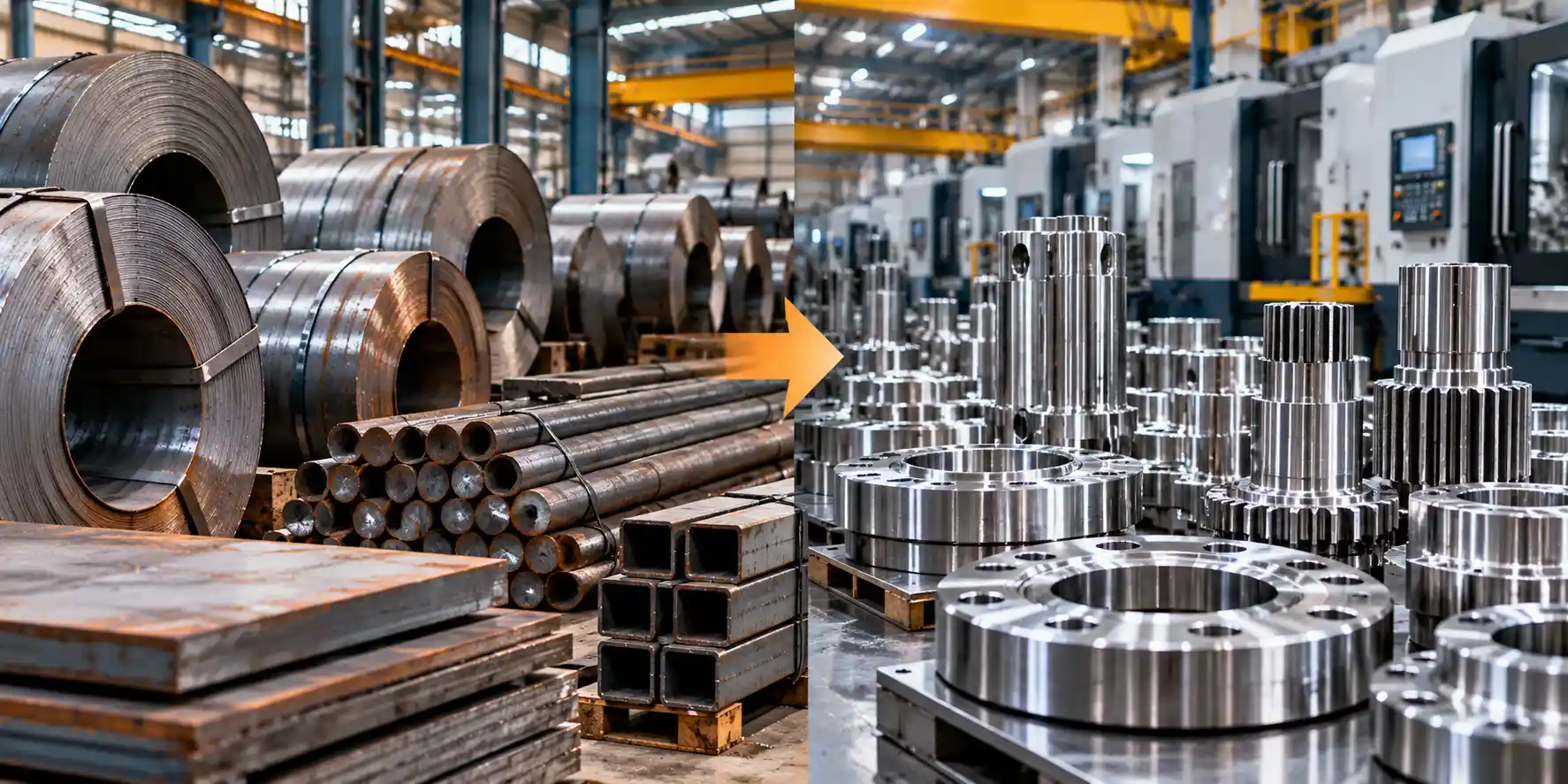
9. Color Contrast Between Raw Material and Finished Product
Placing raw, unprocessed material next to a finished product — raw metal coil beside a polished component, crude oil-adjacent material beside refined product — tells a visual story of transformation in a single frame, without needing any caption to explain it.
Why it works: This kind of before-and-after visual contrast is inherently compelling, since it communicates the entire value of a manufacturing process at a glance.
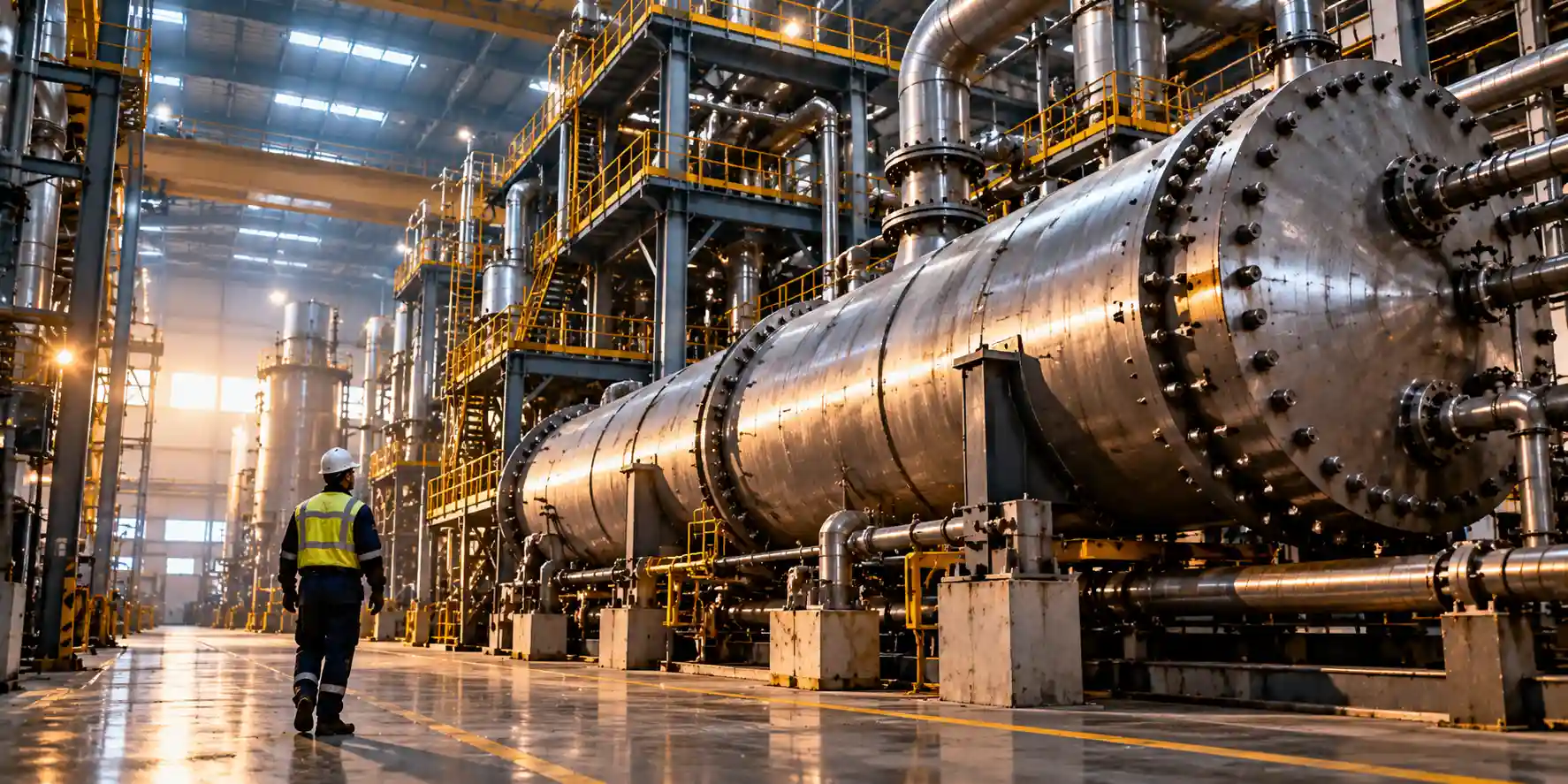
10. Scale Shots: Human Figures Against Massive Equipment
Positioning a single person near a large piece of machinery, a storage tank, or an expansive production line immediately communicates scale in a way that's difficult to convey through a caption or spec sheet alone.
Why it works: Scale is hard to judge from an equipment photo alone — a human reference point makes the size of an operation immediately, viscerally clear to anyone viewing the image.
Factory & Industrial Photography in Okhla
Looking for a professional industrial photographer in Okhla for your factory or manufacturing unit? Lohar Studio provides expert i...
Explore Factory & Industrial Photography in OkhlaWhy This Kind of Photography Matters for Manufacturers
Beyond their visual appeal, these types of shots serve a real business purpose: they turn a factory from an abstract claim ("we have advanced manufacturing capability") into something visually memorable and shareable. This kind of photography works well across:
- Website hero images and about pages, replacing generic stock photography with a genuine, distinctive visual identity
- Social media and LinkedIn content, where striking visuals consistently outperform plain product or facility shots in engagement
- Investor and press materials, where a visually compelling image can carry more impact than another page of operational statistics
- Recruitment marketing, giving prospective employees a sense of the scale and sophistication of the operation they'd be joining
How to Plan a Shoot That Captures These Shots
- Scout the facility in advance for natural light sources, interesting machinery arrangements, and areas with genuine visual character, rather than assuming any corner of the floor will work equally well
- Time the shoot around natural light conditions where relevant — certain shots (light shafts, exterior dusk photography) depend heavily on specific times of day
- Plan for both documentation and artistic shots in the same session, since a facility shoot built purely around standard, functional documentation often misses these more visually striking opportunities entirely
- Coordinate with safety and operations teams in advance, particularly for shots involving active processes like welding or molten material, where safety protocols need to be respected throughout
FAQs
1. Why should manufacturers invest in artistic, not just functional, factory photography?
Striking industrial imagery performs significantly better on websites, social media, and in press materials than standard documentation shots, helping a facility's actual capability and scale come through visually rather than just being claimed in text.
2. What equipment is needed to capture dramatic industrial shots like light shafts or steam?
These shots generally rely more on timing and positioning — catching the right light at the right moment — than specialized equipment, though a tripod and careful exposure control help significantly in low-light conditions.
3. Are drone shots useful for most manufacturing facilities?
Yes, particularly for larger facilities, since aerial views reveal scale and layout patterns that ground-level photography simply can't capture.
4. Can these kinds of shots be captured during a standard factory photoshoot?
Yes, but they need to be planned for specifically — a session focused purely on standard documentation often misses these opportunities unless they're included in the shot list from the start.
Factory & Industrial Photography in Sahibabad
Sahibabad is one of NCR's largest and most established industrial townships — a planned multi-sector manufacturing zone wher...
Explore Factory & Industrial Photography in Sahibabad5. Is it safe to photograph active processes like welding or molten metal pours?
With proper coordination with the facility's safety team and appropriate protective measures for the photography crew, yes — but this always needs to be planned and cleared in advance, not attempted casually.
6. Where should manufacturers use this type of photography?
Website hero images, social media and LinkedIn content, investor and press materials, and recruitment marketing are all strong use cases for visually striking industrial photography.
7. Does night photography require different equipment than daytime facility shots?
Yes — low-light and night photography typically requires a tripod and longer exposure settings to capture detail without introducing excessive noise or blur.
8. How is this different from standard factory photography used for buyer verification?
Standard factory photography documents equipment and process for compliance and buyer trust; this style of photography is additionally built around visual composition and storytelling, serving brand and marketing purposes.
9. Can a single photoshoot produce both documentation and artistic shots?
Yes, with proper planning — including both types of shots in the shot list from the start allows a single session to serve both functional and brand-storytelling purposes.
10. What's the most impactful type of shot for communicating a facility's scale?
Shots that include a human figure for scale reference, or aerial drone views, tend to communicate the size and capability of a facility most effectively.
Want to capture the hidden beauty inside your own facility?
[Talk to Lohar Studio] about planning a shoot that goes beyond standard documentation — we'll help you build a shot list that captures both the functional proof buyers need and the striking visuals your brand can actually use.
If you're looking to enhance your brand’s presence on leading e-commerce platforms like Amazon, Flipkart, Myntra, Meesho, TataCliQ, Snapdeal, and Ajio, Lohar Studio is your go-to destination. Our team specializes in delivering high-quality images for fashion items, footwear, automotive products, medical photography, business headshots, and corporate shoots. We serve Delhi, Noida, Gurgaon, Faridabad, and Ghaziabad, offering professional results that boost conversions and elevate your brand’s image. Get in touch today at +91 9312070458 or visit us at A1/58, 1st Floor, Sector 6 Rd, Pocket 1, Sector 6A, Rohini, Delhi, 110085, to schedule your next shoot!

Written from hands-on experience shooting for 4000+ brands - practical, field-tested photography advice, not just theory.