

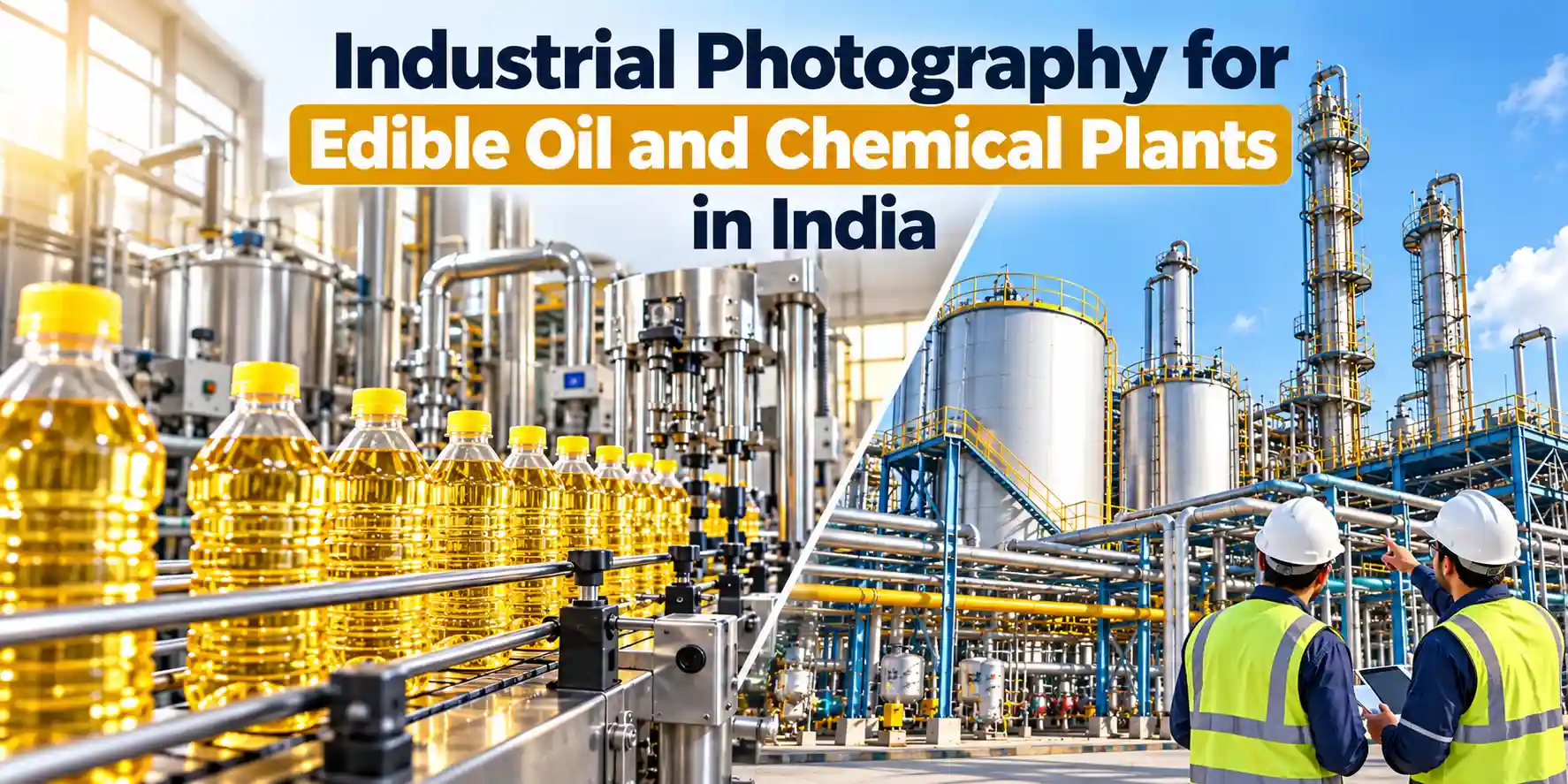
Photographing edible oil and chemical plants requires more than standard photography skills — it demands planning around safety compliance (PESO and OISD regulations for hazardous facilities, FSSAI and BIS standards for edible oil), hazardous-area access restrictions, and often, confidentiality around proprietary processes. The resulting images serve a dual purpose: building trust with B2B and export buyers who want visual proof of a clean, compliant, professionally run facility, and supporting documentation for certifications, audits, and investor materials. Getting the access, safety clearance, and shot planning right before the shoot is just as important as the photography itself.
If you operate or manage an edible oil or chemical plant in India, here's what a professional photography project for your facility actually involves.
Why Edible Oil and Chemical Plant Photography Needs Specialized Handling
Unlike photographing a typical manufacturing facility, edible oil and chemical plants carry genuine safety and regulatory considerations that shape every part of the shoot — from what equipment can be brought in, to which areas can even be accessed. India's chemical sector alone faces hundreds of distinct compliance requirements spanning safety, environmental, and worker protection categories, and edible oil refining carries its own layer of food-safety-specific standards. A photography project in this environment has to work within that framework, not around it.
This is also why generic photography experience doesn't always translate well to this sector — a photographer needs to understand basic hazardous-area protocols, appropriate PPE use, and how to work efficiently without disrupting active production or compromising safety procedures.
Safety and Compliance Considerations Before Any Shoot
PESO and hazardous-area classification. In India, the Petroleum and Explosives Safety Organisation (PESO) regulates safety at facilities handling petroleum, petrochemicals, and related hazardous processes. Areas classified as hazardous zones (where flammable vapors or gases may be present) often have restrictions on what electronic equipment — including camera gear — can be brought in, since standard electronics can pose an ignition risk in these specific zones.
OISD standards for fire and process safety. Facilities following OISD (Oil Industry Safety Directorate) standards have specific fire protection, storage, and safety infrastructure that photography teams need to work around respectfully — not obstructing emergency access points or safety equipment during a shoot.
PPE compliance during the shoot itself. Photography teams entering an active plant floor need to follow the same PPE requirements as plant staff — safety glasses, appropriate footwear, and any facility-specific protective gear — both for genuine safety and to avoid creating a compliance inconsistency in the very photos meant to demonstrate good safety practice.
FSSAI and BIS standards for edible oil facilities. Edible oil refineries operate under food safety licensing requirements, which often extend to hygiene standards in how processing and packaging areas are maintained and presented — relevant both to the actual shoot logistics and to what the resulting images should visually communicate.

Industrial Photography in Delhi
Thousands of manufacturing companies across Delhi NCR still use dark, blurry mobile phone images on their websites, brochures, and...
Explore Industrial Photography in DelhiWhat to Photograph in an Edible Oil Plant
- The refining process itself — degumming, bleaching, deodorization stages — showing the technical sophistication of the operation, particularly valuable for buyers evaluating production capability
- Stainless steel equipment and clean processing areas, which visually reinforce hygiene standards — a genuinely important trust signal in food-grade manufacturing
- Storage tanks and bulk handling infrastructure, relevant to buyers assessing capacity and storage capability
- Filling, bottling, and packaging lines, showing the finished product journey from bulk processing to retail-ready packaging
- Quality control and testing stations, demonstrating the facility's approach to consistency and food safety compliance
- Visible certifications and compliance signage (FSSAI license, ISO certification, BIS marking) photographed clearly, tying documentation to visual proof
What to Photograph in a Chemical Plant
- Reactors and primary processing equipment, photographed to convey scale and technical capability without necessarily exposing proprietary process details
- Storage tanks and containment infrastructure, relevant to both capability assessment and safety compliance demonstration
- Safety infrastructure — fire suppression systems, emergency response equipment, clearly marked hazardous zones — which can serve as genuine evidence of safety investment for buyers, auditors, and insurers
- PPE compliance in action, showing staff following proper safety protocols, which reinforces operational discipline
- Hazardous area classification signage and markings, useful for compliance documentation and safety audits
- General facility and exterior shots, establishing scale and location for buyer-facing and investor materials
Confidentiality and IP Protection During Industrial Shoots
Chemical plants in particular often involve proprietary processes, formulations, or equipment configurations that operators understandably don't want fully visible in public-facing photography. Planning for this before the shoot avoids problems afterward:
- Identify restricted or sensitive areas in advance, agreeing with the photography team on what can and cannot be captured, rather than making this decision after images are already taken
- Consider framing and angle choices that convey scale and capability without exposing specific proprietary equipment configurations or process details
- Review images before external use, particularly for any shots near control panels, formulation areas, or custom equipment that might inadvertently reveal confidential information
- Use non-disclosure agreements with the photography team where appropriate, especially for facilities with significant proprietary process investment
Planning Access and Safety Clearance Before the Shoot
- Confirm hazardous zone classifications in advance, so the photography team knows which areas require special equipment considerations or are off-limits entirely
- Coordinate shoot timing with plant operations, minimizing disruption to active production and avoiding safety-sensitive process windows
- Brief the photography team on facility-specific safety protocols before arrival, not as an afterthought once on-site
- Designate an internal safety or compliance contact to accompany the photography team throughout the shoot, ensuring both safety compliance and appropriate access decisions are made in real time
Common Mistakes When Photographing Edible Oil and Chemical Facilities
Factory & Industrial Photography in Faridabad
Faridabad is not a new industrial city — it is Delhi NCR's oldest and most deeply established heavy manufacturing hub, built...
Explore Factory & Industrial Photography in Faridabad- Skipping safety clearance planning, leading to access restrictions discovered mid-shoot that disrupt the planned shot list
- Bringing standard, non-rated equipment into hazardous-classified zones, creating genuine safety risk rather than just a compliance oversight
- Capturing proprietary process details without considering confidentiality, creating problems when images are later used publicly
- Focusing only on equipment and missing compliance/certification documentation shots, losing an opportunity to pair visual proof with your actual regulatory standing
- Not accounting for hygiene presentation in edible oil facilities, where cluttered or visibly unclean areas undermine the food-safety trust signal the photography is meant to support
Building Buyer and Regulatory Trust Through Photography
For both edible oil and chemical plant operators, photography increasingly plays the same role it does across manufacturing more broadly: giving buyers, auditors, and partners visual proof of capability and compliance they can't otherwise verify remotely. A buyer evaluating a potential edible oil supplier wants to see clean, professionally run processing and packaging lines. A buyer or investor evaluating a chemical plant wants to see genuine safety infrastructure and process discipline, not just a claim of compliance on a company profile.
This is particularly relevant for facilities pursuing export markets or new institutional buyers, where the facility itself often can't be visited in person before a sourcing or investment decision is made — photography becomes a meaningful part of that trust-building process, alongside certifications and documentation.
What to Look for in an Industrial Photography Studio for This Sector
- Experience working within hazardous-area protocols and PPE requirements, not just general photography
- A clear process for discussing confidentiality and restricted areas before the shoot begins
- Willingness to coordinate directly with your safety or compliance team on access and timing
- An understanding of what buyers and auditors in this specific sector actually look for in facility photography — hygiene standards for edible oil, safety infrastructure for chemical plants
FAQs About Edible Oil and Chemical Plant Photography Services
1. What safety regulations apply to photographing chemical plants in India?
Facilities handling petroleum or hazardous chemicals often fall under PESO regulations and OISD safety standards, which can restrict what equipment is allowed in classified hazardous zones.
Factory & Industrial Photography in Gurgaon
Gurgaon (Gurugram) is unlike any other industrial area in NCR. It is the region's corporate-industrial city, where auto-ancillary...
Explore Factory & Industrial Photography in Gurgaon2. Do edible oil refineries have specific compliance standards relevant to photography?
Yes — FSSAI and BIS licensing requirements shape hygiene and operational standards, which both affect shoot logistics and what the resulting images should visually demonstrate.
3. Can standard camera equipment be used in all areas of a chemical plant?
Not necessarily — areas classified as hazardous zones (where flammable vapors may be present) can have restrictions on standard electronic equipment due to ignition risk, requiring advance planning with the facility's safety team.
4. How should confidentiality be handled during a chemical plant photoshoot?
Identify sensitive or proprietary areas in advance, agree on restricted zones with the photography team, and review images before external use to avoid inadvertently exposing proprietary process details.
5. What should edible oil plant photography emphasize?
Clean, stainless steel processing equipment, visible hygiene standards, storage and packaging infrastructure, and clearly photographed compliance certifications like FSSAI licensing.
6. What should chemical plant photography emphasize?
Reactors and processing equipment (framed to avoid exposing proprietary details), storage and containment infrastructure, safety systems, and PPE compliance in action.
Factory & Industrial Photography in Noida
Noida is not just another Delhi-adjacent industrial area — it is a planned city with a distinct industrial identity built ar...
Explore Factory & Industrial Photography in Noida7. Why does photography matter for export-focused edible oil or chemical manufacturers?
International buyers often can't visit a facility in person before a sourcing decision, so professional photography serves as visual proof of capability and compliance standards.
8. Should PPE be worn by the photography team during the shoot?
Yes — photography teams need to follow the same safety protocols as plant staff, both for genuine safety and to avoid an inconsistency with the safety standards the photos are meant to demonstrate.
9. How much does industrial photography typically cost for these types of facilities?
On-location industrial photography is generally priced as a day rate, often ranging from roughly ₹14,999 to ₹59,999 depending on location, scope, and setup complexity.
10. What's the biggest planning mistake companies make before an industrial plant shoot?
Not confirming hazardous zone classifications and safety clearance in advance, which can lead to access restrictions or equipment issues discovered mid-shoot.
Planning a photography project for your edible oil or chemical facility?
[Talk to Lohar Studio] about your plant's safety classifications and access requirements — on-location industrial photography is typically priced as a day rate (₹14,999–₹59,999, depending on scope), planned around your facility's specific safety and confidentiality needs.
If you're looking to enhance your brand’s presence on leading e-commerce platforms like Amazon, Flipkart, Myntra, Meesho, TataCliQ, Snapdeal, and Ajio, Lohar Studio is your go-to destination. Our team specializes in delivering high-quality images for fashion items, footwear, automotive products, medical photography, business headshots, and corporate shoots. We serve Delhi, Noida, Gurgaon, Faridabad, and Ghaziabad, offering professional results that boost conversions and elevate your brand’s image. Get in touch today at +91 9312070458 or visit us at A1/58, 1st Floor, Sector 6 Rd, Pocket 1, Sector 6A, Rohini, Delhi, 110085, to schedule your next shoot!

Written from hands-on experience shooting for 4000+ brands - practical, field-tested photography advice, not just theory.