

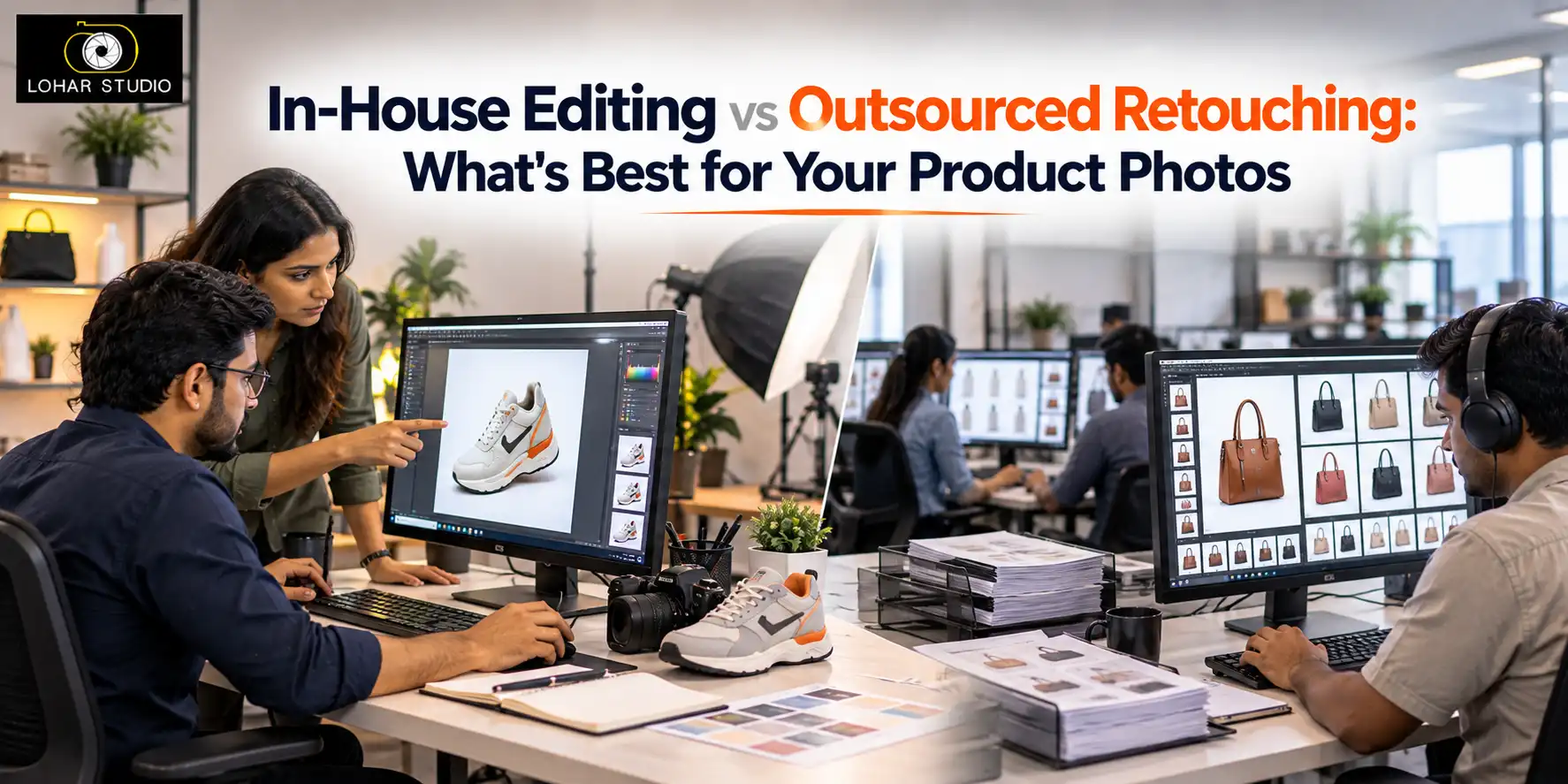
Often comes down to image volume, editing requirements, turnaround time, and the cost of maintaining an internal workflow. For a small catalog with highly specific creative needs, in-house editing gives you full control and immediate feedback. Still, it carries fixed costs — salary, software, hardware — regardless of how many images you actually process in a given month. Outsourced retouching shifts to a variable, per-image cost that scales with your actual volume, typically offering a lower effective cost once you're editing more than a small catalog's worth of images monthly. Below a certain volume, in-house tends to win on control; above it, outsourcing usually wins on cost and turnaround.
If you're deciding how to handle post-production for your product photos, here's how to think through it properly.
The Real Cost Difference: Fixed vs Variable
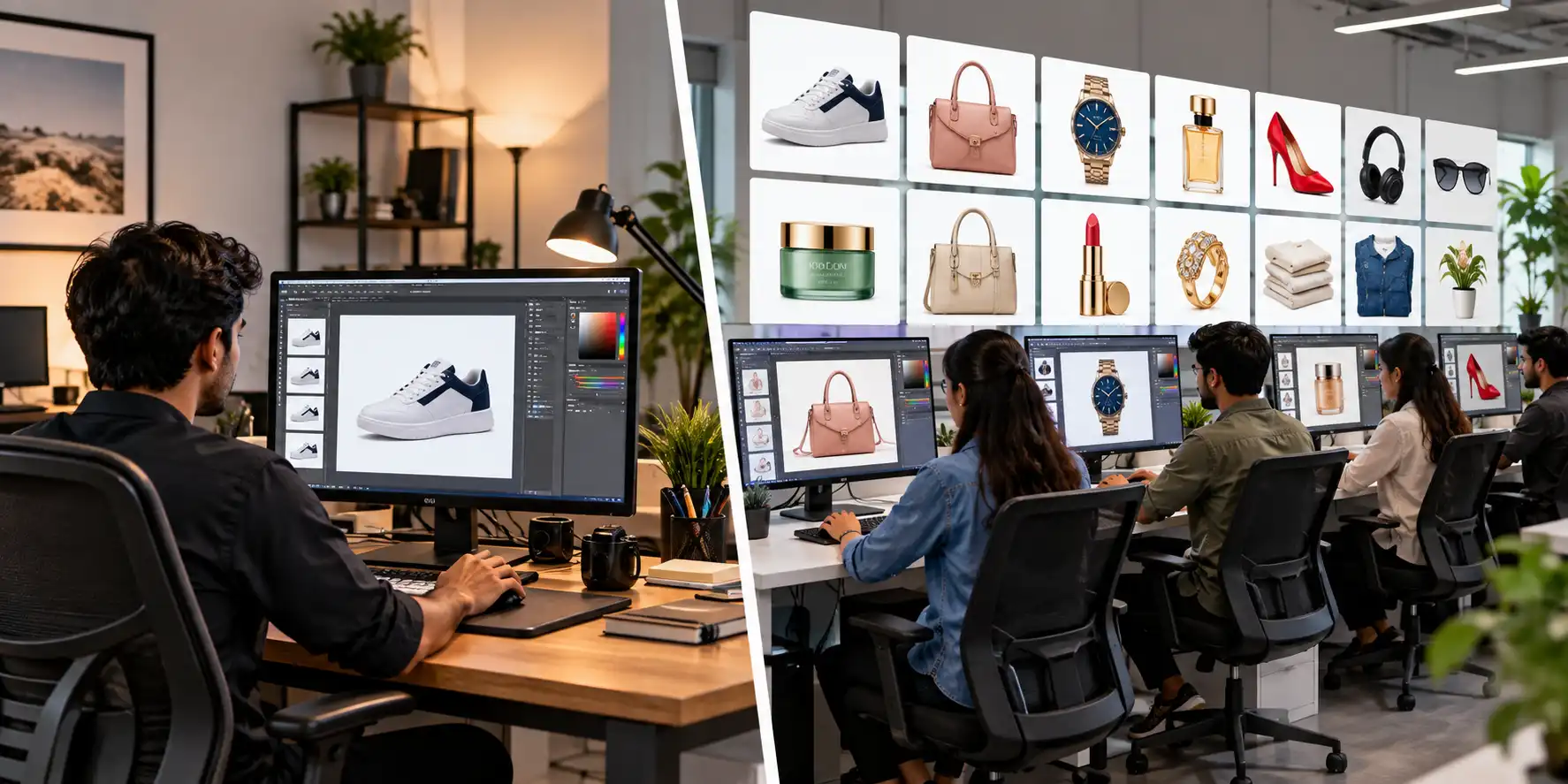
In-house editing is a fixed cost. You're paying for a salary (or your own time), software licenses, and hardware whether you edit 50 images or 5,000 in a given month. This cost doesn't flex with your actual workload — a quiet month still costs the same as a busy one.
Outsourced retouching is a variable cost. You typically pay per image or by volume tier, which means your editing spend tracks much more closely with your actual output. A slow month costs less; a high-volume launch month costs more, but scales predictably.
This distinction matters more than the headline per-image price, because the fixed-cost structure of in-house editing means its effective cost per image drops as volume increases — but only if you have enough volume to justify the fixed overhead in the first place. Below that threshold, you're paying for capacity you're not fully using.
When In-House Editing Makes Sense
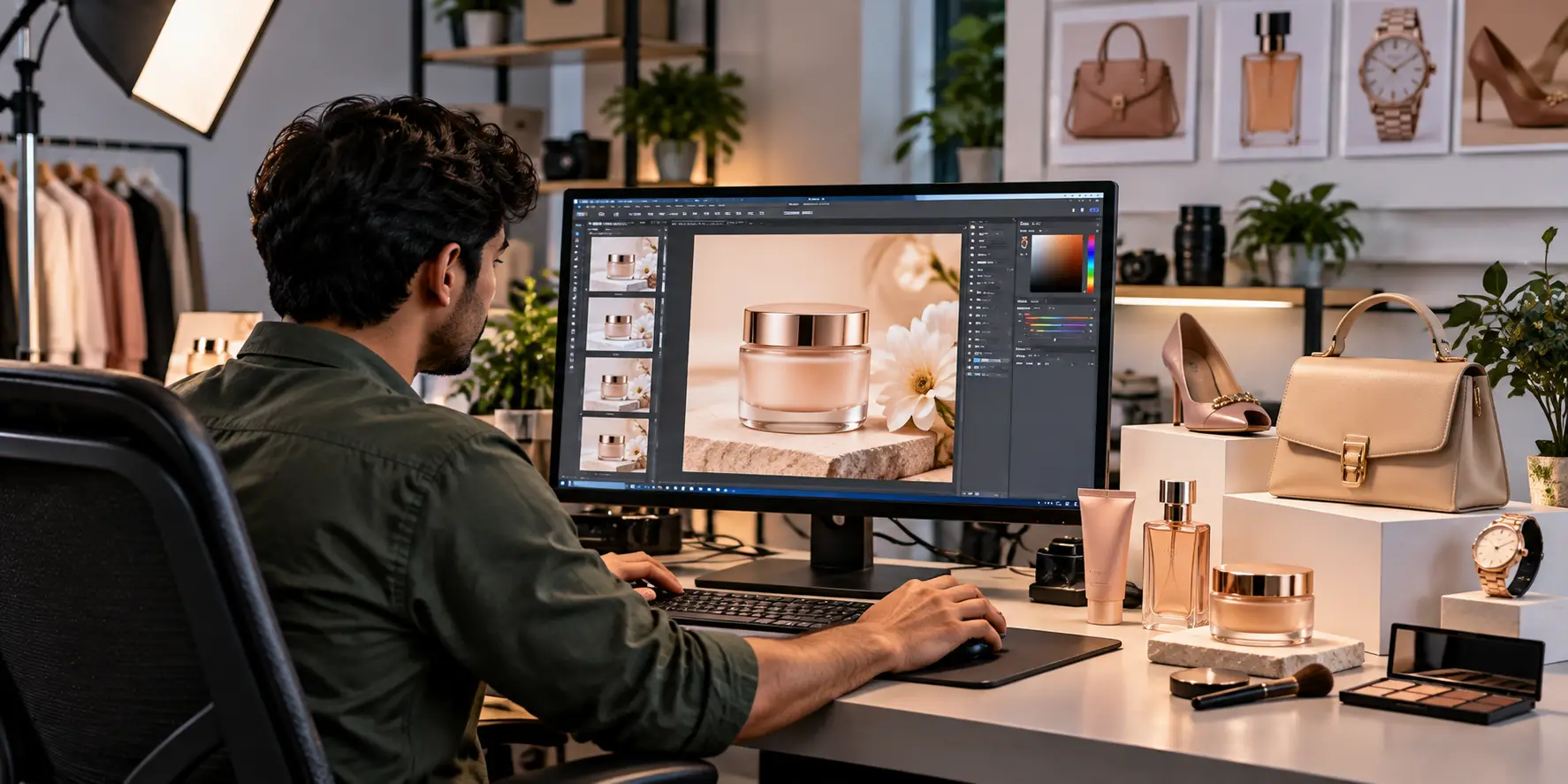
- Small catalog, high creative complexity. If your products need highly specific, brand-particular retouching decisions that are hard to brief out clearly, keeping that work in-house preserves control over the final look.
- Low, steady volume. If you're editing a modest, consistent number of images each month, the fixed cost of in-house editing may already be justified by your regular workload.
- Immediate feedback and iteration matter. When you need to see a result and adjust direction instantly — rather than waiting on a turnaround cycle — having an editor in the same room (or workflow) has real value.
- Your hero images are core to your brand identity. For the handful of flagship images that define how your brand looks, many businesses choose to keep that specific work in-house even while outsourcing the bulk of standard catalog editing.
When Outsourced Retouching Makes Sense
Amazon Product Photography in Delhi
Sanjay Babu Lohar, founder of Lohar Studio Delhi, has been photographing products for Amazon sellers since 2009 — over 15 ye...
Explore Amazon Product Photography in Delhi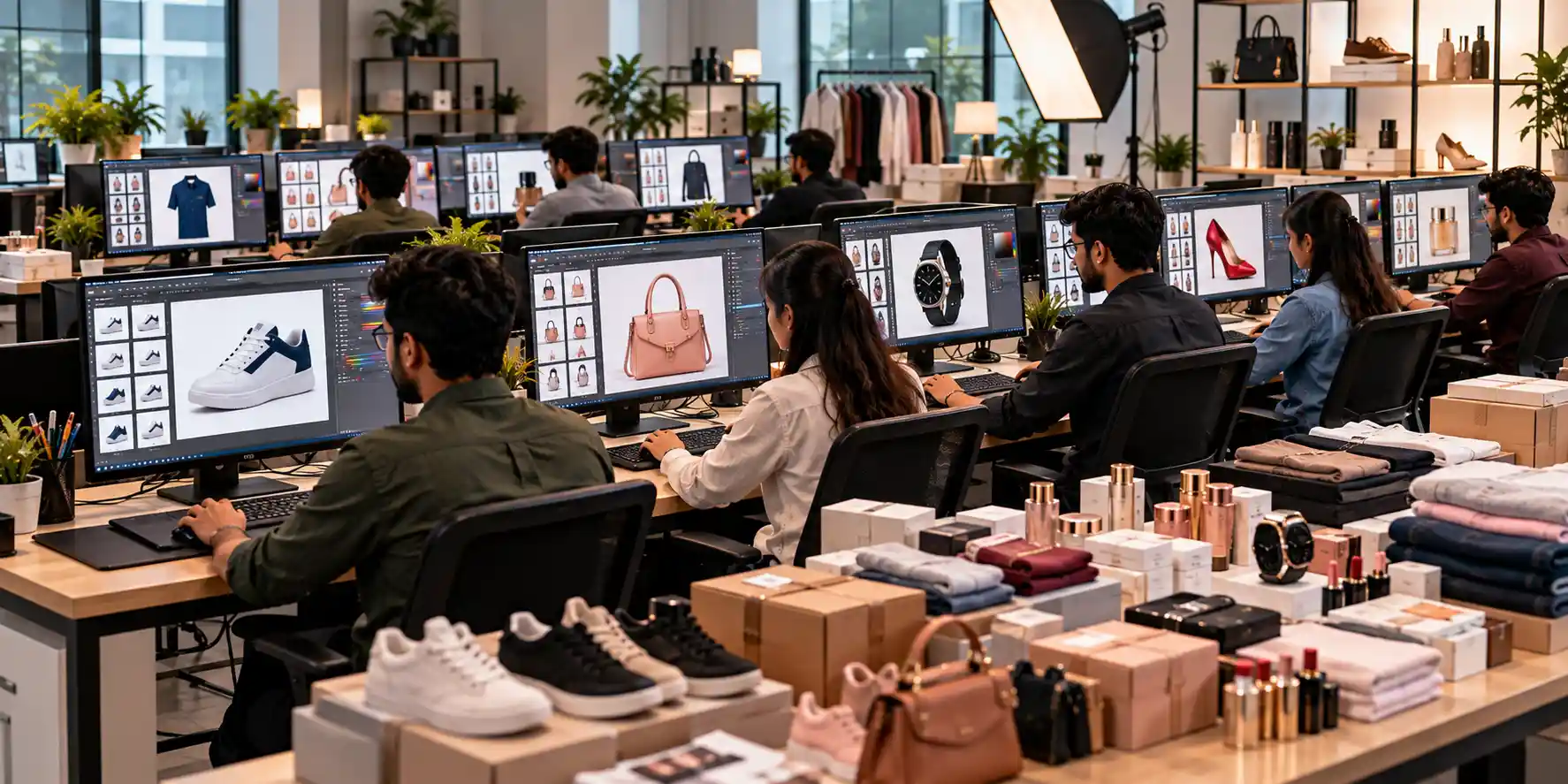
- Growing or large SKU volume. Once your monthly image count exceeds what a small internal team can efficiently handle, outsourcing typically produces a lower effective cost per image, since you're not carrying fixed overhead for unused capacity.
- Editing is eating into time better spent elsewhere. If product photography editing is consuming hours that could go toward higher-value work, the opportunity cost of doing it yourself often exceeds what outsourcing would cost.
- Seasonal or fluctuating demand. Outsourcing partners can scale up during peak periods (launches, sales events) without you needing to hire and then underutilize a larger permanent team.
- Faster turnaround is a priority. Dedicated outsourced editing teams often run structured pipelines that process a standard batch faster than a single in-house editor working through images one at a time.
Quality Control: Who's Actually Responsible
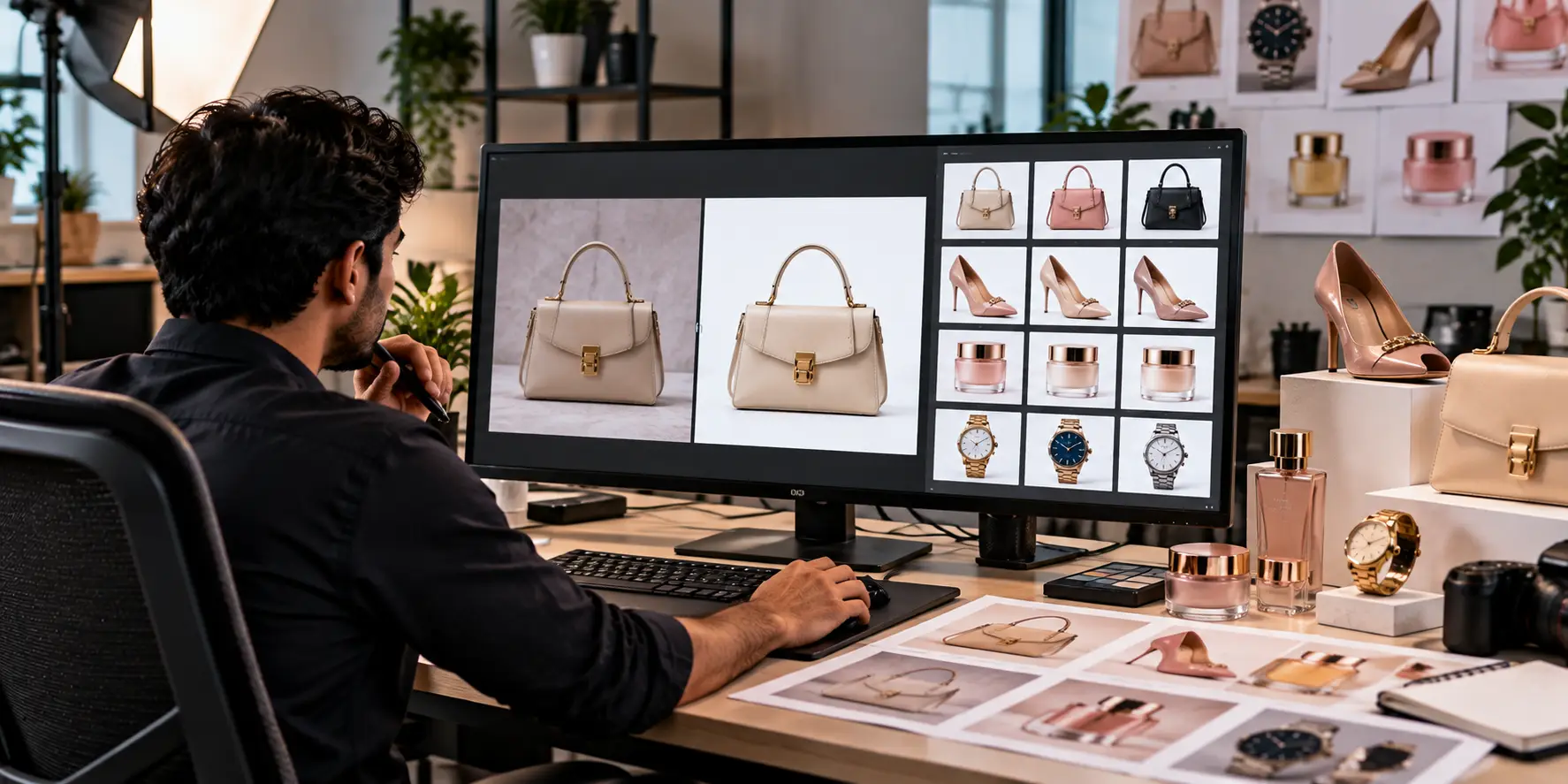
With in-house editing, you build and own the quality control process yourself — every standard, every check, every correction is something you define and enforce internally. This gives you full control, but also means the consistency of your output depends entirely on your own internal discipline and training.
With outsourced retouching, a structured provider typically comes with its own quality control system already in place — but this shifts a meaningful amount of trust to that provider. The key practical difference: outsourcing works well when you give a clear, detailed brief upfront, since the provider's quality control is built around matching your stated standard, not independently guessing your brand's preferences.
Turnaround Time Comparison
In-house editing turnaround typically depends on your team's current workload and capacity — a single editor working through a large batch sequentially can take several days for a sizable catalog. Dedicated outsourced editing providers, by contrast, often run editing as a structured, parallel pipeline, which commonly delivers a standard batch meaningfully faster than one person working through the same volume alone.
For time-sensitive launches or large catalog refreshes, this turnaround difference is often the deciding factor, independent of cost considerations.
Hidden Costs Most Brands Forget to Count
When comparing options, it's easy to focus only on the obvious numbers — salary versus per-image rate — and miss costs that are just as real:
Fashion and Model Photoshoot for Amazon
Lohar Studio provides professional Amazon fashion & model photography specifically for sellers listing on Amazon India. If you...
Explore Fashion and Model Photoshoot for Amazon- Software licensing and hardware for in-house editing, including the workstation specs needed for efficient retouching work
- Hiring, training, and management time for an in-house editor, which isn't a one-time cost but an ongoing investment
- Coverage gaps — sick days, leave, turnover — that can stall your editing pipeline entirely when you depend on a single in-house resource
- Your own time, if you or a team member is doing editing alongside other responsibilities rather than it being a dedicated role — this opportunity cost is real even when no invoice reflects it
Consistency and Brand Style
For a growing catalog, visual consistency across every image matters as much as the quality of any single photo. In-house editing can maintain strong consistency if you have a stable, well-trained team — but that consistency is only as good as your internal documentation and process. Outsourced providers, when given a clear, detailed brief and reference examples upfront, can maintain consistency at scale through their own structured process — though this depends heavily on briefing quality and, ideally, working with the same provider or team consistently rather than switching frequently.
Data Security and Confidentiality Considerations
If you're outsourcing editing, particularly for unreleased products or sensitive campaign material, it's worth confirming how the provider handles your files — data security and confidentiality are commonly cited as the main risk factor in outsourcing arrangements. Look for:
- A clear confidentiality agreement or NDA, especially for pre-launch products
- Defined data handling and storage practices for your original files
- A reliable, named point of contact rather than an anonymous, rotating editing pool
A Simple Volume-Based Decision Framework
- Low, steady volume with high creative complexity → in-house editing likely makes more sense
- Growing or fluctuating volume → outsourcing typically offers better cost efficiency and scalability
- Very high, consistent volume (large established catalogs) → a hybrid or dedicated in-house team can become cost-competitive again, since the fixed cost gets spread across enough images to lower the effective per-image rate
- Time-sensitive launches → outsourcing's typically faster turnaround often outweighs a marginal cost difference
Can You Combine Both Approaches?
Yes — and many growing ecommerce brands end up doing exactly this. A common hybrid approach: keep your most important hero images and anything requiring close creative control in-house, while outsourcing the bulk, standard catalog editing (background removal, color correction, basic retouching) where consistency and volume matter more than individual creative judgment. This captures the cost and turnaround benefits of outsourcing for routine work, while preserving control where it matters most.
Top 10 FAQs About In-House Editing vs Outsourced Retouching
Jewellery Model Photography
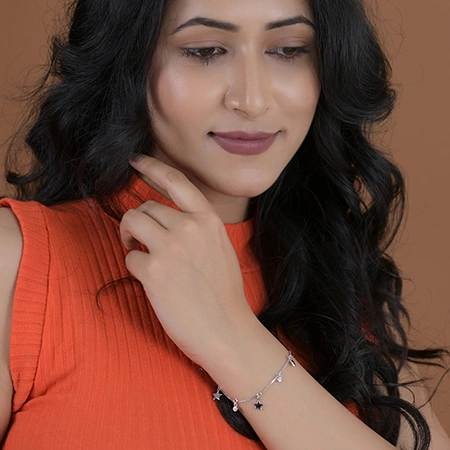
Lohar Studio provides professional jewellery model photography — jewellery shot worn on a live model, not flat-lay or produc...
Explore Jewellery Model Photography1. Is outsourced photo editing cheaper than in-house for most ecommerce brands?
For most businesses below a high-volume threshold, yes — outsourcing's variable, per-image cost typically comes out lower than the full fixed cost (salary, software, hardware) of an in-house editor.
2. When does in-house editing make more financial sense than outsourcing?
When your monthly image volume is high and consistent enough that the fixed cost of an in-house editor gets fully utilized, or when your editing needs require close, constant creative control.
3. Does outsourced retouching take longer than in-house editing?
Usually the opposite — dedicated outsourced providers often run editing as a parallel pipeline, which typically delivers a standard batch faster than a single in-house editor working sequentially.
4. What's the highest hidden cost of in-house editing?
Beyond salary, the hidden costs include software and hardware overhead, hiring and training time, and coverage gaps during leave or turnover that can stall your editing pipeline.
5. Is data security a real concern when outsourcing photo editing?
It's commonly cited as the main risk — confirming confidentiality agreements and data handling practices with your provider is worth doing, especially for unreleased products.
6. Can I outsource some editing while keeping other work in-house?
Eyewear & Sunglasses Photography
If you are looking for sharp, high-quality, and marketplace-ready visuals for your eyewear brand, Lohar Studio offers professional...
Explore Eyewear & Sunglasses PhotographyYes — a common hybrid approach keeps hero or brand-critical images in-house while outsourcing standard, high-volume catalog editing.
7. Does outsourcing photo editing reduce quality and brand consistency?
Not necessarily — with a clear, detailed brief and reference examples, outsourced providers can maintain strong consistency, though this depends heavily on briefing quality and working with a consistent provider.
8. What volume of images makes outsourcing worthwhile?
For many ecommerce businesses, outsourcing is more cost-effective when image volume isn't high enough to justify the fixed costs of an in-house editor, including salary, software, hardware, training, and ongoing management.
9. Does seasonal demand affect the in-house versus outsourcing decision?
Yes — outsourcing partners can scale up during peak periods without you needing to hire and then underutilize extra staff during slower months.
10. Should a small, early-stage brand use in-house or outsourced editing?
Outsourcing is often more practical for small or early-stage brands, since it avoids the upfront fixed costs of hiring and equipping an in-house editor before volume justifies it.
Not sure which approach fits your catalog volume?
[Contact Lohar Studio] about your monthly image volume and editing needs — our retouching is built into our photography process, so you get consistent, professional editing without managing it separately in-house.
If you're looking to enhance your brand’s presence on leading e-commerce platforms like Amazon, Flipkart, Myntra, Meesho, TataCliQ, Snapdeal, and Ajio, Lohar Studio is your go-to destination. Our team specializes in delivering high-quality images for fashion items, footwear, automotive products, medical photography, business headshots, and corporate shoots. We serve Delhi, Noida, Gurgaon, Faridabad, and Ghaziabad, offering professional results that boost conversions and elevate your brand’s image. Get in touch today at +91 9312070458 or visit us at A1/58, 1st Floor, Sector 6 Rd, Pocket 1, Sector 6A, Rohini, Delhi, 110085, to schedule your next shoot!

Written from hands-on experience shooting for 4000+ brands - practical, field-tested photography advice, not just theory.