


Diwali is India's biggest home decor buying season. Shoppers start browsing weeks ahead, and the sellers who win are the ones whose listings already look ready. This guide explains how to plan Diwali home decor product photography, which shots to capture for each product type, and how to avoid mistakes that cost festive sales.
Why Should You Start Home Decor Product Photography Before Diwali?
Start four to six weeks before Diwali. Festive demand peaks quickly, marketplaces take time to approve listings, and photo reshoots, retouching, and ad creatives all need buffer days. Early, finished listings also collect reviews and ranking signals before the rush.
Here is what an early start gives you:
- Time to fix problems. Reflections on brass, colour mismatches, and wrong scale are common, and reshoots take days to arrange.
- Time for approvals. Marketplace image checks and A+ content reviews can send listings back.
- Ad-ready creatives. Your Instagram, Meta, and Google Shopping campaigns need images in different ratios.
- Ranking momentum. Listings that go live early gather clicks, saves, and reviews before competition peaks.
- Lower costs. Studio slots fill up in the festive run-up, so booking early also means better scheduling and fewer rushed jobs.
Home decor is a highly visual market. A product on a shelf can be touched; online, your photograph has to do all of that work. Shoppers want to understand size, finish, texture, and how a piece will look in their own room.
What Makes Home Decor Product Photography Different From Other Product Photography?
Short answer: Home decor is bought for how it makes a room feel, so buyers need both a clean product view and a styled scene. Textures, reflective finishes, and scale are harder to show than with a simple packaged product.
Most ecommerce items need only a clean packshot. Decor needs more:
- Context. Buyers want to picture the piece on their console, wall, or dining table.
- Scale. A vase that looks large online and arrives small causes returns. Showing it next to everyday objects or in a room fixes this.
- Texture and finish. Hand-painted ceramics, jute, brass, resin, and glass all react to light differently.
- Mood. Warm diyas, rich fabrics, and festive colour palettes sell the feeling of the season.
The usual best practices from the top-ranking guides still apply: style the space, not just the product, use soft natural-looking light, include close-up detail shots, and keep a consistent look across your whole collection.
What Shots Do You Need for Each Diwali Home Decor Listing?
Short answer: Plan at least six to eight images per listing: a clean hero shot, an alternate angle, a detail close-up, a scale shot, a lifestyle scene, and, where relevant, an in-use or lit shot, a packaging or gifting shot, and an infographic.
|
Shot |
Purpose |
Notes |
|---|---|---|
|
Hero packshot |
Main marketplace image |
Clean white background, full product in frame, true colour |
|
Angle shots |
Show depth and back or side |
Two or three angles |
|
Detail close-up |
Prove quality |
Texture, stitching, paintwork, engraving |
|
Scale shot |
Reduce returns |
Product beside a hand, or common items |
|
Lifestyle scene |
Create desire |
Styled shelf, table or wall in a festive setting |
|
In-use or lit shot |
Show function |
Lit diya, glowing lantern, fairy lights |
|
Set or group shot |
Sell bundles |
Gift hampers and multi-piece sets |
|
Packaging shot |
Gifting appeal |
Box, wrap and unboxing look |
|
Infographic |
Information at a glance |
Dimensions, material, care |
How Do You Photograph Different Types of Home Decor?
Every category behaves differently under light. Here is how to approach the main Diwali decor products.
1. Diyas, Candles and Tealight Holders
Handicraft Photography for Amazon
At Lohar Studio, we specialize in handicraft photography for Amazon, helping artisans and sellers showcase wooden, pottery, textil...
Explore Handicraft Photography for Amazon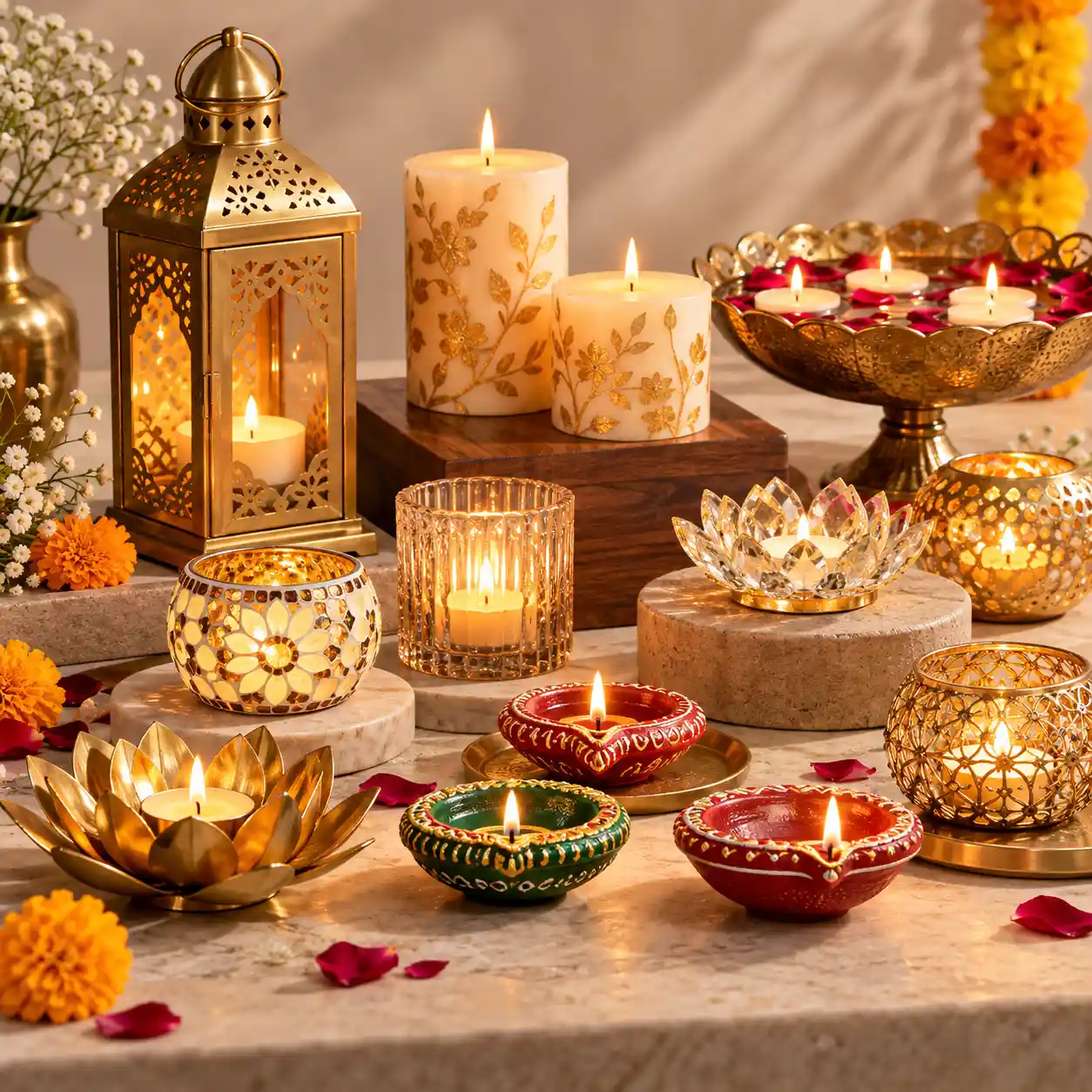
Capture them unlit for the clean listing image and lit for the festive mood. For lit shots, balance the flame with a soft fill light so the flame does not blow out and the holder does not go dark. Shoot candles at a safe distance from fabric, and use a darker, warmer background for the lit version.
2. Lanterns and String Lights
Shoot them switched off for a clean view, then switched on, ideally at dusk-like light levels to show the glow. Use a longer exposure on a tripod so the light looks natural rather than blown out. Show the scale against a balcony railing or doorway.
3. Brass, Copper and Metal Decor
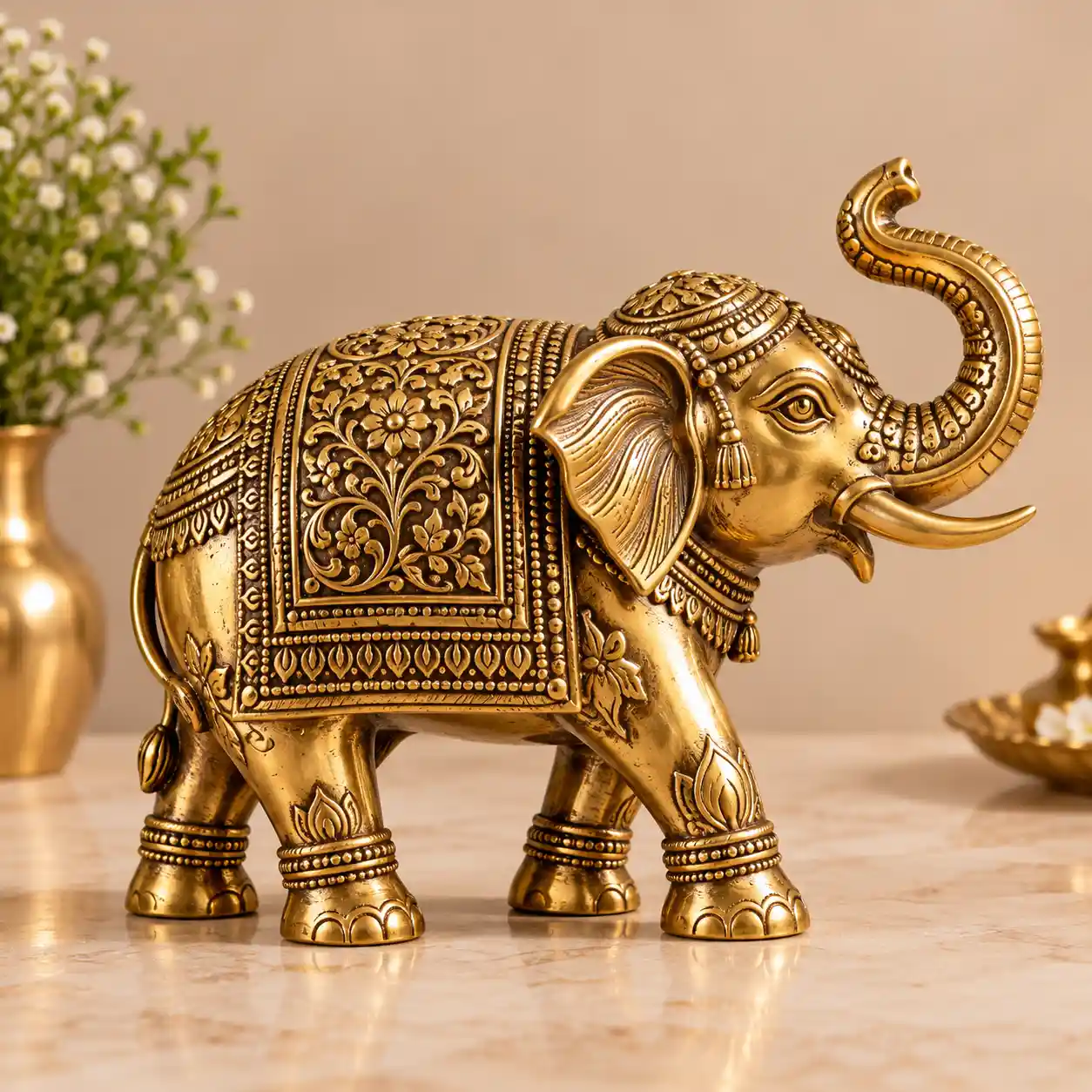
Metal acts like a mirror. Use large, soft light sources, diffusion panels, and black or white cards to control reflections. Photographers often shoot several frames and combine them, which keeps shine without distracting hotspots.
4. Glass and Crystal
Glass needs controlled edges. Backlight with a soft source so the outline stays crisp, and use black flags to define the edges. Keep every fingerprint off the surface, as dust and smudges show strongly.
5. Ceramics, Vases and Planters
Use side light to bring out glaze and texture. Add real or faux stems in vases, since an empty vase often looks less appealing. Place them next to a book, a tray, or a small plant to give scale.
6. Wall Art, Frames and Mirrors
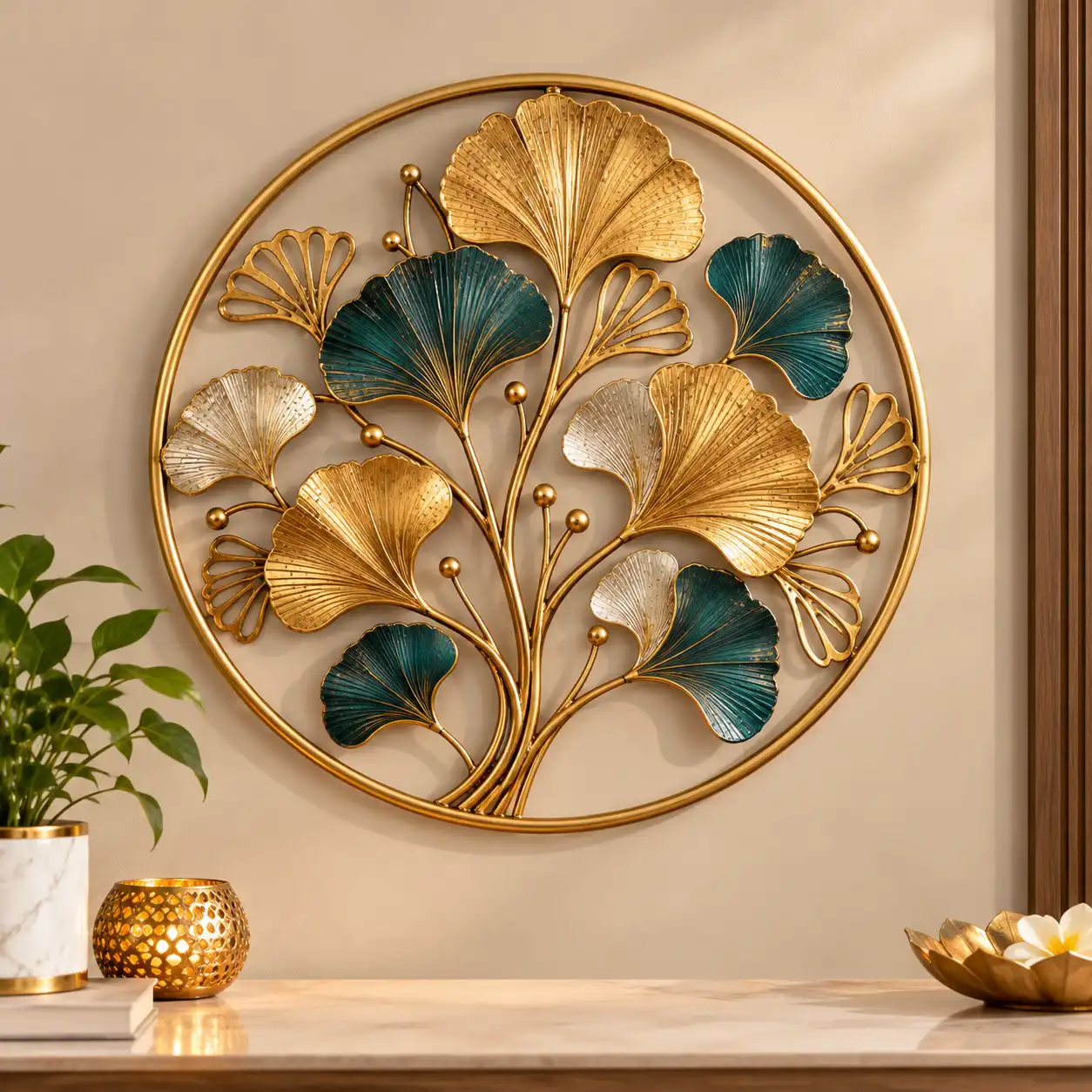
Shoot flat-on for the marketplace image with careful lighting to avoid glare. For lifestyle, hang the piece on a styled wall above a console or sofa. Keep the camera at mid-height and use a wide-angle lens carefully so lines stay straight.
7. Cushions, Throws, Rugs and Table Linen
Iron or steam before shooting. Show texture close up, then a styled sofa or bed scene. For rugs, add a top-down view plus an angle that shows pile and thickness.
Handicraft Photography for Flipkart
At Lohar Studio, we specialize in handicraft photography for Flipkart, helping artisans and sellers showcase wooden, pottery, text...
Explore Handicraft Photography for Flipkart8. Torans, Rangoli Items and Door Decor
Shoot torans hanging on a real or mocked-up doorway for scale. Add a close-up for beadwork and embroidery. Rangoli stencils and colours photograph well from above, with the finished design shown beside the tools.
9. Idols and Pooja Items
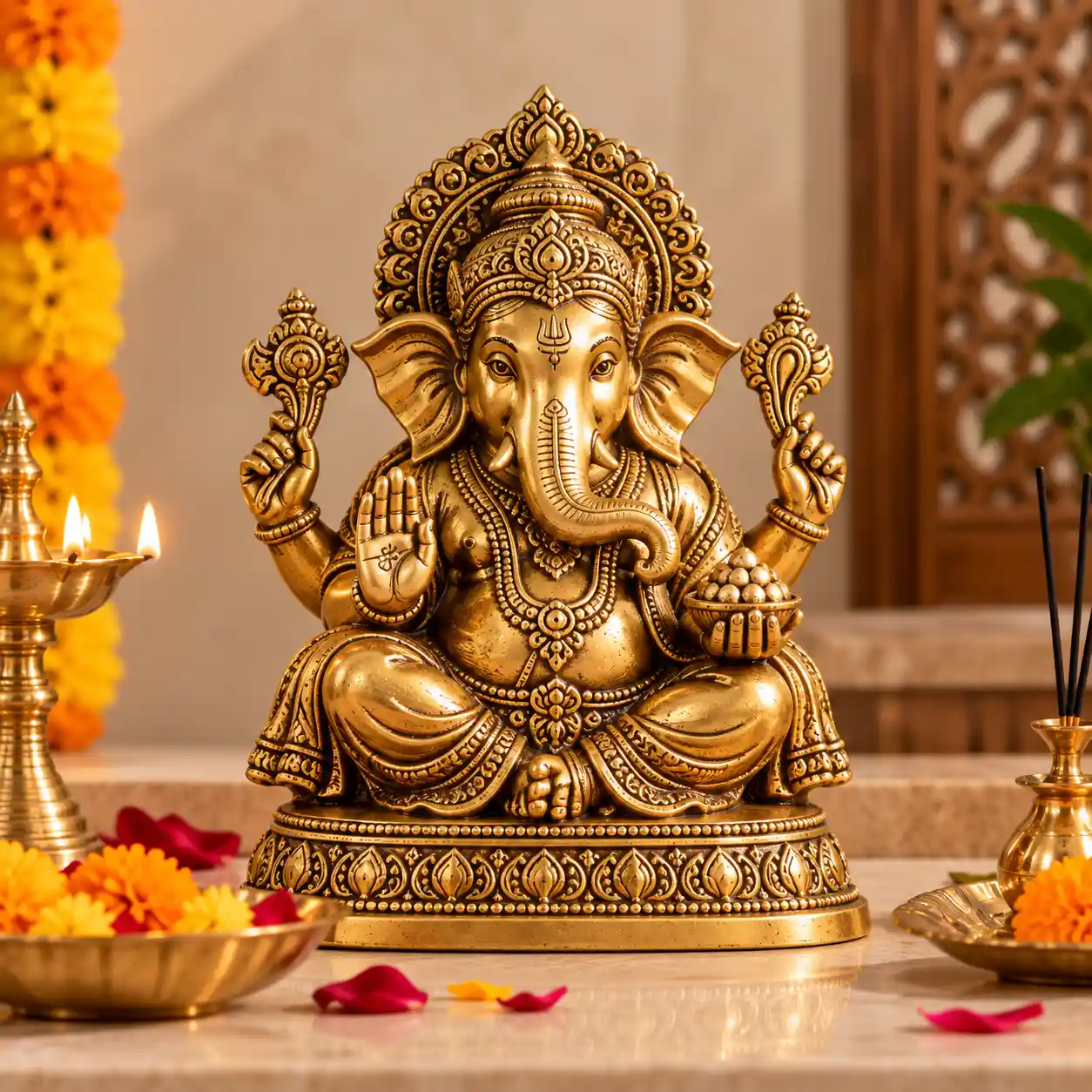
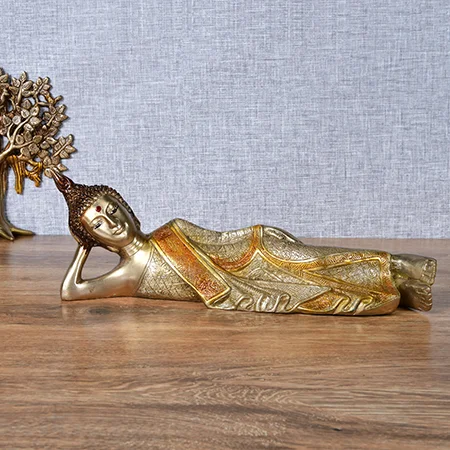
Handle with respect and styling that suits the product. Use clean, warm light, simple backgrounds, and a close-up of the face and fine detail. Keep reflective brass or silver under control with diffused lighting.
10. Gift Hampers and Festive Sets
Show everything included, laid out neatly from above, then closed in its box. Add a lifestyle gift scene with ribbons, dry fruits, sweets or props that suit the occasion.
11. Furniture and Large Decor
Shoot clean angles first, then styled room shots. Large pieces need space, a clean backdrop or a realistic set, and enough depth to show proportions properly.
What Lighting and Setup Work Best for Home Decor Product Photography?
Soft, diffused light gives the most flattering result for decor: large softboxes or window-style light, reflectors for fill, and a tripod for sharpness. Use clean white for marketplace images and warm, textured scenes for lifestyle.
- Soft light reduces harsh shadows and lets textures show.
- Natural-style light looks believable in lifestyle scenes, so many photographers recreate window light in the studio.
- Tripod and low ISO keep images sharp and low in noise.
- Colour accuracy matters because festive reds, golds and maroons are easy to shift. Calibrate your screen and use a grey card.
- A wide-angle lens helps for room scenes, while a standard or macro lens suits detail shots.
- Consistency across the collection builds a recognisable brand look.
How Do You Style Home Decor for Diwali Photos?
Keep the product as the hero and use props that support the festive mood without crowding the frame: marigold, diyas, fabric, brass trays, and warm lighting. Choose a limited colour palette so the product stays dominant.
- Use a simple palette: for example, deep jewel tones with gold accents.
- Keep props smaller than the product in visual weight.
- Vary heights and layers for depth.
- Use odd numbers of props, and leave breathing space.
- Avoid clichés that make every brand look the same. A distinct style helps your brand stand out in search results and ads.
- Do not let props mislead. Anything shown in the picture but not included in the pack should be clearly stated in the listing.
What Are the Image Requirements for Marketplaces and Your Website?
Handicraft Photography Services In Delhi
Lohar Studio provides professional handicraft product photography in Delhi for artisans, craft exporters, D2C sellers, and ecommer...
Explore Handicraft Photography Services In DelhiMarketplaces generally require a clean main image on a white background with the product filling most of the frame, and high-resolution images that support zoom. Always check the latest rules for Amazon India, Flipkart, and any other platform before you shoot.
Before the shoot, confirm:
- Required main image background and product fill percentage
- Minimum resolution and preferred aspect ratio
- Rules on text, logos, badges, and props in the main image
- Whether lifestyle images are allowed as secondary images
- Video and 360-degree support
Then deliver multiple versions of each image: square for marketplaces and feeds, vertical for Instagram stories and reels, and wide for banners and Google Shopping.
Your Diwali Photography Timeline
- 6 weeks out: Finalise your product list, order samples and props, and decide on your visual style.
- 5 weeks out: Book your studio slot, write your shot list, and prepare products (clean, steam, polish).
- 4 weeks out: Shoot packshots, detail shots and lifestyle scenes.
- 3 weeks out: Retouch, colour-match and export marketplace and social versions.
- 2 weeks out: Upload listings, A+ content and ad creatives.
- 1 week out: Review live listings, fix issues and launch campaigns.
- Festive week: Shoot quick extras for offers, countdowns and last-minute gifting.
Should You Hire a Professional Studio or Shoot In-House?
Shoot simple items in-house if you have time and a modest catalogue. Hire a studio when you have a large range, reflective or tricky materials, need consistent quality, or have a tight festive deadline.
A professional product photography studio brings lighting control, experience with metals, glass, and fabrics, retouching, and a team that can handle volume. It also helps with consistency across hundreds of SKUs, which is difficult to keep up alone. If you are in Delhi NCR, a local studio such as Lohar Studio also makes sample drop-off, pickup, and rapid reshoots easy to manage, which matters when festive deadlines are close.
Top 10 FAQs About Home Decor Product Photography
1. What is home decor product photography?
Home decor product photography is the practice of photographing items such as vases, lamps, wall art, cushions, candles, and festive decor so they look appealing and accurate online. It usually combines clean packshots with styled lifestyle scenes that show scale, texture, and use.
2. How many photos does a home decor listing need?
Aim for six to eight images: a hero image, two or three angles, a detail close-up, a scale or dimension image, and a lifestyle scene. Add an in-use shot, a set shot or a packaging shot where relevant. Check the maximum your marketplace allows.
3. What is the best lighting for home decor product photography?
Soft, diffused light is best. Use large softboxes or window-style light with reflectors to fill shadows. For metallic and glass items, use big light sources and flags or cards to control reflections.
Handicraft Photography in Gurgaon
Lohar Studio provides professional handicraft product photography for Gurgaon sellers — artisans, craft exporters, D2C sellers, an...
Explore Handicraft Photography in Gurgaon4. How do you photograph shiny brass, metal, or glass decor?
Control what the surface reflects. Use large diffused lights, black and white cards to shape reflections, and clean the product thoroughly. Many professionals shoot multiple frames and blend them to keep shine without harsh hotspots.
5. How early should I shoot my Diwali collection?
Start four to six weeks before Diwali. That gives time for styling, shooting, retouching, marketplace approvals, and ad creatives, plus a buffer for reshoots.
6. What background should I use for home decor product photos?
Use a clean white or light neutral background for marketplace hero images. For lifestyle shots, use real or built sets such as shelves, tables, walls, windows, mirrors, or plants that match your product's style.
7. How can I show the size of a decor product in photos?
Include a scale shot with a hand, a common object or a room setting, and add an infographic with dimensions. Clear size information reduces returns and customer questions.
8. Can I shoot home decor with a smartphone?
Yes, for simple items and social content, especially with good light, a tripod and careful styling. For reflective items, large catalogues and marketplace-grade consistency, a professional studio setup usually gives better and more reliable results.
9. How do I optimise home decor product images for SEO?
Use descriptive file names and alt text, compress images, add Product schema, publish images with written descriptions, and keep product names and attributes consistent across your site and marketplaces.
10. How much does home decor product photography cost?
Cost depends on the number of products, shot types, props and set builds, retouching level and turnaround time. Studios usually quote per image, per product or per batch, so share your SKU count, shot list and deadline to get an accurate quote.
Final Checklist Before You Upload Your Diwali Listings
- Hero image meets marketplace rules
- Colours match the real product
- Reflections and dust are controlled
- Scale and dimensions are clear
- Lifestyle images match your brand style
- Alt text, file names, and schema are in place
- Social and ad versions are exported in the right ratios
- Everything is live at least a week before the peak
Planning early turns Diwali from a scramble into a campaign. If you would like help with a festive shoot, Lohar Studio's team in Delhi NCR can plan your shot list, styling, and delivery formats around your launch date.
If you're looking to enhance your brand’s presence on leading e-commerce platforms like Amazon, Flipkart, Myntra, Meesho, TataCliQ, Snapdeal, and Ajio, Lohar Studio is your go-to destination. Our team specializes in delivering high-quality images for fashion items, footwear, automotive products, medical photography, business headshots, and corporate shoots. We serve Delhi, Noida, Gurgaon, Faridabad, and Ghaziabad, offering professional results that boost conversions and elevate your brand’s image. Get in touch today at +91 9312070458 or visit us at A1/58, 1st Floor, Sector 6 Rd, Pocket 1, Sector 6A, Rohini, Delhi, 110085, to schedule your next shoot!
Written from hands-on experience shooting for 4000+ brands - practical, field-tested photography advice, not just theory.