


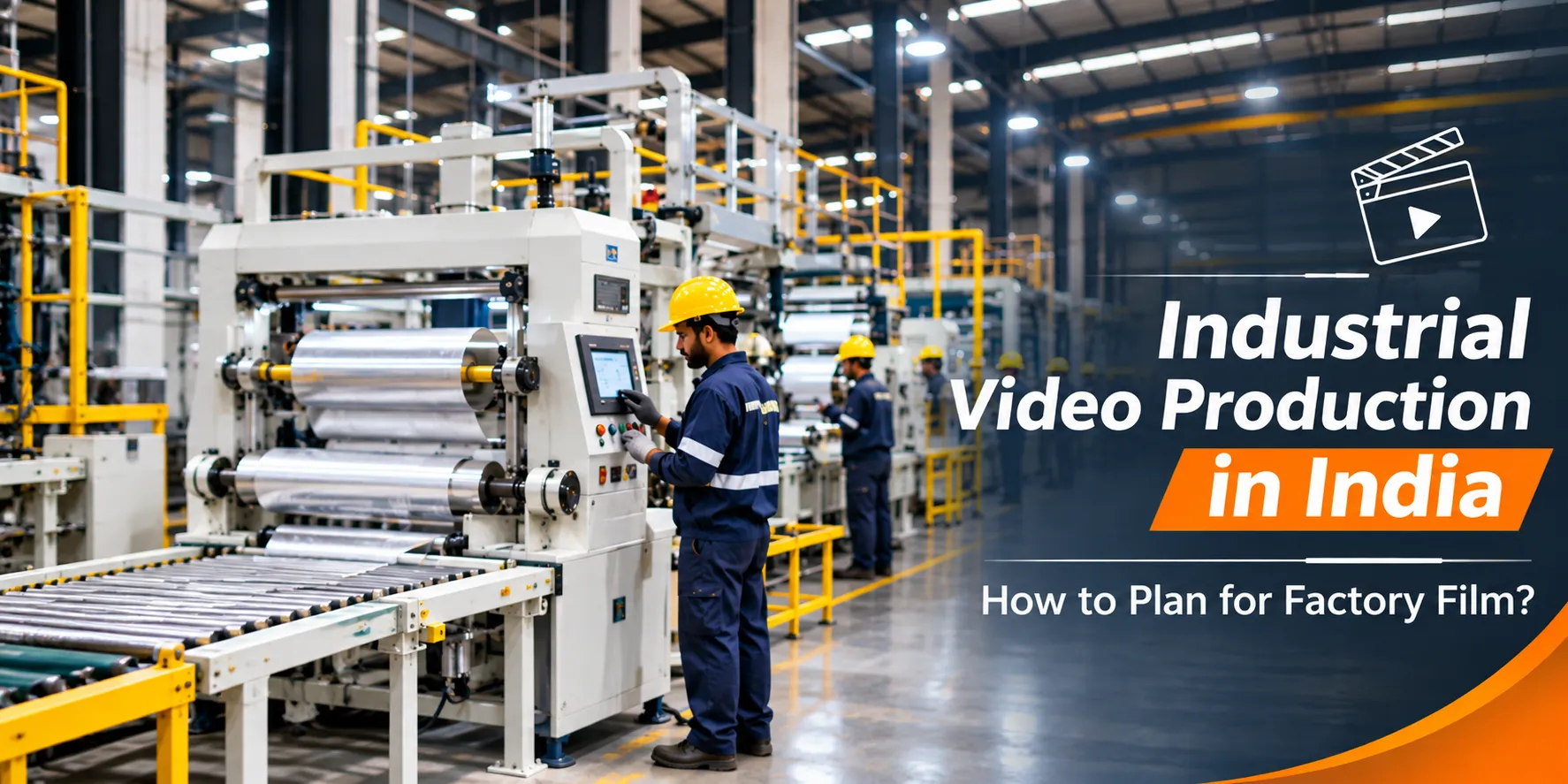
A buyer in Europe, a procurement team running a vendor audit, and a tender committee reading your submission often cannot visit your plant, yet they still have to decide whether to trust it. A brochure shows a product, but not a line running at cycle time, a quality check being done, or a dispatch bay on a busy day. Industrial video production closes that gap: it is the planning, filming and editing of video inside factories, process plants, warehouses and project sites, built around plant safety rules and a technical audience rather than a generic brand message. A well-planned shoot takes one to three days on site, usually delivers within two to four weeks of the brief, and costs anywhere from a few tens of thousands of rupees for a short factory film to several lakhs for a multi-location brand film, depending mainly on shoot days, crew, and post-production. This guide covers which film to make first, how a shoot runs on a live plant, safety and confidentiality, what you actually receive, realistic cost ranges, and how to choose a partner.
What Industrial Video Production Actually Includes
It helps to separate industrial video from ordinary corporate video, because the differences decide how the shoot is planned:
- The plant’s rules decide the shot list. Hot zones, rotating machinery, forklift routes, and hazardous areas determine where a camera can stand and when.
- Production keeps running. The aim is to film real work without asking you to stop the line, so shots are grouped into short, pre-agreed windows.
- The audience checks details. Engineers, auditors and procurement teams notice an incorrect term, a mislabelled machine or a badly framed process step.
- The footage has several jobs. One shoot typically supplies a website film, tender and vendor-onboarding clips, social cutdowns and a library of reusable b-roll.
Which Film Should You Make First? Match the Video to the Buyer’s Question
Instead of choosing a format by name, start from the question your buyer is asking. This is the quickest way to avoid paying for a film that doesn’t do any work.
| The buyer is asking... | Film that answers it | Typical length | Best used on |
|---|---|---|---|
| “Who are you?” | Company profile film | 2–4 min | Website, tender submissions, investor meetings |
| “Can you actually make this?” | Process or capability film | 60–120 sec | Product pages, sales decks, LinkedIn |
| “Is your factory real, clean and safe?” | Unscripted plant walkthrough (remote-audit style) | 3–6 min | Vendor onboarding, export buyer enquiries |
| “How does this machine or product work?” | Machinery or product demonstration | 45–90 sec | Product pages, dealer training |
| “How big is the site?” | Aerial and ground site tour | 60–90 sec | Website, investor and partner presentations |
| “How do we operate it safely?” | Training and SOP video | 3–10 min | Customer onboarding, internal EHS |
| “Who will I be dealing with?” | Leadership and team interviews | 60–120 sec each | Website, LinkedIn, proposals |
| “Is this a good place to work?” | Recruitment film | 60–90 sec | Careers page, social media |
Most manufacturers should begin with one profile film and one process or walkthrough film, then add the rest from the same footage later.
The Formats That Earn Their Cost
The capability or process film. It follows material from input to output (loading, processing, inspection, packing) with close-ups, slow motion, and short on-screen labels. It proves capability faster than any spec sheet.
The unscripted plant walkthrough. A calm, continuous tour of the real floor, with real operators and no staged cleaning. Many buyers now run their first supplier check remotely, and this is the film that supports it. For why this authentic style builds trust, see our guide to documentary-style videos for manufacturers.
The machinery or product demonstration. A controlled setup, either on the shop floor or at a table, that shows how a product works, its features, and its output. It is useful for OEMs, machine builders and component makers.
The aerial and ground site tour. Drone footage shows layout, scale, yards, storage and expansion land, and ground footage supplies the detail. Together they work as a virtual plant visit.
The training and SOP video. Short procedural videos for customers, dealers, and your own operators, covering installation, safe operation, and maintenance.
Industrial Photography in Delhi
Lohar Studio has provided industrial photography in Delhi since 2010 for manufacturers, engineering firms, factory owners, and ind...
Explore Industrial Photography in DelhiHow an Industrial Shoot Runs Without Stopping Production
| Stage | What happens | Typical time |
|---|---|---|
| 1. Brief | Goal, audience, where the film will be used, key messages | 1–2 days |
| 2. Recce | Walk the plant with your production and EHS team, mark camera positions and shift timings | Half to 1 day |
| 3. Script and shot list | Scene list checked by engineering for technical accuracy | 2–4 days |
| 4. Permissions | Gate passes, PPE, staff consent, confidential-area rules, drone approvals | Runs in parallel, 3–7 days |
| 5. Shoot | Small crew moves line by line around the schedule | 1–3 days |
| 6. Edit and finish | Cut, colour grade, graphics, voice-over, subtitles, music | 7–15 working days |
| 7. Review and delivery | Usually two review rounds, then final exports | 2–4 days |
Timelines vary with film length and plant complexity. The step that saves the most money is the recce: it prevents wasted shoot hours and keeps downtime near zero.
Safety, Compliance and Confidentiality on a Live Plant
This is where industrial work differs most from general video, and where a prepared crew matters.
Safety
- The crew follows the same PPE and EHS rules as plant staff, and attends your safety induction.
- Hot work, rotating machinery, moving vehicles and live electrical areas are planned around, not through.
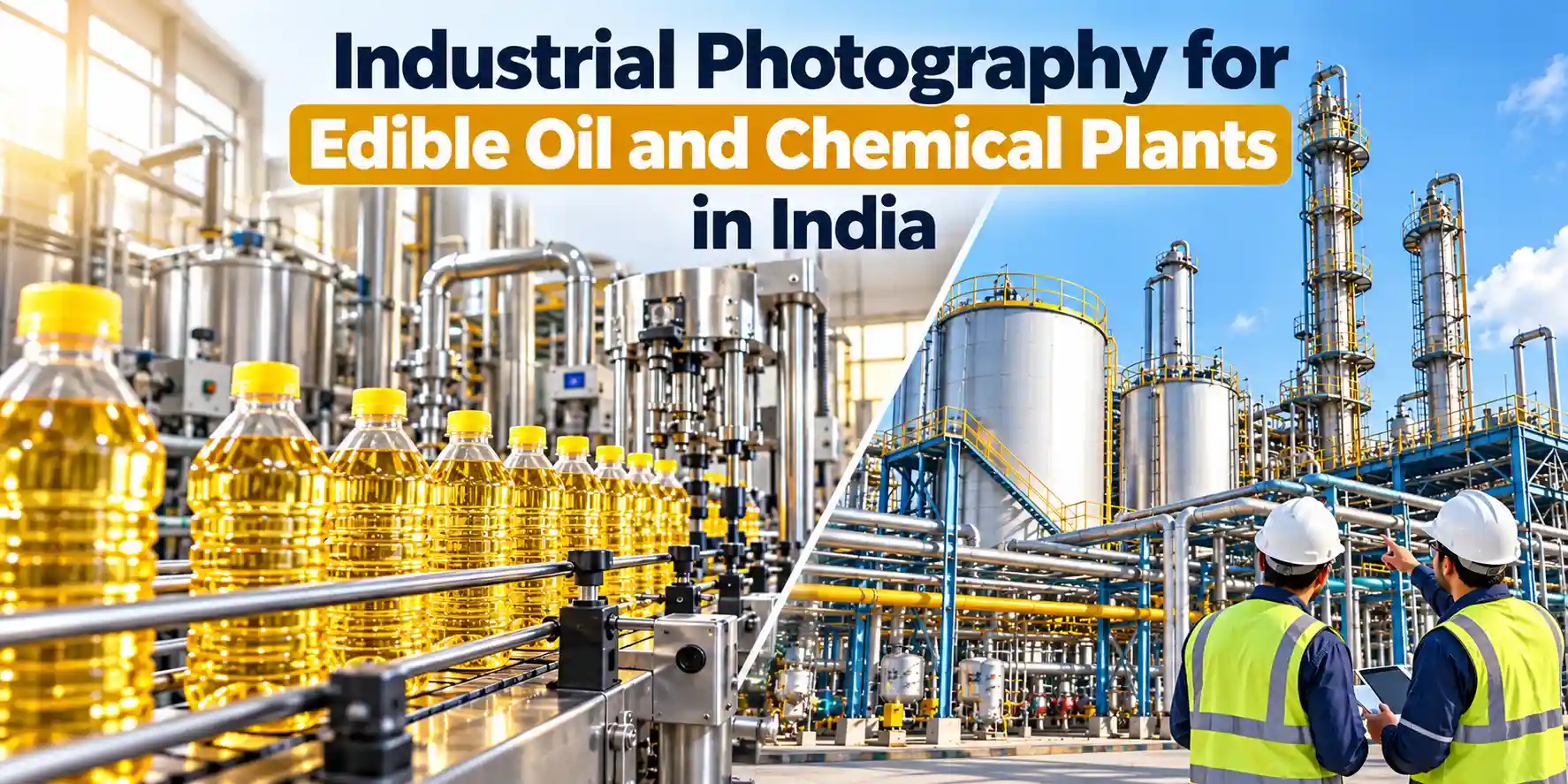
- In hazardous or classified zones (for example chemical, petroleum or solvent areas), equipment and access follow the plant’s own permit system. See our note on photographing edible oil and chemical plants.
- Lights, cables and tripods are placed so they never block walkways, emergency exits or safety equipment.
People and privacy
- Operators who appear on camera should know and agree beforehand.
- Avoid filming ID cards, personal data and visitor registers.
Confidential information
- Agree in advance which areas, drawings, screens, formulations and customer-specific parts must not appear.
- Use a simple NDA where the process or product is proprietary.
- Review the edit for anything sensitive before the film goes public.
Drone flights
- Outdoor drone flights in India are governed by the Drone Rules, 2021 and the Digital Sky airspace map (green, yellow and red zones). Sites near airports or other restricted areas need extra permission, which should be checked at the recce stage.
What You Receive: Deliverables and Technical Specs
Factory & Industrial Photography in Gurgaon
Gurgaon (Gurugram) is unlike any other industrial area in NCR. It is the region's corporate-industrial city, where auto-ancillary...
Explore Factory & Industrial Photography in GurgaonAgree the deliverables before the shoot so the edit is built for each use:
- Master film in 4K or full HD, usually 16:9
- Cutdowns of 15, 30 and 60 seconds for web and social media
- Vertical (9:16) and square (1:1) versions for LinkedIn, Instagram and YouTube Shorts
- Captions or subtitles in English, Hindi or the buyer’s language, so the film works muted
- Voice-over in the language your audience uses, if the film is narrated
- A thumbnail and a few stills from the shoot
- A library of raw b-roll for later edits, where agreed
- Licensed music and clear usage rights for web, social media, tenders and events
- A lighter compressed copy for tender portals and email, which often have file size limits
How Much Does Industrial Video Production Cost in India?
Video is priced mainly by shoot days and crew, not by the minute of the final film. At Lohar Studio, a short factory or process film (around 2 minutes) is priced at ₹14,999–₹59,999, with photography included in the same price, so one visit gives you both video and stills. For comparison, the table also shows typical ranges published by Indian producers, which vary by city, brief, and quality.
| Type of production | Lohar Studio | Typical market range (published Indian guides) |
|---|---|---|
| Short factory or process film (around 2 minutes), photography included | ₹14,999–₹59,999 | roughly ₹50,000–₹2,00,000 |
| Corporate or profile film (3–5 minutes) | Quoted on brief | Roughly ₹1–5 lakh, more for multi-location or cinematic work |
What moves the price:
- Number of shoot days and locations
- Crew size and camera, lighting, and gimbal gear
- Drone footage and any aerial permissions
- Scripting, voice-over, and the number of languages
- Motion graphics or animation for process labels
- Travel outside the city
- Metro rates, which are often 20–40% above smaller cities
Ways to keep it efficient:
- Shoot photography and video in the same visit, so you pay for one recce, one set of permissions and one set of travel.
- Plan several films from one shoot day, because crew and setup are largely a fixed daily cost and a second video from the same day costs far less than a separate shoot.
- Film the factory as it really runs. Building sets or restaging a process is what makes budgets jump.
Where Industrial Video Gets Used
- Website and landing pages, replacing generic stock footage
- Tenders, vendor registration and supplier onboarding
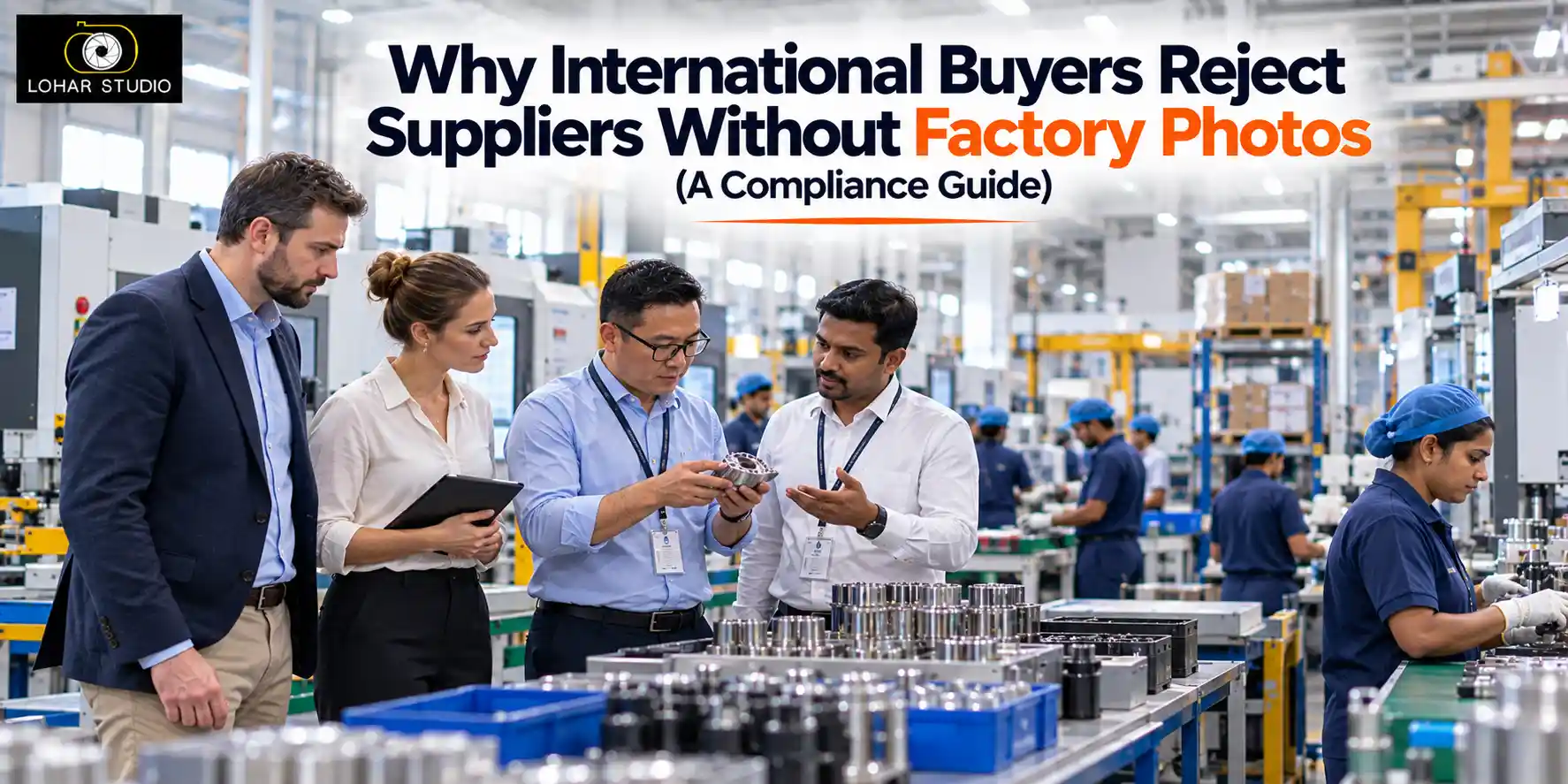
- Export buyer enquiries and remote audits
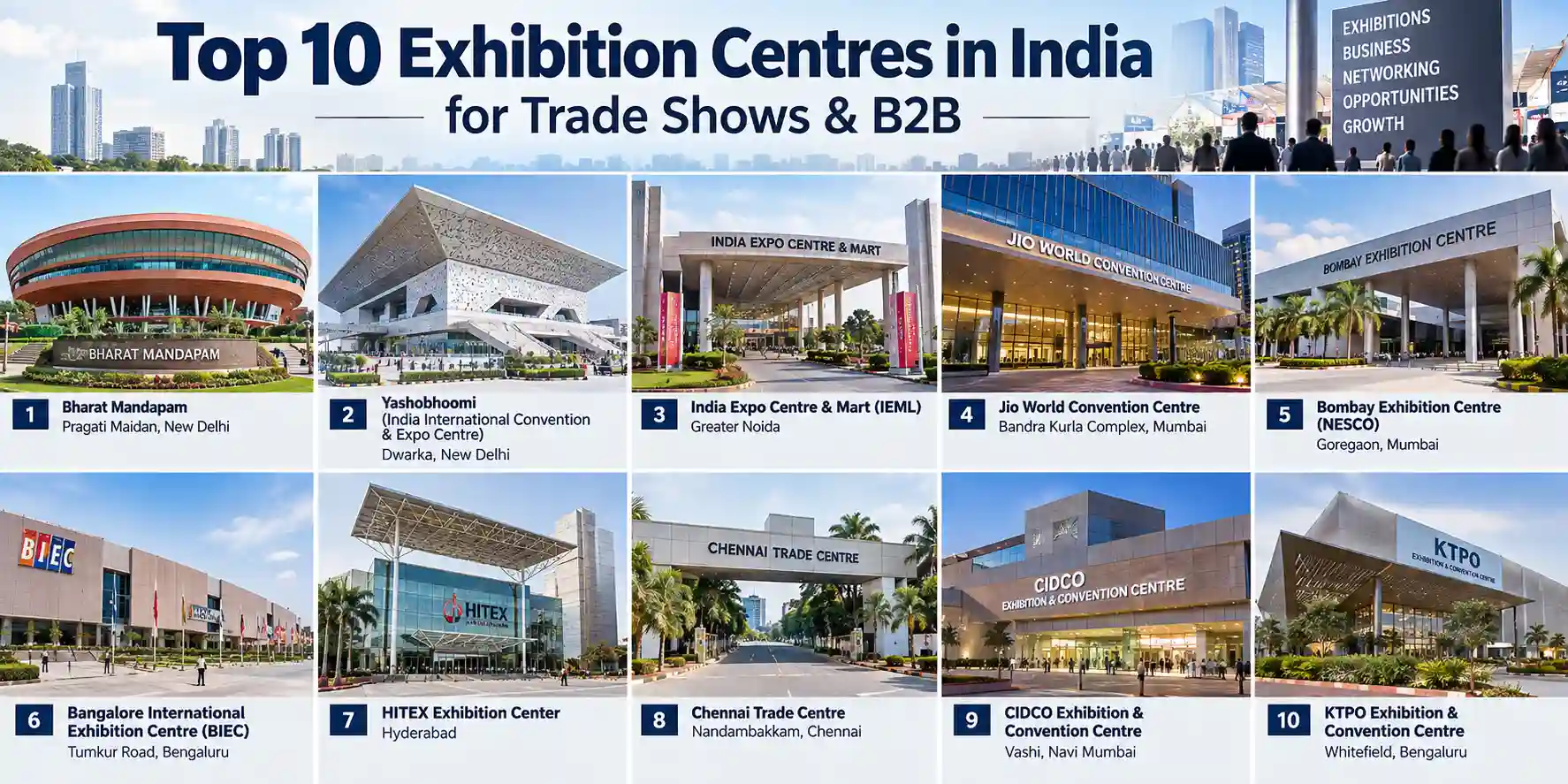
- Trade shows and exhibitions, on stall screens (see our exhibition photographer guide)
- LinkedIn and social media, as short cutdowns
- Dealer and customer training
- Recruitment and employer branding
- Investor and partner presentations
Industrial Video Across North India: Where Delhi NCR Manufacturers Shoot
North India has dense, active industrial belts, and many are within a day’s reach of Delhi:
- Faridabad (NIT and nearby sectors), engineering, auto components and fabrication
- Manesar, Gurugram and Bawal, automotive and electronics
- Bahadurgarh, Kundli and Sonipat, footwear, food and light engineering
- Noida, Greater Noida and Ghaziabad, electronics, FMCG and packaging
- Delhi’s own industrial areas such as Okhla, Narela and Bawana
- Neemrana (Rajasthan), Baddi (Himachal) and Haridwar and Rudrapur (Uttarakhand), pharma, auto and engineering
Grouping plants within one cluster and one trip keeps travel costs down.
Factory & Industrial Photography in Noida
Noida is not just another Delhi-adjacent industrial area — it is a planned city with a distinct industrial identity built ar...
Explore Factory & Industrial Photography in NoidaHow to Choose an Industrial Video Partner
Ask these questions before you sign:
- Can they show work inside live plants, not just studio or brand films?
- Will they do a recce and share a shot list and permission checklist?
- How do they handle PPE, hazardous zones, confidentiality, and consent?
- Who handles drone permissions?
- What exactly is in the quote: crew, shoot days, edit rounds, music licence, subtitles, cutdowns?
- Can they deliver photography and video together?
- Who owns the footage, and can you get the raw files?
Common Mistakes Manufacturers Make
- Starting with a long, scripted film when a short capability film would answer the buyer’s question
- Staging the plant instead of filming it as it runs
- Skipping the recce and permission checklist
- Forgetting vertical and captioned versions, so the film doesn’t work on LinkedIn or on a muted stall screen
- Not agreeing the usage rights and raw footage terms upfront
- Using old footage that no longer matches the plant (see how often a factory should update its photography)
FAQs
1. What is industrial video production?
Industrial video production is the planning, filming, and editing of video inside factories, process plants, warehouses, and project sites. It differs from general corporate video because it is built around plant safety rules, live production and a technical audience.
2. How long does an industrial video shoot take?
Most industrial films need one to three days on site, with two to four weeks from brief to final delivery, depending on length, number of plants, and review rounds.
3. How much does industrial video production cost in India?
Published market ranges run from roughly ₹25,000–₹50,000 for a simple one-day shoot to ₹1–5 lakh for a 3–5 minute profile film, and more for multi-location or cinematic productions. Price depends mainly on shoot days, crew, and post-production.
4. Will filming stop my production line?
It shouldn’t. A recce and a pre-agreed shot list let the crew film around your schedule, using short windows for key machines.
Factory & Industrial Photography in Faridabad
Faridabad is not a new industrial city — it is Delhi NCR's oldest and most deeply established heavy manufacturing hub, built...
Explore Factory & Industrial Photography in Faridabad5. What video should a manufacturer make first?
Start with a company profile film and a short process or plant walkthrough film, then create machinery demos, training and recruitment videos from the same footage.
6. Are drone shots allowed inside and around factories in India?
Outdoor drone flights follow the Drone Rules, 2021 and the Digital Sky airspace map. Sites near airports or restricted zones need extra permission, so this is checked during the recce.
7. How do you protect confidential processes during a shoot?
Agree on restricted areas and sensitive items beforehand, use an NDA where needed, and review the edit before publishing so nothing proprietary appears.
8. What deliverables should I expect from a factory video shoot?
A master film, 15, 30, and 60-second cutdowns, vertical and square versions, subtitles, a thumbnail and stills, usage rights and, where agreed, raw b-roll.
9. Can photography and video be shot in the same visit?
Yes, and it is usually more cost-efficient, because you share one recce, one set of permissions and one set of travel costs.
10. Does industrial video help with export buyers and tenders?
Yes. Buyers who can’t visit your plant use video to judge capability, cleanliness, and scale, and many vendor-onboarding and tender processes accept or ask for factory video as supporting evidence.
Planning a factory or process film?
[Share your plant and your goal with Lohar Studio]. Tell us what the film needs to prove, who will watch it, and where it will run, and we’ll scope the shoot, deliverables, and timeline around your production schedule. Industrial photography and video services can be planned together in one visit.
If you're looking to enhance your brand’s presence on leading e-commerce platforms like Amazon, Flipkart, Myntra, Meesho, TataCliQ, Snapdeal, and Ajio, Lohar Studio is your go-to destination. Our team specializes in delivering high-quality images for fashion items, footwear, automotive products, medical photography, business headshots, and corporate shoots. We serve Delhi, Noida, Gurgaon, Faridabad, and Ghaziabad, offering professional results that boost conversions and elevate your brand’s image. Get in touch today at +91-9312070458 or visit us at A1/58, 1st Floor, Sector 6, Rohini, Delhi-110085, to schedule your next shoot!

Written from hands-on experience shooting for 4000+ brands - practical, field-tested photography advice, not just theory.