











The Wholesale City's Manufacturing Shadow
Hathras is known across the trade. Buyers from Delhi, Mumbai, Kolkata, Hyderabad, and dozens of smaller markets come to Hathras specifically to source hing. The wholesale market is established, the city has a reputation, and the trade moves. By that measure, Hathras doesn't have a visibility problem.
Except it does — and it's one that affects every processing unit and manufacturer in the district, regardless of how well the wholesale market performs.
The buyers who come to Hathras come to the market. They buy from traders. They evaluate prices, negotiate quantities, and leave. The hing compounding unit that processed the batch they just purchased remains invisible. The mustard oil mill, whose output flows through the wholesale channel, has no documentation for the institutional buyer who wants to qualify a direct supplier. The chemical manufacturer in the industrial area belt, which has been supplying regional distributors for fifteen years, has no facility record for the procurement manager shortlisting vendors for a corporate account.
Wholesale market reputation belongs to the market. It doesn't transfer to individual manufacturing units automatically.
For a processing unit or manufacturer in Hathras to convert a buyer's market visit into a direct supply relationship — to compete for institutional procurement contracts, FMCG vendor registrations, and organised retail supply chain positions — they need documentation that shows the facility, the production quality, the processing standards, and the scale of the operation. That documentation does not exist for most Hathras manufacturers.
Industrial photography in Hathras is built for this specific problem: to give each manufacturing unit the professional documentation that converts buyer interest into supplier evaluation — and supplier evaluation into confirmed orders.
Hathras Industrial Landscape — What Gets Manufactured Here
Hathras district's manufacturing base extends well beyond its famous wholesale trade. The district has a formally designated UPSIDC industrial area, and manufacturing clusters spread across the NH-19 and NH-34 belts.
Hing (asafoetida) compounding and processing — Hathras is one of India's primary hing compounding centres. Raw asafoetida resin, imported from Afghanistan and Iran, arrives in Hathras and is compounded — blended with edible flour, emulsifying agents, and other food-grade inputs — to produce the hing that reaches consumers across India. The compounding operations range from small-scale units to large-format processing floors with blending equipment, quality control labs, and commercial packaging lines. For FMCG buyers, institutional food manufacturers, and export buyers purchasing compounded hing in commercial quantities, vendor documentation of the compounding facility is a standard requirement in organised procurement.
Mustard oil mills — Hathras district sits within UP's mustard cultivation belt. Mustard seed arrives from fields in Hathras and surrounding districts and is processed in solvent extraction plants and expeller mills, producing crude and refined mustard oil for wholesale, institutional, and FMCG markets. Mustard oil mill documentation requirements — extraction plant photography, refinery and processing floor, QC and testing lab, packaging lines, and storage infrastructure — are relevant to FMCG buyers, institutional food manufacturers, and commodity buyers evaluating suppliers for direct procurement accounts.
Chemical manufacturing — industrial chemicals, agricultural chemicals, fertilizers, and crop protection products. Chemical units in the Hathras UPSIDC area serve both local agricultural supply chains and industrial buyers across the UP market. For institutional chemical buyers, compliance and facility documentation are standard vendor qualification requirements.
Engineering and precision components — fabrication, mechanical components, agricultural equipment parts, and precision manufacturing. Engineering units in Hathras serve both local construction and agriculture-support demand and supply chains reaching Agra, Aligarh, and Mathura manufacturing hubs.
Agro-processing — flour mills, dal mills, grain processing — Hathras district's agricultural base sustains a significant grain and pulse processing sector. Flour mills, dal mills, and other agro-processors serve wholesale, institutional, and FMCG supply chains. For institutional food buyers and FMCG companies sourcing processed grain and pulse products, QC documentation and food safety compliance photography have become standard vendor onboarding requirements.
The Market-to-Factory Documentation Bridge
There is a specific buyer journey that plays out every year in Hathras — and it almost always ends the same way.
A procurement manager from a Delhi FMCG company, a buyer from a Mumbai wholesale distributor, or a supply chain officer from an institutional food manufacturer comes to Hathras to attend the market or visit a trader. They leave having bought what they came for. Somewhere in that visit, they probably walked past or drove through the industrial areas. They may have even enquired about a direct supply relationship with one or two processors.
But they don't follow through. Not because the manufacturing units aren't capable — many are excellent operations — but because there is nothing to evaluate after the market visit ends. No facility photographs to share internally. No production floor documentation for the procurement committee. No QC lab images for the food safety team. No capability overview for the supply chain manager who wasn't on the trip.
The buyer returns to their office. The shortlisting decision is made on what can be put in front of decision-makers, and for Hathras manufacturing units without documentation, that is nothing.
Professional documentation changes the trajectory of this buyer journey. The hing compounding unit that hands a buyer a folder of professional facility photographs, production floor images, QC documentation, and a capability overview is no longer competing on price in a market stall. It is presenting as a verified, documented manufacturer to an institutional buyer's procurement process.
This is what industrial photography in Hathras enables — not just better visibility, but a completely different buyer relationship from the one the wholesale market creates.
Industrial Photography Services for Hathras Manufacturing Units
The scope below covers what a standard Hathras project delivers across the district's manufacturing sectors. Multi-zone projects and combined photography-plus-videography engagements are confirmed during the pre-shoot factory visit.
- Processing floor and production documentation: Active floor coverage calibrated to the specific sector — hing compounding and blending operations, mustard oil extraction and refinery floors, chemical plant processing zones, engineering machining and fabrication floors, and grain and pulse processing production flows. For hing compounding units, the documentation sequence covers the full production journey: raw material receipt and storage, blending and compounding operations, quality control testing, packaging lines, and finished goods storage. Each stage communicates a different capability to a different buyer type — the compounding standards for food safety buyers, the packaging quality for FMCG buyers, the storage infrastructure for supply chain buyers.
- Machinery and equipment photography: Individual machine and equipment documentation with lighting calibrated to the specific surface type and production environment. For hing processing units: blending and mixing equipment, sifting and grading systems, packaging machines, sealing and labelling lines. For mustard oil mills: expeller presses, solvent extraction equipment, refinery columns, filtration and processing systems, filling and packaging lines. For chemical units: reactors, blending tanks, filling systems, and storage infrastructure. For engineering units: machining centres, fabrication tools, and precision measurement equipment.
- Quality control and compliance documentation: QC lab, testing equipment, sampling processes, and compliance protocol photography. For hing compounding units — standardisation samples, grade testing, moisture and purity checks, food safety compliance systems. For mustard oil mills — acid value testing, refinery monitoring, QC lab, and packaging quality checks. For chemical manufacturers — safety protocols, storage compliance, and regulatory documentation. This is the documentation layer that most directly addresses institutional buyer requirements for vendor qualification.
- Finished goods and product documentation: Compounded hing in commercial packaging formats, refined mustard oil in consumer and institutional sizes, chemical goods in standard packaging, and engineering components in finished arrangements — all in controlled setups for B2B buyer catalogues, institutional procurement documentation, and export documentation. Product Photography for finished goods requiring dedicated catalogue-standard imagery is scoped into the same engagement. For hing units supplying FMCG buyers, finished product photography calibrated to retail packaging standards is often as important as facility documentation.
- Raw material and input documentation: For hing compounding units, raw asafoetida resin documentation — showing the quality, sourcing, and grade of incoming material — is a specific documentation requirement for institutional and FMCG buyers who want to verify the input quality of the product they are purchasing. For mustard oil mills, incoming seed quality and storage documentation. This is a documentation layer that most standard industrial photography engagements skip; Lohar Studio includes it for Hathras hing and oil processing projects where it is relevant.
- Team and workforce photography: Operators at compounding and blending positions, QC technicians at testing stations, packaging line staff, engineering machinists, and management team coverage. For Hathras's larger hing and mustard oil processing operations, workforce photography communicates operational scale and the human quality-control infrastructure — both important signals for institutional buyers.
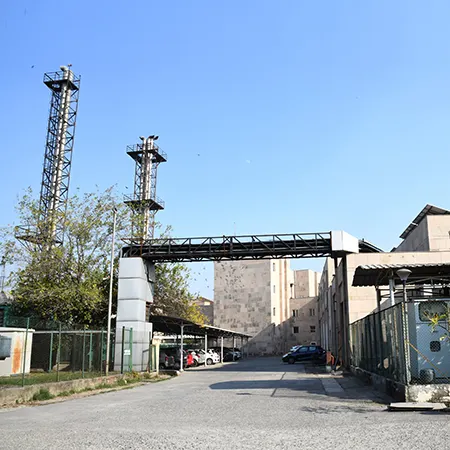
- Facility and yard overview documentation: Exterior address photography, campus and storage yard overview, raw material receipt areas, finished goods dispatch infrastructure, and entry documentation. For hing processing units supplying institutional buyers, the facility overview establishes that the operation is a formally organised, scaled manufacturing unit — not a small informal processing operation.
- Industrial videography: Processing floor capability reels (60–90 seconds), hing compounding process films, mustard oil extraction and refinery sequences, and chemical plant overview videos. Photography and videography are both available in a single Hathras shoot engagement. For Hathras hing compounding units presenting to institutional food buyers or FMCG companies that have not visited, a 90-second facility video showing the compounding process from raw material to packaged product is often the documentation format that moves a buyer from interest to shortlisting.
Pre-Shoot Factory Visit for a Hathras Engagement
Hathras is approximately 175–180 kilometres from Lohar Studio's Delhi base — via Yamuna Expressway to Mathura and then onward, or via Aligarh on NH-34. At this distance, every Hathras engagement begins with a physical pre-shoot factory visit before the shoot day is scheduled.
- Initial inquiry and brief: Begin by reaching out via our Contact Us page. Share your unit's location in Hathras (UPSIDC Industrial Area, Sadabad, Iglas, Sasni, or other zone), your sector — hing processing, mustard oil, chemical, engineering, agro-processing, or other — your facility layout and zone count, and the primary buyer types you are documenting for: FMCG buyers, institutional food procurement, chemical industry buyers, engineering supply chains, or a combination.
- Physical pre-shoot factory visit: The factory is walked in person before the shoot day is confirmed. For hing compounding units, the visit covers the full facility: raw material receipt and storage, compounding and blending floor, QC lab, packaging lines, and finished goods dispatch. For mustard oil mills: seed storage, extraction plant, refinery, QC, and filling lines. For chemical and engineering units: production zones, equipment, compliance areas, and any access or safety protocols. The pre-visit produces a detailed shot plan covering all documentation objectives — including the raw material and input documentation that distinguishes hing unit photography from standard food processing shoots.
- Shoot plan and written sign-off: Following the factory walk, we confirm the shot sequence, lighting approach, equipment requirements, and shoot schedule in writing — with your approval before any shooting begins.
- Shoot day — setup and execution: Hathras manufacturing environments present specific photography considerations. Hing compounding facilities have strong aromatic environments and fine particulate conditions that affect equipment choices. Mustard oil extraction plants involve solvent and heat conditions, and refinery areas have their own access considerations. Chemical plants have safety zone protocols. All of these are addressed at the pre-shoot visit — not improvised on the day.
- Delivery in 24–72 hours: All edited, formatted, and usage-ready files are delivered within 24–72 hours of shoot completion via shared folder link or direct transfer from our Delhi base.
Why Lohar Studio for Industrial Photography in Hathras
- Documentation built for Hathras's specific buyer problem: Every Hathras project is planned around the wholesale-market-to-direct-supplier transition. If your goal is to move from being one of many market suppliers to being a verified, documented manufacturer in an institutional buyer's shortlist, the documentation strategy is built around that specific objective — not just "professional factory photos."
- Raw material and input documentation as standard for hing units: Hing buyers — especially FMCG and institutional food manufacturers — want to see the incoming raw material as well as the processing operation. Raw asafoetida resin documentation, grade, and quality evidence, and input sourcing context are included in the shot plan for hing compounding units. This is documentation that standard photography engagements miss, and that creates a meaningful advantage in vendor qualification processes.
- Physical factory visit at this distance: At 175–180km, the pre-shoot visit happens in person — the factory is walked in full before the shoot day, the shot plan is built around your actual conditions, and the shoot executes precisely. No assumptions about your facility's layout, lighting, or access requirements.
- Photography and videography in one engagement: For Hathras hing processors and mustard oil mills presenting to FMCG buyers who need both still images for catalogues and video for capability presentations, both formats are available within the same project scope and the same 24–72 hour delivery window.
Coverage — Hathras and Nearby Manufacturing Belt
Lohar Studio covers manufacturing units across Hathras district — Hathras Industrial Area (UPSIDC), Sadabad belt, Iglas engineering zone, Sasni, Sikandra Rao, and hing processing, mustard oil, chemical, engineering, and agro-processing businesses throughout the district. Coverage extends to any manufacturing unit searching for an industrial photography service provider in Hathras or industrial photography near me in Hathras.
For manufacturers in the broader Agra Division industrial corridor, Lohar Studio also covers adjacent manufacturing geographies. For the Aligarh manufacturing belt — locks, hardware, precision engineering, and architectural fittings — industrial photography in Aligarh covers those businesses (~40km from Hathras). For Etah district's manufacturing zone — sugar mills, chemical, hosiery, and agro-processing — industrial photography in Etah serves those units (~40km from Hathras in a different direction). Both pages together cover the industrial corridor that Hathras sits at the centre of.
For Hathras manufacturers whose finished goods — compounded hing, refined mustard oil, processed agro-products, or consumer packaged food items — require FMCG Photography for institutional buyer listing documentation, FMCG catalogue sets, or retail buyer presentation materials, that service is available within the same Hathras shoot engagement. Product Photography for finished manufactured goods, chemical products, and engineering components requiring catalogue-standard imagery is scoped into the same project.
Portfolio — See Our Work Before You Confirm
Lohar Studio shares portfolio samples matched to your sector and documentation purpose before any project is confirmed. For Hathras manufacturers, this means samples from agro-processing and food manufacturing documentation, chemical plant photography, engineering floor coverage, and finished goods product photography from comparable manufacturing environments across North India. The quality of the work is something you should evaluate before hiring us — not something you verify after the shoot.
Pricing — Industrial Photography in Hathras
Industrial photography in Hathras starts from ₹14,999 per day. The pre-shoot factory visit is included at no separate charge. A standard day's scope covers the primary production or processing floor, key manufacturing zones, QC and raw material areas, team photography, finished goods, and product documentation in controlled setups, and a full facility overview.
For hing compounding units or mustard oil mills requiring multi-zone coverage — raw material receipt, compounding floor, QC lab, packaging lines, and dispatch — or for projects combining photography and videography, the scope and total cost are confirmed at the pre-shoot factory visit. Travel to Hathras is included in the project quote.
10% referral credit applies to any confirmed project referral from your network.
For scope discussion, pre-shoot visit scheduling, and a project quote for your Hathras unit, reach out via our Contact Us page.
E-E-A-T — Experience, Expertise, Authority, Trust
Lohar Studio has been delivering industrial photography since 2010, founded by Sanjay Babu Lohar. Fifteen years of manufacturing documentation across Delhi NCR and North India's industrial belt includes agro-processing and food manufacturing environments, chemical plant and refinery photography, engineering fabrication documentation, and FMCG-grade finished goods photography — across a wide range of manufacturing sectors and production environments.
Industrial photography in Hathras requires specific preparation for its dominant sectors. Hing compounding facilities present a unique combination of aromatic environment conditions, fine particulate, and food-grade access protocols. Mustard oil extraction and refinery plants involve heat and solvent conditions. Chemical units require safety-zone planning. Each environment is assessed at the pre-shoot factory visit, and the equipment setup is confirmed before the shoot day — not adjusted on arrival.
Every project is confirmed in writing before the shoot is scheduled. The same photographer who walked your Hathras factory at the pre-shoot visit is the one who arrives on the shoot day.
Studio address: A-1/58, 1st Floor, Sector-6, Rohini, Delhi – 110085 Phone / WhatsApp: +91-9312070458 Email: contact@loharstudio.com