









The Aligarh Lock Paradox — The World Buys Aligarh Locks Without Ever Seeing an Aligarh Factory
"Aligarh lock" is not just a product description. It is a product with global standing. Hardware importers in Germany, the US, the UAE, and Singapore use "Aligarh" as a quality signal — the way buyers in other industries use "Jaipur" for gems or "Ludhiana" for knitwear. The city's manufacturing identity is built into the product itself.
Here is what makes this remarkable — and what makes it a serious documentation problem: in most cases, the buyers using that phrase have never seen the inside of an Aligarh lock factory.
The product brand is global. The factory is invisible.
A German hardware importer placing a bulk order with an Aligarh exporter is not doing so because they have evaluated the production floor. They are doing so on the strength of the product sample, the price, and the reputation of the origin. What they have not seen — and in most cases, what the supplier has never provided — is documentation of the facility where that product is made: the forging shop, the machining floor, the assembly tables, the plating tanks, the QC room, the finished goods area.
For decades, this gap did not matter. Aligarh's lock reputation did the work. But as international procurement has become more documentation-driven — with institutional buyers, retail chains, and marketplace platforms requiring supplier audits, facility evidence, and compliance documentation before onboarding — reputation alone is no longer sufficient. A competing supplier who provides professional factory documentation alongside a competitive price has a structural advantage over one who cannot.
Professional industrial photography in Aligarh is what closes this gap. Not glamour shots. Not aspirational images. Documented, honest, well-lit facility evidence that gives an international buyer the visual confirmation of what their Aligarh supplier's production environment looks like — before the audit, before the order, before the first shipment.
Lohar Studio's industrial photography in Aligarh is built for this specific purpose.
The Documentation Gap Aligarh Lock Manufacturers Can't Ignore
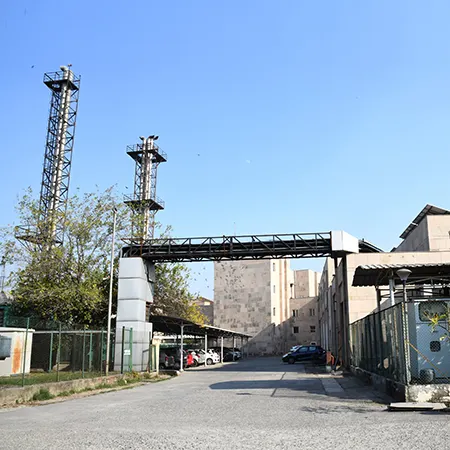
Walk through any of Aligarh's lock manufacturing zones — Jamalpur, Marris Road, Quarsi, or the UPSIDC industrial area — and you will find manufacturing operations that export to four continents running without a single professional image of their production floor.
The typical Aligarh manufacturer has a product catalogue, a price list, and a phone number. What they typically do not have is a documentation set that shows a distant buyer — one who cannot easily visit Aligarh — what their facility looks like, how the production is organised, what quality control looks like in practice, and what scale of operation they are dealing with.
For local buyers — in Delhi, Agra, or Mathura — this has not been a critical problem. They can visit. But for buyers in Mumbai, Bangalore, or any international market, a supplier who cannot show documentation is a supplier asking the buyer to take a risk.
This gap is now widening. International procurement platforms and retail buyers increasingly require facility documentation before onboarding new suppliers. An Aligarh exporter who can send a professional documentation set — production floor, machinery, assembly, QC, finished goods — shortens their buyer onboarding time, reduces the barrier to trial orders, and builds the kind of visual credibility that word-of-mouth and product reputation alone cannot create.
That is what Lohar Studio's industrial photography in Aligarh delivers.
Aligarh's Industrial Landscape — Zones, Clusters, and What Documentation Needs to Do
Understanding Aligarh's manufacturing geography is essential for anyone commissioning industrial photography here, because the lock sector operates across multiple distinct cluster types, each with a different production scale and different documentation requirements.
Aligarh Industrial Area (UPSIDC) along the GT Road and Ramghat Road belt is the city's primary formal industrial zone — home to medium and large-scale lock manufacturers, hardware goods producers, precision engineering units, and metal goods manufacturers with UPSIDC-allotted plots. This zone has defined infrastructure, larger production floors, and a more organised factory-standard setup.
Vijay Nagar and Dhanipur Industrial Areas cover a mix of lock component manufacturers, hardware goods units, and engineering businesses operating in semi-formal industrial settings — mid-scale operations with production floors, machinery, and organised workflows.
Jamalpur, Marris Road, and Quarsi are the traditional lock manufacturing clusters — home to the small and medium workshop operations that form the backbone of Aligarh's lock sector. Many of these units are decades-old family businesses producing padlocks, security locks, and hardware components at workshop scale, often with highly skilled craft-level metalwork. Documentation for these units requires a different approach from a standard large-factory shoot.
Brass Fittings and Hardware Cluster operations are distributed across multiple Aligarh localities — producing door fittings, window hardware, cabinet locks, and architectural hardware pieces for both domestic and export markets.
Aligarh's industrial reach extends into the surrounding district as well: Hathras (~40km), Kasganj (~70km), Iglas, and Sasni are home to hardware and light manufacturing businesses that are part of the broader Aligarh supply chain and share its documentation needs.
Industrial Photography in Aligarh — Documentation by Manufacturing Stage
Aligarh's lock manufacturing is a sequential process. Documentation that follows this sequence gives a buyer a complete picture of how the product is made — from raw material to finished goods. The scope below is organised by production stage, because for Aligarh's lock sector, the manufacturing process is the story buyers need to see.
- Forging, casting, and raw material documentation: The lock body starts as a brass, iron, or stainless steel blank — forged, cast, or pressed into shape. Photography at this stage covers the forging shop or casting area, raw material storage, press machinery, and the output at each step. For buyers evaluating quality, forging and casting coverage shows the grade of raw material and the quality of the initial body — the foundation of the finished product.
- Machining and component manufacturing coverage: Body blanks move to machining — drilling, cutting, turning, and milling to form keyways, shackle holes, cylinder seats, and precision features. Shackle manufacture, spring production, cylinder machining, and key blanking all happen at this stage. Photography covers CNC machines, manual lathes, grinding equipment, in-process component checks, and the component output at each sub-stage.
- Assembly line and sub-assembly documentation: Lock assembly — where body, cylinder, shackle, springs, and key come together — is one of the most buyer-relevant stages to document. Assembly line coverage shows the organisation of the production floor, the skill level of the workforce, and the systematic nature of the operation. For buyers concerned about production capacity and workforce quality, assembly line documentation is often the most persuasive part of the facility evidence.
- Surface finishing, plating, and treatment photography: Electroplating (chrome, nickel, brass), powder coating, painting, and anti-corrosion treatment are all part of Aligarh lock finishing. Photography covers the plating tanks, treatment lines, and finished surface quality — directly relevant for buyers who specify surface finish grades in their purchase orders and need evidence of the plating process being controlled.
- Quality control, testing, and compliance documentation: Aligarh lock manufacturers run QC checks across multiple stages — dimensional checks on components, cycle testing on finished locks (open-close repetition testing), corrosion resistance testing, and key security checks. QC photography covers inspection tables, testing instruments, batch sampling, and compliance records. For institutional buyers and marketplace platforms requiring audit documentation, QC coverage is often the first section a compliance team reviews.
- Finished goods and product catalogue photography: Finished locks and hardware goods in controlled setups — for product catalogues, export buyer presentations, e-commerce listings, and institutional procurement documentation. This covers individual SKU photography, range photography across product families, and finished products shown in retail or export pack format for both packaged and unpackaged product states. For Aligarh exporters using B2B marketplaces or international e-commerce channels, catalogue-standard finished goods images are as important as factory floor documentation.
- Industrial videography for Aligarh manufacturers: Production floor walkthroughs (60–90 seconds), stage-by-stage process videos showing the complete lock manufacturing sequence, assembly line capability reels, and quality testing demonstration videos. For Aligarh exporters presenting to international buyers who cannot visit the factory before a first order, a well-produced process video showing the complete manufacturing sequence — from raw material to finished lock — is one of the strongest conversion tools available.
- Export documentation sets: Formatted image packages for international sourcing submissions, B2B platform listings, trade fair display materials, and institutional buyer onboarding — with confirmed file formats, resolutions, and naming conventions matched to the specific buyer or platform requirement.
Pre-Shoot Factory Visit for an Aligarh Industrial Photography Engagement
Aligarh is approximately 130 kilometres from Lohar Studio's Delhi base — a comfortable day-trip distance that makes a physical pre-shoot factory visit practical before the shoot day. This is how all Aligarh engagements are structured.
- Initial inquiry and remote brief: Start with an inquiry via our Contact Us page. Share your unit's location in Aligarh (UPSIDC area, Vijay Nagar, Dhanipur, Jamalpur, Marris Road, or other), the manufacturing sector — lock type, hardware goods, engineering, brass fittings — floor size or zone count, and the primary purpose for the images: export buyer documentation, B2B platform listing, trade fair materials, domestic buyer onboarding, or a combination.
- Pre-shoot factory visit: For Aligarh at 130km, we conduct a physical factory walk before the shoot day — visiting your unit in advance to map the production floor, assess natural and artificial lighting across each zone, identify the key stages and areas to document, and understand any access or sequencing constraints. This pre-visit ensures the shoot day is planned according to the specific conditions of your facility.
- Shoot plan confirmation: Following the factory visit, we confirm the shot sequence, equipment requirements, lighting setup plan, and schedule for the shoot day — in writing, with your sign-off before any shooting begins.
- Lighting and equipment setup on shoot day: Aligarh lock manufacturing environments vary significantly in lighting. Forging shops have high-temperature environments requiring specific exposure approaches. Plating tanks have reflective liquid surfaces needing diffused lighting. Assembly lines and QC areas are typically in enclosed spaces with mixed overhead lighting. We carry calibrated supplementary lighting rigs suited to each zone type encountered during the pre-visit.
- Shoot execution and delivery: Photography and videography are executed zone by zone per the confirmed sequence. Files are delivered within 24–72 hours of shoot completion via shared folder or direct transfer, in the formats and specifications confirmed during the pre-shoot visit.
Why Lohar Studio for Industrial Photography in Aligarh
- Understanding of the lock manufacturing sequence: Industrial photography in Aligarh requires knowing what you are photographing — a forging shop looks different from a plating line, which looks different from an assembly table, which looks different from a QC room. The photography approach for each stage requires different lighting setups, different positioning, and a clear understanding of what a buyer needs to see at that stage. Lohar Studio's preparation covers this before the shoot day.
- Physical pre-shoot factory visit included: At 130km from Delhi, Aligarh allows for a proper factory visit before the shoot — not a video call substitute. Walking your floor in person means the shoot day is built on actual knowledge of your specific facility, not generic assumptions.
- Export-buyer documentation standard: Aligarh manufacturers sell to international buyers who evaluate suppliers on documentation quality. Every image is produced to meet the standard that an international hardware buyer, institutional procurement team, or B2B marketplace platform expects — not the standard of a general commercial photography studio.
- Photography and videography in a single engagement: Process video for Aligarh lock manufacturers is as valuable as still photography, particularly for export buyer presentations where showing the complete manufacturing sequence in 90 seconds is more persuasive than ten individual facility images. Both services are available in a one-shot engagement.
Coverage — Aligarh Industrial Areas We Serve
Lohar Studio serves manufacturing units across Aligarh's major industrial zones and clusters — Aligarh Industrial Area (UPSIDC, GT Road and Ramghat Road belt), Vijay Nagar Industrial Area, Dhanipur, Jamalpur, Marris Road, and the Quarsi lock manufacturing cluster. Coverage extends to hardware and manufacturing units in surrounding district areas, including Hathras, Iglas, Sasni, Atrauli, and Kasganj.
For Aligarh-based businesses that also need Product Photography for their finished hardware catalogue — individual lock SKUs, range photography, and export catalogue-ready images — that service is available as part of the same shoot engagement. For businesses in the brass fittings and architectural hardware segment who need Handicraft Photography for artisan metalwork detail imagery, that scope can be included. FMCG Photography for packaged hardware goods formatted for retail buyer listings and institutional procurement catalogues, is also available as part of the same project.
Portfolio — Industrial Photography Samples
We share portfolio samples matched to your sector and documentation purpose at the inquiry stage. For Aligarh manufacturers, this means samples from the lock manufacturing unit shoots, hardware goods floor documentation, metal fabrication and engineering unit photography, and product catalogue shoots for precision hardware. Reviewing our work before confirming a project is built into how we work — not an extra step you need to ask for.
Pricing — Industrial Photography in Aligarh
Industrial photography in Aligarh starts from ₹14,999 per day. A standard day's scope covers the primary production floor, key manufacturing stages, QC area, team photography, and finished goods. The pre-shoot factory visit is included in the project — no separate charge for the preliminary factory walk.
For multi-zone facilities, units requiring documentation across multiple production stages, or projects combining photography and videography, the scope is confirmed after the factory visit. Travel for the shoot day is included transparently in the project quote — no charges added after confirmation.
10% referral credit is available for any confirmed project referral.
For scope discussion, factory visit scheduling, and project quote for your Aligarh unit, reach out via our Contact Us page.
E-E-A-T — Experience, Expertise, Accountability
Lohar Studio has been delivering industrial photography since 2010, founded by Sanjay Babu Lohar. Over 16 years, the studio has documented manufacturing operations across Delhi NCR's full industrial range and has developed a specific methodology for regional and outstation industrial shoots — including the pre-shoot physical factory visit approach used for Aligarh-distance engagements.
Industrial photography in Aligarh requires preparation that goes beyond standard factory photography: understanding the lock manufacturing sequence and what documentation each production stage requires for which buyer, calibrating lighting for environments ranging from forge shops to electroplating tanks to precision assembly areas, and producing a deliverable set that meets international export buyer documentation standards.
For Aligarh manufacturers, the accountability is clear: every scope, quote, and delivery timeline is confirmed in writing. The photographer who conducted the pre-shoot factory visit is the one who arrives for the shoot day. No handoffs.
Studio address: A-1/58, 1st Floor, Sector-6, Rohini, Delhi – 110085 Phone / WhatsApp: +91-9312070458 Email: contact@loharstudio.com