


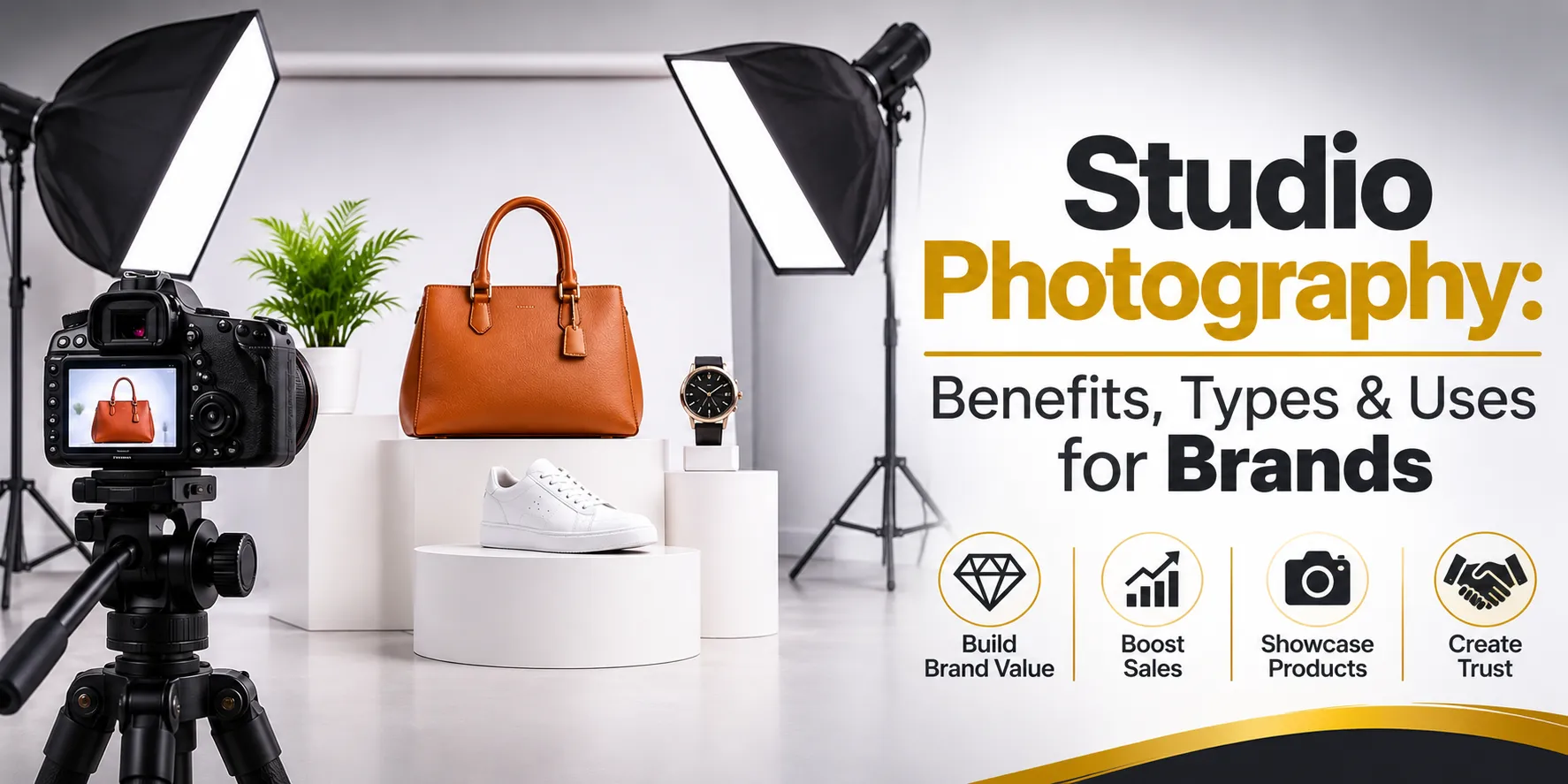
Studio photography is done in a controlled indoor space, where the photographer sets the lighting, backgrounds, and camera positions rather than relying on weather or location. For businesses, it delivers consistent, high-quality images for products, models, portraits, and catalogues. The main types are product, e-commerce, fashion, catalogue, portrait, and industrial or B2B studio photography, used across marketplaces, websites, ads, print, and PR.
What Is Studio Photography?
Studio photography means shooting in a dedicated space with artificial lighting, backdrops, and fixed setups. Nothing in the frame is left to chance: light direction, background colour, angle, and styling are all chosen and repeated on purpose.
That control is why brands use it. Whether you are photographing five products or five hundred, a studio lets you get the same look every time, regardless of the time of day, the season, or the weather outside.
Benefits of Studio Photography for Businesses and Brands
1. Full Control Over Lighting and Colour
Studio lighting can be shaped for each product: soft light for fabric, controlled reflections for metal and glass, and crisp edges for packaging. Colour stays accurate because the light does not change, which matters when buyers judge a product only by its image.
2. Consistent Results Across Your Whole Catalogue
A studio setup can be saved and repeated. New products shot next month will match the ones shot today, so your website, marketplace listings, and catalogues look like one brand.
3. No Dependence on Weather or Daylight
Outdoor shoots stop for rain, shift with sunlight, and are harder to schedule. In a studio, a planned shoot day stays planned.
4. Efficiency for Large Batches
Products, props, and backdrops are close at hand, so a studio can move through many SKUs in a day. That is why most marketplace sellers and catalogue brands choose studio production.
5. Better Handling of Difficult Products
Reflective items such as jewellery, steel and glass, as well as detail-heavy products such as embroidered garments and small parts, need controlled lighting to look right. Our posts on photographing metal and brass handicrafts and luxury perfume photography show how much setup matters.
6. Privacy and Product Security
A studio is a private space, which is useful for unreleased products, samples, and confidential launches.
7. Easier Editing and Retouching
Clean, evenly lit originals need less correction, so retouching is faster and more accurate, and the final images stay true to the real product.
8. Reusable Assets for Many Channels
One planned shoot can supply images for marketplaces, your website, ads, social media, and print, instead of reshooting for each.
Types of Studio Photography for Businesses
|
Type |
What it covers |
Best for |
|---|---|---|
|
Product (packshot) photography |
Clean images of a product on a plain background |
Catalogues, websites, marketplaces |
|
Lifestyle and styled product photography |
Products with props, surfaces and scenes |
Ads, social media, brand pages |
|
E-commerce photography |
Marketplace-ready images, white background and infographics |
Amazon, Flipkart, Meesho and other sellers |
|
Fashion and model photography |
Garments and accessories on models |
Clothing brands, jewellery, footwear |
|
Catalogue and lookbook photography |
Planned multi-product sets |
Seasonal collections, wholesale buyers |
|
Corporate portraits and headshots |
Individual and team portraits |
Websites, LinkedIn, press kits |
|
Industrial and B2B product photography |
Parts, components and equipment |
Trade catalogues, export buyers |
|
Creative and campaign photography |
Concept-led, art-directed images |
Launches, hero banners, advertising |
1. Product Photography
The foundation of studio work. Clean product images on white or neutral backgrounds show the item clearly and suit most listings. For the variations within this category, such as flat lay, ghost mannequin, and detail shots, see our dedicated page on product photography services.
2. E-commerce Photography
Marketplace images follow platform rules for backgrounds, framing, and image counts. Studios that shoot for sellers deliver files in the right sizes and formats. Our e-commerce product photography guide and white background photography guide cover this in depth.
3. Fashion and Model Photography
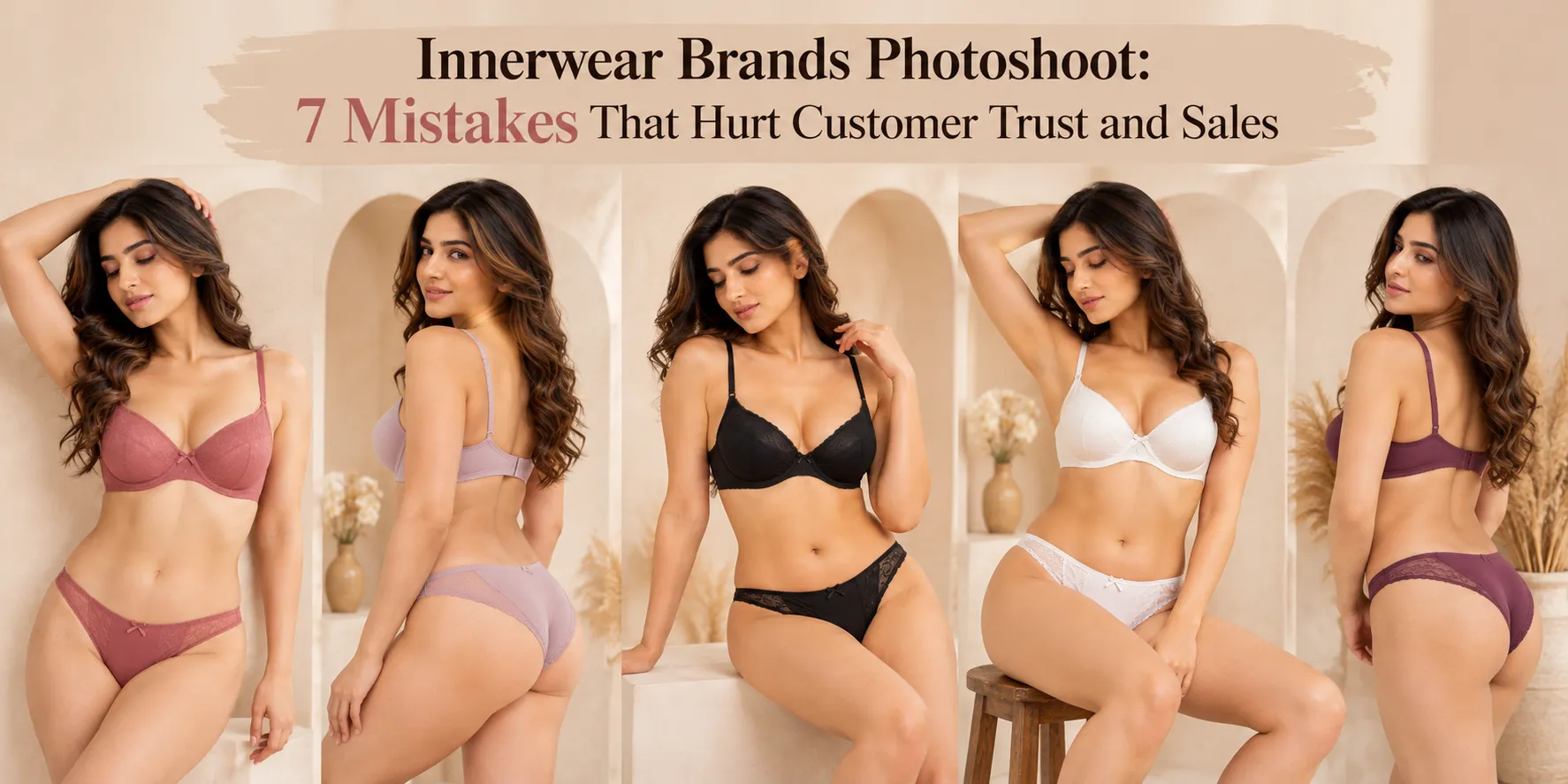
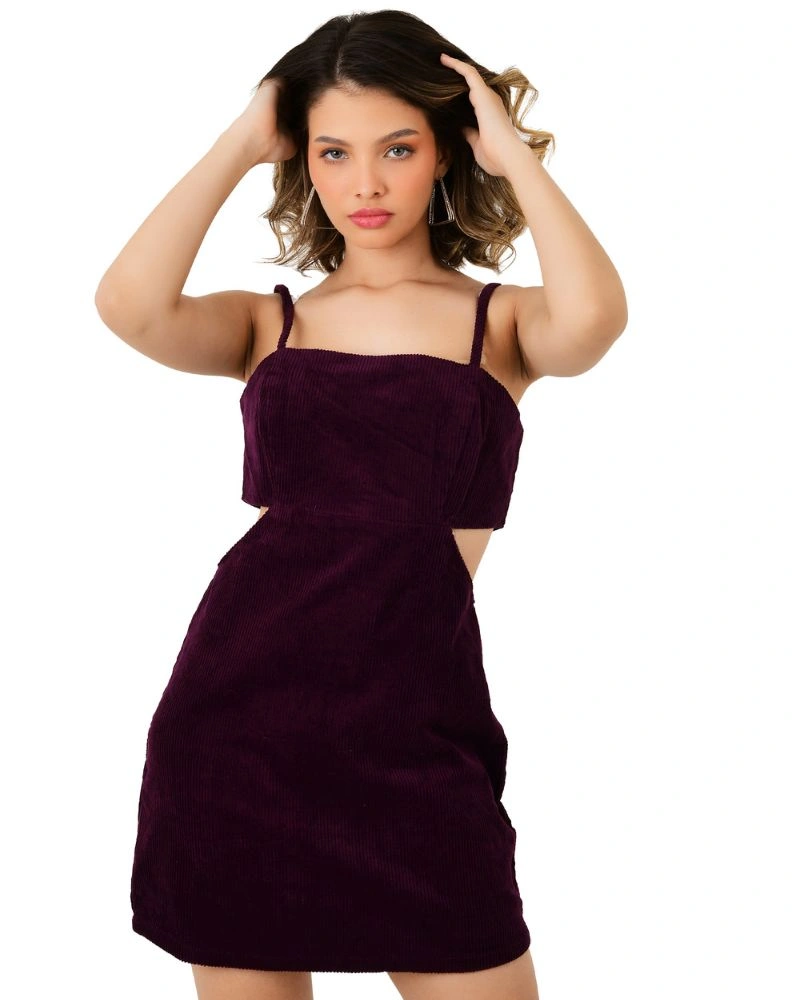
Clothing, footwear, and accessories need models, styling, and fit to show how they look worn. Read our garment photography guide for how professional clothing shoots work. Visit our dedicated fashion & model photography page.
4. Catalogue and Lookbook Photography
5. Catalogues need a consistent style across dozens or hundreds of products. Professional catalogue and fashion photography is planned as a set, with shared lighting, poses and framing.
5. Corporate Portraits and Headshots
Studio portraits give teams and founders a consistent, professional look for websites, LinkedIn and press material. See our guide to professional headshots for what to expect.
6. Industrial and B2B Product Photography
Small and mid-sized industrial items, such as spare parts, components and accessories, are often photographed in a studio for catalogues and export buyers. Larger machinery or factory settings usually need on-site work. Our comparison of studio and on-location photography for spare parts explains the trade-offs, and our industrial photography guide covers the wider field.
7. Creative and Campaign Photography
When a brand wants a distinctive look for a launch or ad campaign, a studio lets the team build sets, use coloured light, and shoot concepts that would be hard to find on location.
Common Uses of Studio Photography
|
Use |
How studio images help |
|---|---|
|
Marketplace listings |
Meet platform image rules and help buyers judge the product |
|
Brand website and product pages |
Create a consistent, trustworthy storefront |
|
Paid ads and social media |
Provide clean, flexible visuals for different formats |
|
Print catalogues and brochures |
Deliver high-resolution images for print |
|
B2B and export catalogues |
Show parts and products clearly for overseas buyers |
|
Packaging and product launches |
Supply sharp visuals for packaging and press kits |
|
Press kits and PR |
Give journalists ready-to-use, high-quality images |
|
Team pages and recruiting |
Present people consistently with professional portraits |
Which Type of Studio Photography Fits Your Business?
|
If you are a... |
Usually need |
|---|---|
|
Online seller or D2C brand |
E-commerce and product photography, plus lifestyle images |
|
Clothing or fashion label |
Model, catalogue and lookbook photography |
|
Jeweller or accessories brand |
Close-up product and styled photography, with models for scale |
|
Manufacturer or industrial supplier |
B2B product photography and catalogue sets |
|
Retailer with a large range |
Bulk white-background photography and catalogue shoots |
|
Startup, professional or service business |
Corporate portraits and brand imagery |
If you have a lot of products, our guide to bulk white-background shoots explains how studios handle volume.
When a Studio Is Not the Best Choice
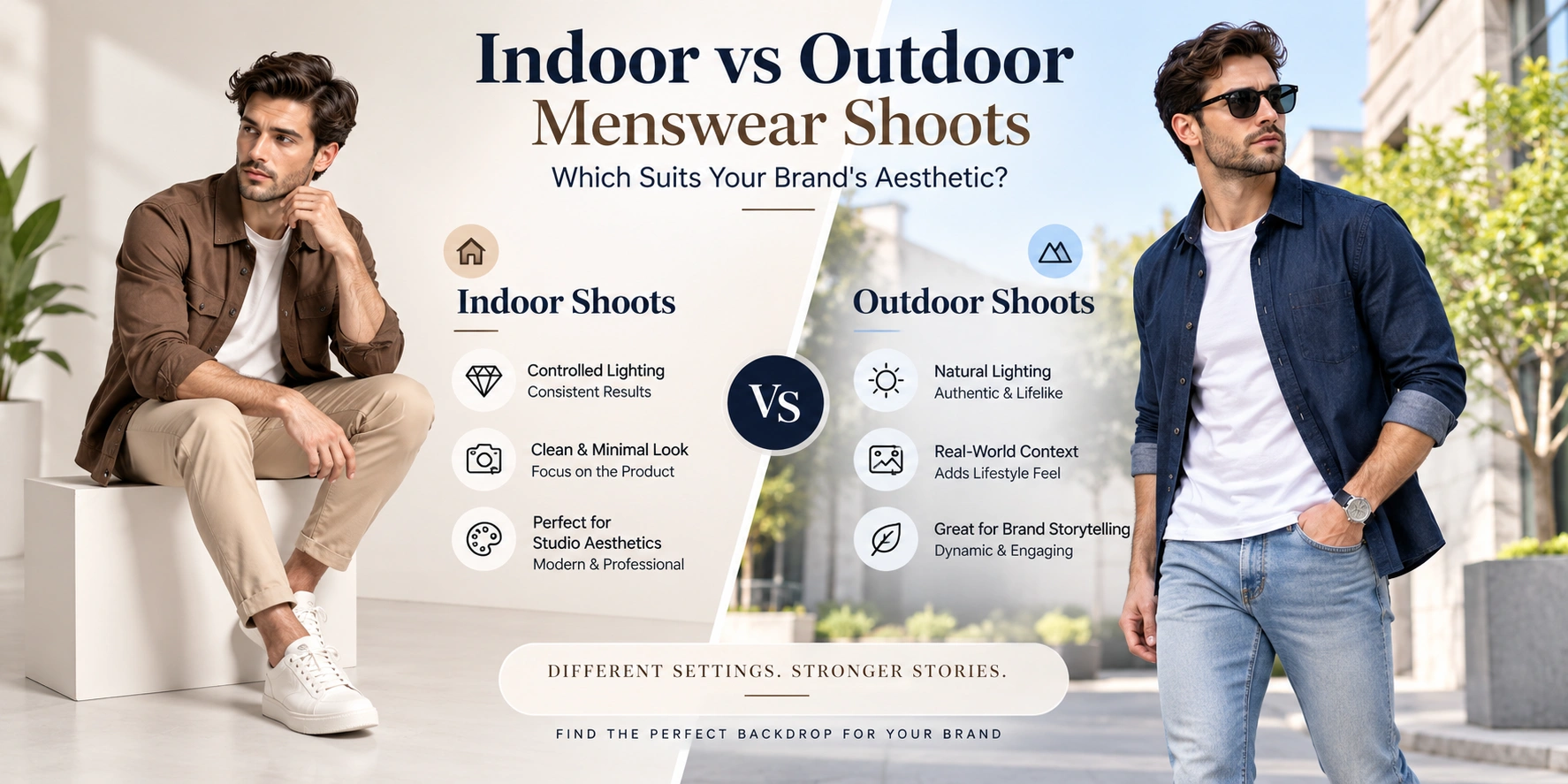
Studio photography is not right for every job. Large machinery, factory floors, construction sites, outdoor products, and context-heavy lifestyle scenes often work better on location. Many brands use both: a studio for catalogue and marketplace images, and location work for brand storytelling. The key is to pick the setting that fits what you need the image to show.
How a Studio Photography Project Works
- Brief: You share products, the channels you will use them on, and any reference images.
- Planning: The studio decides the shot list, backgrounds, models, and props.
- Preparation: Products are cleaned, steamed, or styled. Our e-commerce product shoot checklist lists what to prepare.
- Shoot: Lighting and camera positions are set up, then products are shot in batches.
- Editing: Images are colour-corrected, retouched and exported in the sizes you need.
- Delivery: You receive organised, named files ready to upload.
For timing, see how long a shoot takes in our studio timelines guide. For help picking a partner, read how to choose the right photography studio for your brand.
Cost and Budget Considerations
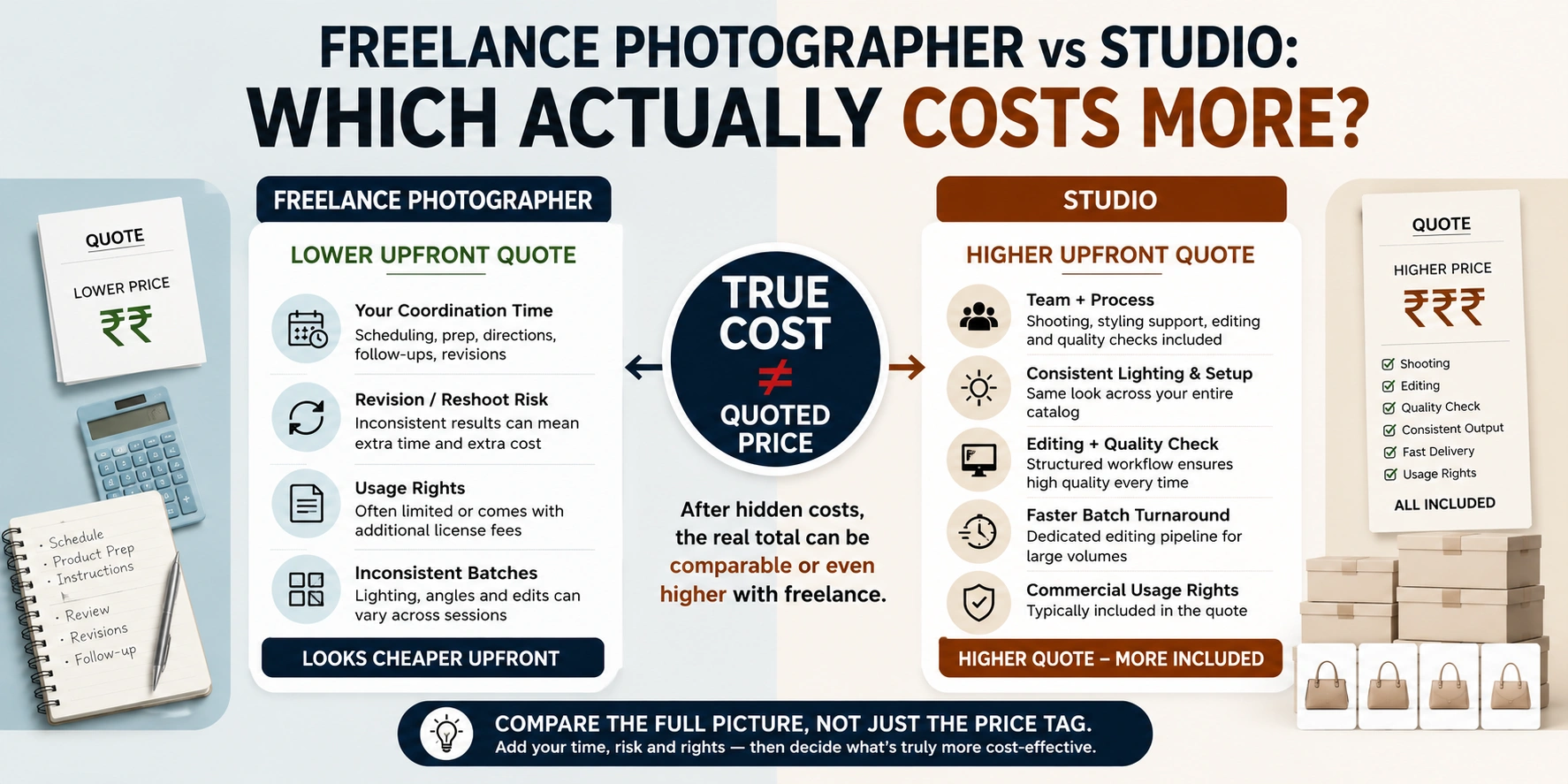
Studio photography pricing depends on the number of products, the number of images per product, whether models are used, the amount of retouching, and the timeline. A planned, batched shoot is usually more cost-effective than many small ones. If you are comparing options, our breakdown of freelancer vs studio costs explains where the differences appear, and small brands can see how to plan a catalogue shoot on a budget.
Studio Photography vs AI-Generated Images
AI tools can help with backgrounds and clean-up, but they cannot replace a real, accurate image of your product, which is what buyers and marketplaces expect. Many brands combine both, using studio photography as the accurate base. Our comparison of AI product photography and traditional photography covers the pros and cons.
Work With a Professional Studio
If you want a single partner for product, model, catalogue, and portrait work, our product photography services cover the shoot and the editing together. If you are based in Delhi NCR, see why businesses choose a professional photo studio in Delhi.
Frequently Asked Questions
1. What is studio photography?
Studio photography is photography done in a controlled indoor space using artificial lighting, backdrops, and planned camera setups. It gives the photographer full control over light, background, and composition, which produces consistent, high-quality images for products, people, and campaigns.
2. What are the main types of studio photography for businesses?
The main types are product, lifestyle and styled product, e-commerce, fashion and model, catalogue, corporate portrait and headshot, industrial or B2B product, and creative campaign photography. The right type depends on your product, your audience, and where the images will be used.
3. What are the benefits of studio photography for brands?
The main benefits are controlled lighting and accurate colour, consistent results across a catalogue, independence from weather, efficient batch shooting, better handling of reflective or detailed products, privacy for unreleased items, and easier retouching.
4. What is studio photography used for?
Businesses use studio photography for marketplace listings, websites, ads, social media, print catalogues, B2B and export catalogues, packaging, press kits and team portraits. A single planned shoot can usually supply images for several of these.
5. Is studio or on-location photography better?
Neither is better in every case. Studio photography suits products, models, and catalogues where consistency and control matter. On-location photography suits large equipment, factory settings, and lifestyle scenes that need a real environment. Many brands use both.
6. Can studio photography be used for Amazon and Flipkart listings?
Yes. Studio photography is the standard way to produce marketplace images, especially the clean main image on a plain background. Each platform has its own rules for backgrounds, sizes, and image counts, so check the current guidelines in your seller portal.
7. What equipment is used in studio photography?
Typical equipment includes a professional camera, studio lights or strobes, light modifiers such as softboxes and reflectors, backdrops, stands and tripods, and tools for styling and holding products. The exact setup changes with the product, so lighting for jewellery differs from lighting for clothing.
8. How do I prepare my products for a studio shoot?
Clean and inspect each product, steam or iron garments, gather accessories and packaging, prepare a list of required angles, and share reference images. Label samples clearly so they match your SKU list. Our shoot checklist covers this in detail.
9. How long does a studio photography shoot take?
It depends on the number of products, images per product, whether models are used, and the retouching level. A small batch can be shot in a day, while larger catalogues take longer. Ask the studio for a shoot and delivery timeline before you book.
10. Is studio photography worth it for a small business?
Often yes, especially for best sellers, new launches and listings where images carry the most weight. Small businesses can start with a limited set of hero products, batch the work into one session, and expand later as sales grow.
Final Thoughts
Studio photography gives brands control, consistency, and reusable images. Choose the type that fits your products and channels, decide when a studio is right and when location work is better, and plan your shoot as one batch so every image works across your website, marketplaces and campaigns.
Pricing, timelines, and marketplace requirements vary. Please confirm current details before booking or uploading.
If you're looking to enhance your brand’s presence on leading e-commerce platforms like Amazon, Flipkart, Myntra, Meesho, TataCliQ, Snapdeal, and Ajio, Lohar Studio is your go-to destination. Our team specializes in delivering high-quality images for fashion items, footwear, automotive products, medical photography, business headshots, and corporate shoots. We serve Delhi, Noida, Gurgaon, Faridabad, and Ghaziabad, offering professional results that boost conversions and elevate your brand’s image. Get in touch today at +91-9312070458 or visit us at A1/58, 1st Floor, Sector 6, Rohini, Delhi-110085, to schedule your next shoot!

Written from hands-on experience shooting for 4000+ brands - practical, field-tested photography advice, not just theory.