


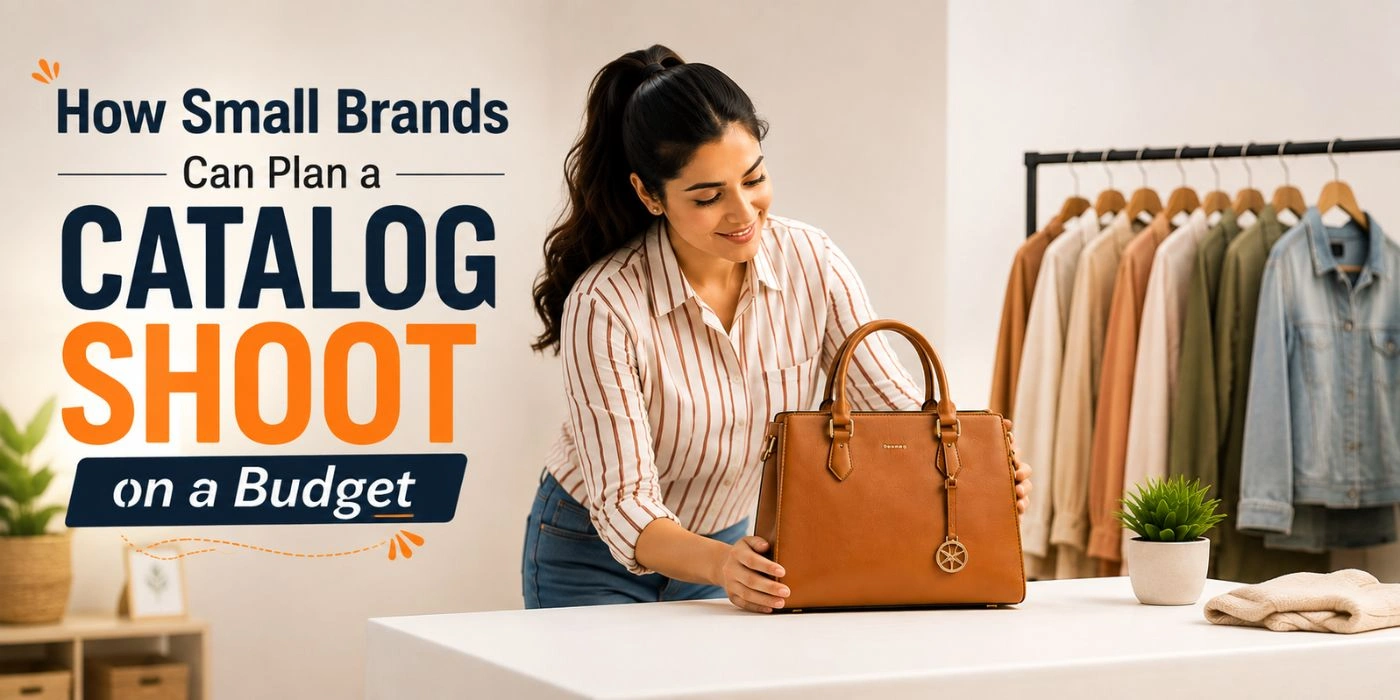
A catalog shoot for small brands typically costs ₹69–₹699 per photo for garments (₹49–₹499 for standalone product shots), with the exact price depending on styling complexity, retouching level, and batch size. Turnaround is generally 24–72 hours depending on SKU count. The biggest budget lever isn't finding the cheapest photographer — it's planning your shot list, batch size, and category requirements before you book, so you're not paying for reshoots or last-minute add-ons.
If you're a small or growing brand trying to get a professional catalog shot without overspending, here's exactly how to plan it.
What Does a Catalog Shoot Cost Per Product?
Catalog shoot pricing is typically charged per photo, not as a flat day rate, which makes it easier for small brands to budget accurately based on their actual catalog size.
| Shoot Type | Price Range (Per Photo) |
|---|---|
| Standalone product photography (accessories, footwear flat shots, etc.) | ₹49–₹499 per photo |
| Garment/outfit photography (ghost mannequin, flat lay, or model) | ₹69–₹699 per photo |
The wide range within each category exists because pricing scales with complexity — a simple white-background flat lay sits at the lower end, while styled model shots with detailed retouching sit at the higher end. Understanding this range helps you estimate your total cost before booking: multiply your total SKU count by the per-photo rate that matches your styling needs, and you have a realistic budget figure.
Catalog Photoshoot Pricing Guide: What Affects Your Final Cost
Several factors move your price within the range above, and knowing them helps you control your budget rather than being surprised by it:
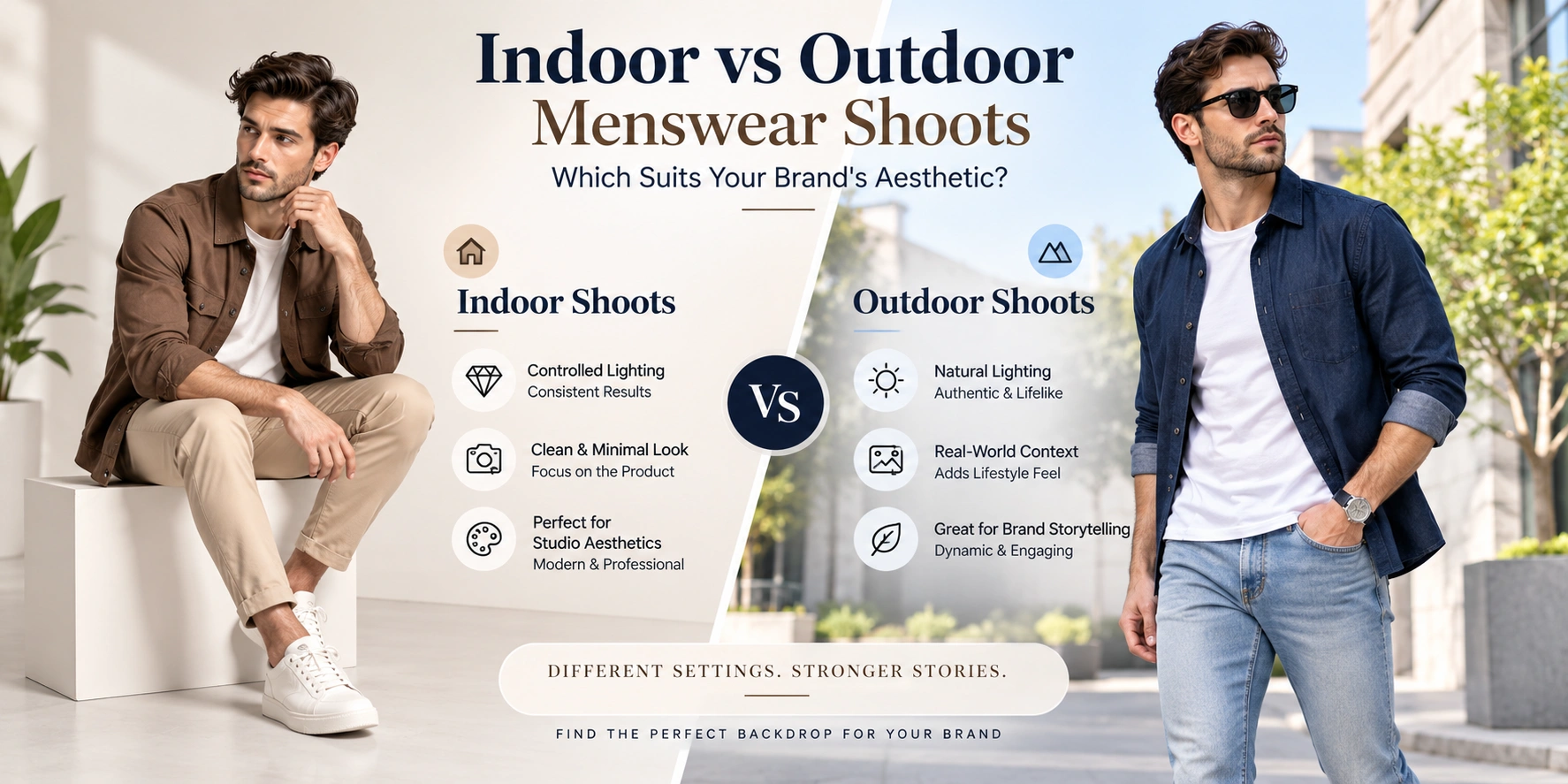
- Photography format — flat lay and ghost mannequin shots are generally more affordable than full model shoots, since model shoots add styling, hair, and makeup costs
- Retouching level — basic background removal and color correction costs less than detailed retouching for embellished or reflective garments
- Number of angles per SKU — more angles per product increases the per-SKU cost, even at the same per-photo rate
- Batch size — larger batches often come with better per-photo rates, since studio setup costs are spread across more products
- Category complexity — heavily embellished ethnic wear or footwear with reflective materials typically needs more editing time than plain garments

How to Plan a Catalog Shoot Budget as a Small Brand
Rather than asking "what's the cheapest studio," small brands get better long-term value by planning the budget around their actual catalog needs:
- Count your real SKUs — not your total inventory, but what actually needs new photography this cycle
- Decide your format mix — how many SKUs need ghost mannequin/flat lay versus full model shots, since this is the biggest cost driver
- Multiply by the relevant per-photo rate to get a realistic total, using the ranges above as your starting benchmark
- Add a buffer for revisions — budgeting zero room for a second round often forces rushed approvals
- Compare cost per photo against your average order value, not just against your total budget — a cost that looks high in isolation is often small relative to what one additional sale from a better-converting listing is worth
How Many Outfits Should You Shoot Per Catalog Session
Batching more outfits into a single session is one of the most effective ways to reduce your effective cost per SKU, since studio setup and lighting calibration are a fixed cost regardless of how many outfits you shoot. As a general guideline:
White Background Product Photography
A white background photoshoot is one of the most effective ways to present products and people with clarity and professionalism. C...
Explore White Background Product Photography- 10–20 outfits is a practical batch size for small brands starting with a focused capsule collection or seasonal drop
- 20–50 outfits suits brands doing a full seasonal catalog update
- 50+ outfits works best when planned well in advance, since it needs more coordinated styling and prep time to keep the session efficient
Shooting fewer than 10 outfits per session is usually the least cost-efficient option, since you're paying the fixed setup cost across a small batch — combining smaller drops into fewer, larger sessions is almost always more budget-friendly.
Catalog Shoot Planning Checklist
- Finalize your SKU list and confirm which need ghost mannequin, flat lay, or model shots
- Decide on angles and shot types needed per product before the shoot, not during it
- Prep every garment — steamed, cleaned, tagged, and assembled
- Confirm marketplace or website image specifications in advance
- Set a realistic budget using the per-photo pricing ranges above
- Batch your outfits into as few sessions as practical to reduce per-SKU cost
- Assign one point of contact for approvals to avoid delays
Catalog Shoot Turnaround Time: What to Expect
Turnaround for a catalog shoot typically falls within a 24–72 hour window, with the exact timeline depending on your SKU count and the complexity of your format mix. Simple flat lay or ghost mannequin batches tend to land toward the faster end, while larger model-shoot-heavy catalogs move toward the higher end of that range. Planning your launch date with this window in mind — rather than assuming same-day delivery — avoids unnecessary rush requests that can add to your cost.
Catalog Shoot Requirements by Category
Different product categories have specific styling and shooting needs that affect both planning and cost. Here's what to expect for common categories, and how to plan around each one.
1. Catalog shoot for kids' wear
Kids wear catalogs usually involve a wide size range within the same design, so sizing consistency across sizes matters more than elaborate styling. Simple, clean presentation helps buyers focus on fit and fabric rather than a busy set. Ghost mannequin or flat lay formats generally work well here, and since kids wear catalogs are often large (multiple sizes per design), batching the full range into one session keeps the cost per SKU efficient.
2. Catalog shoot for ethnic wear
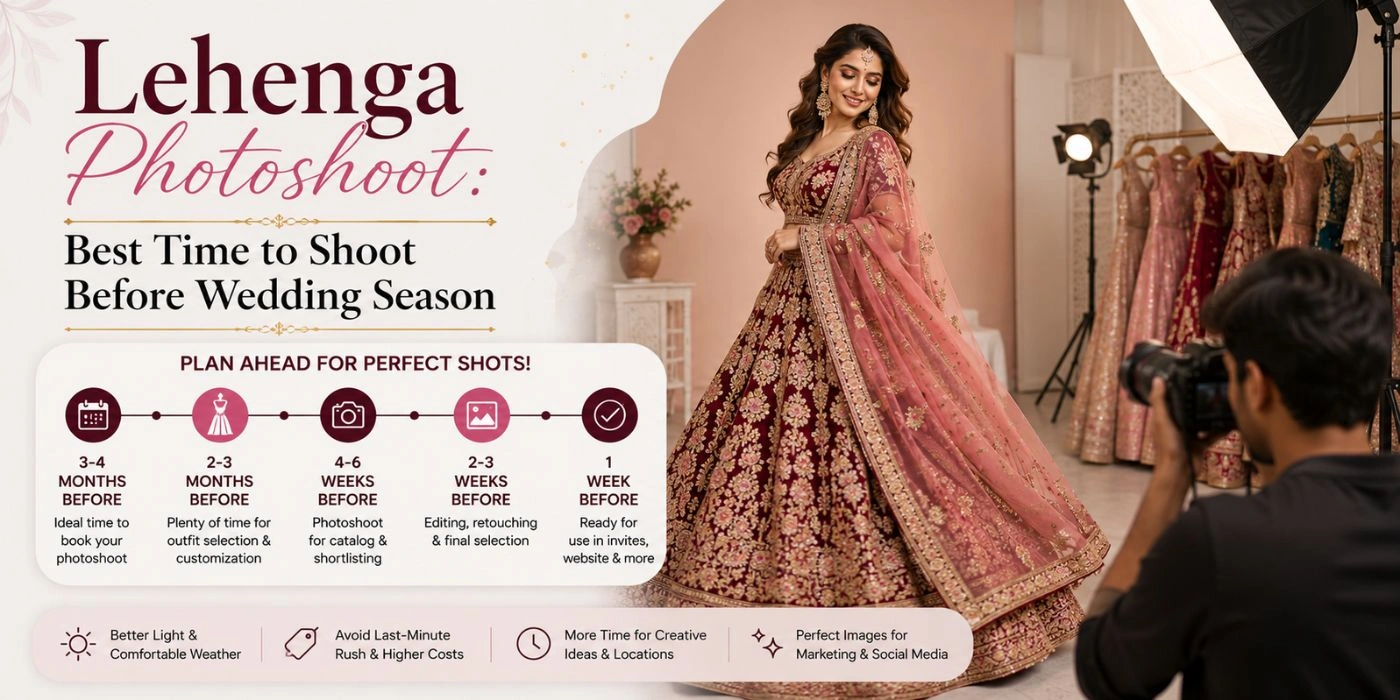
Ethnic wear — especially pieces with embroidery, zari work, or embellishment — needs more careful lighting to capture detail accurately without losing texture or color. This extra editing time is why ethnic wear catalog shoots often sit toward the higher end of the garment pricing range. Draping also plays a bigger role here than in simpler categories, since the way a dupatta or lehenga falls is part of the buying decision.
3. Catalog shoot for western wear
Western wear is generally the most straightforward category to shoot efficiently, since shapes are consistent and fabrics are usually simpler to light and edit than heavily embellished pieces. This typically means faster turnaround and a lower per-SKU cost compared to more detail-heavy categories, making it a good starting category for brands testing a new catalog shoot workflow.
4. Catalog shoot for footwear
Fashion / Model Photography for Flipkart
Lohar Studio provides professional Flipkart fashion & model photography for sellers and brands listing on Flipkart India. If y...
Explore Fashion / Model Photography for FlipkartFootwear needs more angles per SKU than flat apparel — side, sole, top, and sometimes a worn/on-foot angle — to give buyers a complete view before purchase. Reflective or glossy materials also need adjusted lighting to avoid harsh glare, which adds to editing time and affects overall cost even at a standard per-photo rate.
5. Catalog shoot for accessories
Accessories like jewelry, bags, and belts benefit significantly from macro-level detail shots that highlight craftsmanship, clasps, texture, and fine design elements — details that standard product angles often miss. This additional close-up work adds some editing time but is usually essential for this category, since buyers rely heavily on detail shots for smaller items they can't physically handle before buying.
6. Catalog shoot for activewear
Fit and stretch are central to how activewear performs and sells, which is difficult to convey through flat lay alone. Model shots — even a minimal set — are usually worth the investment here, since they show how the fabric moves and holds shape, directly reducing the "will this fit right" hesitation that drives returns in this category.
7. Catalog shoot for plus-size garments
Accurate fit representation matters more in this category than almost any other, since plus-size buyers frequently cite mismatched sizing as their top concern when shopping online. Model shoots using correctly sized fit models tend to reduce return rates noticeably more than flat lay or ghost mannequin alone, making this category one where the model-shoot investment pays back quickly.
8. Catalog shoot for menswear
Structured pieces like blazers and formal shirts benefit from ghost mannequin photography, which preserves shape and presents a consistent silhouette across the catalog. Casual menswear — t-shirts, basics — works well with flat lay, offering a faster and more budget-friendly option when structure isn't the main selling point.
9. Catalog shoot for womenswear
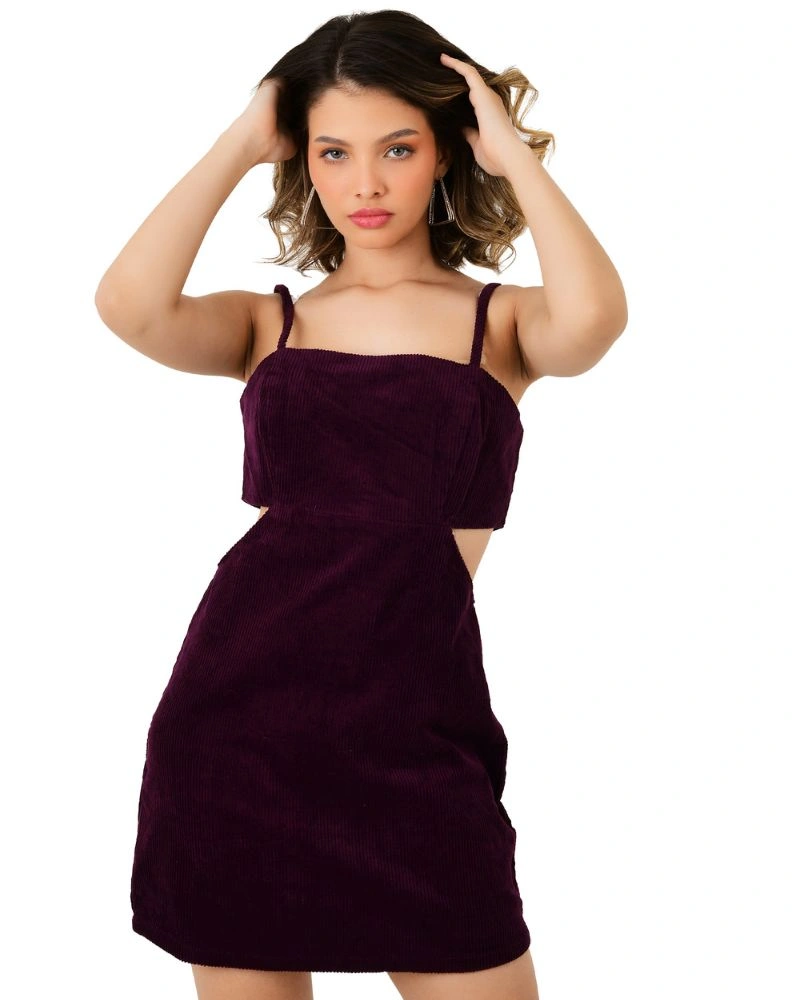
Womenswear covers the widest format range of any category — simple flat lay works for basics and casual pieces, while occasion wear and premium pieces benefit from full model shoots. Because of this range, planning your format mix product-by-product (rather than applying one format across the whole catalog) is especially important for controlling cost in this category.
How to Find the Right Catalog Shoot Photographer
- Check their portfolio specifically for your category — a studio strong in western wear may not have the same expertise in embellished ethnic wear
- Confirm they offer transparent per-photo pricing rather than vague day rates that are hard to budget against
- Ask about their standard turnaround time and whether it scales clearly with your SKU count
- Look for a studio experienced with your target marketplace's image specifications (Amazon, Flipkart, Myntra, or your own website)
Questions to Ask Before Booking a Catalog Shoot
Fashion and Model Photoshoot for Amazon
Lohar Studio provides professional Amazon fashion & model photography specifically for sellers listing on Amazon India. If you...
Explore Fashion and Model Photoshoot for Amazon- What's the per-photo cost for my specific format mix (flat lay, ghost mannequin, model)?
- Does the price change based on batch size, and what's the most efficient batch size for my catalog?
- What's the expected turnaround time for my SKU count?
- How many revision rounds are included before extra charges apply?
- Do you have experience shooting my specific category?
- What marketplace or platform specifications do you shoot to by default?
How Lohar Studio Helps Small Brands Shoot Smart on a Budget
At Lohar Studio, product photography starts at ₹49–₹499 per photo and garment/outfit photography at ₹69–₹699 per photo, with pricing scaling transparently based on format and complexity — so small brands can plan an accurate budget before booking, not after. Delivery typically falls within 24–72 hours depending on SKU count.
FAQs
1. How much does a catalog shoot cost per product?
Product photography typically ranges from ₹49–₹499 per photo, and garment/outfit photography from ₹69–₹699 per photo, depending on styling complexity and retouching level.
2. How many outfits should I shoot per catalog session?
10–20 outfits works well for smaller capsule drops, while 20–50+ is more efficient for full seasonal catalogs — batching more outfits into one session generally reduces your effective cost per SKU.
3. What affects catalog shoot pricing the most?
Photography format (flat lay vs. ghost mannequin vs. model shoot), retouching level, and number of angles per SKU are the biggest factors within the pricing range.
4. How long does a catalog shoot take to deliver?
Typically 24–72 hours, depending on your SKU count and format complexity.
5. Is it cheaper to shoot a large catalog in one session or multiple smaller sessions?
One larger session is almost always more cost-efficient, since studio setup costs are fixed and spread across more products in a single batch.
6. Which format is most budget-friendly for a small brand?
Fashion and Model Photography for Myntra
Lohar Studio provides professional Myntra fashion & model photography for apparel brands, private labels, and sellers listing...
Explore Fashion and Model Photography for MyntraFlat lay and ghost mannequin formats are generally more affordable than full model shoots, since they don't require styling, hair, and makeup costs.
7. Do different garment categories cost different amounts to shoot?
Yes — categories with embellishment or detail work (like ethnic wear or footwear) often need more editing time, which can push cost toward the higher end of the range.
8. What questions should I ask before booking a catalog shoot photographer?
Ask about per-photo pricing by format, turnaround time for your SKU count, revision policy, and their specific experience with your product category.
9. Should kids wear and western wear use the same shoot format?
They can both work well with flat lay or ghost mannequin, though kids wear typically prioritizes sizing consistency while western wear focuses more on styling variety.
10. Does activewear need model shots instead of flat lay?
Model shots are usually worth the investment for activewear, since fit and stretch are harder to communicate through flat lay alone.
11. How do I budget for a catalog shoot as a new, small brand?
Count your actual SKUs needing photography, decide your format mix per product type, and multiply by the relevant per-photo rate — then add a buffer for revisions.
12. Can I mix formats (flat lay, ghost mannequin, model) in one catalog shoot?
Yes — most small brands do exactly this, using flat lay or ghost mannequin for standard SKUs and reserving model shots for hero pieces or higher-priority categories.
Ready to plan your catalog shoot budget?
[Reach out to Lohar Studio] with your SKU count and category mix — we'll help you plan a format strategy and turnaround that fits your budget before you book.
If you're looking to enhance your brand’s presence on leading e-commerce platforms like Amazon, Flipkart, Myntra, Meesho, TataCliQ, Snapdeal, and Ajio, Lohar Studio is your go-to destination. Our team specializes in delivering high-quality images for fashion items, footwear, automotive products, medical photography, business headshots, and corporate shoots. We serve Delhi, Noida, Gurgaon, Faridabad, and Ghaziabad, offering professional results that boost conversions and elevate your brand’s image. Get in touch today at +91 9312070458 or visit us at A1/58, 1st Floor, Sector 6 Rd, Pocket 1, Sector 6A, Rohini, Delhi, 110085, to schedule your next shoot!
Written from hands-on experience shooting for 4000+ brands - practical, field-tested photography advice, not just theory.