








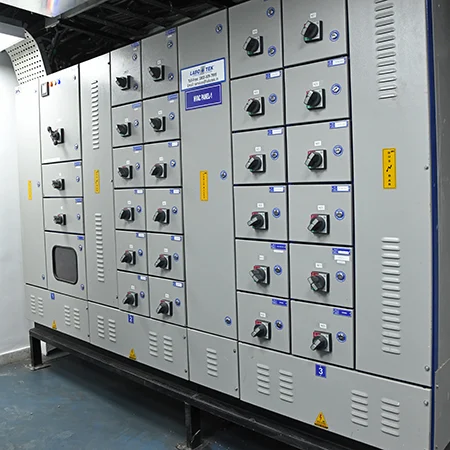


The Granary City's Invisible Factory Floor
Maharaja Ganga Singh of Bikaner completed the Gang Canal in 1927 — an engineering achievement that transformed barren scrubland into Rajasthan's most productive agricultural zone. The canal's legacy shaped Sri Ganganagar's identity at the deepest possible level. Rajasthan ka Anaj Bhandar — Rajasthan's granary — became the city's defining description, repeated in state records, school textbooks, and district tourism material.
That identity is accurate. Sri Ganganagar does produce extraordinary quantities of wheat, paddy, and cotton. But the same agricultural success that built the city created a secondary economy that the city's identity actively conceals. When cotton arrived in sufficient volume, ginning factories were built to process it. When grains needed milling, flour and oil mills followed. When farms required inputs, chemical and fertiliser manufacturers established units. When processed food created demand, FMCG manufacturers entered. When infrastructure grew, engineering fabricators arrived to serve it.
The factory floor exists. It has existed for decades. What doesn't exist is a coherent visual record of it — the kind of photography that allows a manufacturer in Sri Ganganagar to say, credibly and evidentially, "We make this, at this scale, by this process." Industrial photography in Sri Ganganagar addresses this gap.
The Procurement Buyer's Agricultural Assumption
When a procurement buyer, sourcing manager, or international trader encounters a supplier listed as "Sri Ganganagar," their mental model does not file that supplier under "manufacturer." It files them under "agricultural supplier." The city's identity is so thoroughly agricultural that the first cognitive question any buyer asks — even before looking at price or specification — is: "Are they a farm or a factory?"
This mental categorisation is not a prejudice. It is a reasonable inference drawn from everything publicly known about Sri Ganganagar. The city's name appears in agri commodity reports. Its news coverage is dominated by crop yields and canal water allocations. Its market associations are grain mandis and cotton exchanges. For a buyer with no prior relationship with a Sri Ganganagar manufacturer, the default assumption is agricultural supply, and agricultural supply carries implicit associations of informality, variable quality control, and absence of manufacturing infrastructure.
Professional visual documentation breaks this assumption before the buyer completes their first impression. A factory tour video showing a ginning unit with 16 gins operating simultaneously does not leave room for the "small informal operation" assumption. A process sequence of a mustard oil extraction plant — seed intake to refined output — makes the manufacturing reality undeniable. Interior photographs of a packaged food plant's clean room reframe the city entirely: this is not a farm, it is a factory, and this factory meets the hygiene and process standards of an FMCG supplier.
The procurement buyer's agricultural assumption is the specific documentation problem that Sri Ganganagar's manufacturers face. It cannot be overcome with a price list or a product brochure. It requires visual evidence — the kind that makes the industrial reality of the city visible to buyers who have never heard it described that way.
What Sri Ganganagar's Manufacturers Actually Produce
Sri Ganganagar district's industrial base is broader and more structurally varied than its agricultural identity suggests.
Cotton ginning and pressing plants are the dominant industrial unit type — Sri Ganganagar is one of Rajasthan's largest cotton ginning centres, with hundreds of gins operating across the district. Ginning photography documents the separation process, bale pressing, lint grading, seed extraction, and output storage at a level of detail that allows buyers to evaluate scale and process quality.
Oil extraction mills — mustard oil, groundnut oil, cottonseed oil, and refined edible oils — represent a major processing sector. Mill photography covers seed intake, expeller operations, refining stages, filtration systems, and packaging lines. Product Photography of refined oil packs, ghee tins, and bulk containers supports packaging label and catalogue work across the supply chain.
Flour mills and grain processing units — wheat flour, maida, suji, besan — have been a Sri Ganganagar staple for decades, given the district's extraordinary wheat production. Grain processing documentation covers weighing systems, cleaning equipment, stone mill or roller mill operations, and bagging lines.
Agro-chemical, fertiliser, and pesticide manufacturers occupy a substantial part of Sri Ganganagar's RIICO industrial estates — the proximity to a farming-intensive hinterland makes this a natural base for soil nutrient and crop protection product manufacturing. Chemical plant documentation covers reactor vessels, mixing and blending lines, granulation systems, and quality testing laboratories.
FMCG food processing — packaged snacks, spices, dals, edible oil retail packs, and grain-based products — has grown significantly as Sri Ganganagar's processing sector matures. FMCG Photography for these manufacturers covers product shots, plant interiors, process documentation, and packaging for retail and export catalogues.
Engineering fabrication units — agricultural equipment, irrigation components, storage tanks, structural steel — serve the district's large farm and processing sector. Fabrication photography documents workshop conditions, welding and machining operations, assembly lines, and finished product quality.
Photography and Videography Services
Lohar Studio provides the full scope of industrial visual documentation for Sri Ganganagar manufacturers — photography and videography produced together on the same engagement, designed for different deployment contexts from the same location visit.
Industrial Facility Photography
Factory interior documentation — machine halls, production floors, processing lines, quality control labs, storage and packing areas — photographed at the real dimensions of the space without compressing or falsifying scale. Lighting is calibrated to the specific conditions of each unit: cotton gin halls with high dust, oil mills with moisture, chemical plants with hazardous zone protocols, and food processing clean rooms with contamination controls.
Industrial Process Photography
Sequential documentation of a manufacturing process from raw material intake to finished output — the most persuasive form of factory documentation because it shows buyers the complete chain of custody and control. For a cotton ginning plant: bale receipt, seed cotton feeding, ginning, lint cleaning, bale pressing, weighing, and dispatch. For an oil mill: seed intake, expeller pressing, crude oil collection, refining, filtration, and packing. Each process sequence provides material for the website, catalogue, export brochure, and institutional buyer presentations.
Industrial Videography
Factory tour videos with voiceover narration — 2 to 5 minute formats for website embedding and trade platform profiles. Process explainer videos — showing a specific manufacturing step with close-up machine detail and output quality. Testimonial integration — Sanjay Babu Lohar (Lohar Studio owner) conducts the direction session via pre-shoot video call, and the on-location videographer executes per the agreed shot list. Completed videos are delivered with the photography package.
Machine and Equipment Close-up Photography
Detailed documentation of specialised equipment — gin stands, expeller presses, roller mills, blending reactors, granulators, steel fabrication tools — photographed with enough detail to communicate make, condition, and operational scale to a technical buyer or quality auditor.
Aerial Facility Overview — Drone-free
External perimeter and elevated-angle facility overview photography using elevated platforms, scissor lifts, or roof-access photography where permitted — capturing plant scale, compound layout, and entry infrastructure without drone equipment.
Packaging and Product Photography
Product Photography of finished goods — refined oil retail packs, flour and dal bags, FMCG cartons, fertiliser granule samples, chemical drums, engineering components — shot in controlled product photography setups during the same facility visit. These images feed directly into the catalogue, export listing, and marketplace platform requirements.
Pre-shoot: Video Call Assessment
Sri Ganganagar is approximately 420–450 kilometres from Delhi via NH-9 through Haryana — the route passes Rohtak, Hisar, and Sirsa before crossing into Rajasthan. At this distance, Lohar Studio conducts a detailed pre-shoot video call assessment before committing to travel and equipment logistics for the shoot day.
The video call serves multiple functions. First, it confirms the shooting brief — which units, which processes, which products, which specific documentation objectives. Second, it captures visual context that Sanjay Babu Lohar cannot get from a written brief: facility dimensions, lighting conditions, ambient dust or moisture levels, available machine access, and any safety or access restrictions. Third, it produces the structured shot list and shoot schedule used by the on-location team on the day.
For Sri Ganganagar manufacturers, the video call also functions as an audit-readiness check. Many ginning plants, oil mills, and FMCG units have documentation requirements triggered by institutional or export buyers, and the pre-shoot call allows us to prioritise shots that directly address those requirements.
To schedule a pre-shoot video call:
- Reach out via Contact Us with your facility type, sector, and a description of your documentation objective.
- Sanjay Babu Lohar will review the brief and confirm a video call time.
- Post video call, a detailed shot list and shoot schedule are prepared and shared for your confirmation.
- The shoot day is then scheduled as a dedicated outstation engagement from Delhi.
Why Lohar Studio for Industrial Photography in Sri Ganganagar
Sector experience is the primary differentiator for industrial photography. Cotton ginning halls require a fundamentally different photographic approach than pharmaceutical clean rooms or automobile assembly lines — ambient dust levels, bale compression timelines, lint movement during operation, and gin stand access all determine how the photographer positions equipment and times exposures. An industrial photographer who has documented processing sector units understands these constraints and works around them rather than asking the factory to pause operations.
Lohar Studio's industrial photography portfolio spans manufacturing sectors across Uttar Pradesh, Haryana, Rajasthan, and Delhi NCR — agro-processing, chemical, engineering, textile, and FMCG among them. The Sri Ganganagar shoot framework is derived from this multi-sector experience applied specifically to an agro-processing industrial context.
Sanjay Babu Lohar (owner and lead photographer) conducts the pre-shoot video call directly — not a sales associate or assistant. The understanding of your facility and brief carries directly from the video call into the shot list, and from the shot list into the on-location execution.
Post-processing is completed in 24–72 hours after the shoot day — optimised for manufacturers who have time-sensitive catalogues, export tenders, or buyer presentations.
Coverage from Sri Ganganagar
Sri Ganganagar serves as the base for industrial photography across the district's manufacturing belt and into adjacent areas.
Hanumangarh (~55km) — adjacent district with significant agro-processing, oil milling, and grain processing operations. Units in the Hanumangarh industrial areas are within range for inclusion in a planned Sri Ganganagar-region shoot.
Suratgarh (~60km along the NH-62 corridor) — an agricultural and light industrial centre with oil mills, cotton ginning, and agro-processing units operating along the Suratgarh road belt.
Padampur (~35km) — a smaller manufacturing cluster within the Sri Ganganagar district, primarily agro-processing and grain milling.
Anupgarh (~80km, towards the Pakistan border belt) — district-edge industrial operations; feasibility assessed case by case based on shoot scale and access logistics.
Abohar and Fazilka (Punjab, ~45–60km across the Haryana-Punjab-Rajasthan tri-border zone) — manufacturers in the Abohar belt can be included in a combined Sri Ganganagar-region trip where the combined shoot justifies the full outstation engagement.
Portfolio and Recent Work
Lohar Studio's industrial photography portfolio includes ginning and processing units, chemical manufacturing facilities, FMCG production plants, and engineering fabrication workshops across North India. Portfolio samples available on request — WhatsApp or email via Contact Us. Specific sector reference work shared under NDA where client confidentiality is required.
Pricing
Industrial photography in Sri Ganganagar starts from ₹14,999 per day — this includes full-day on-location photography and videography at your facility, pre-shoot video call assessment, travel and logistics from Delhi, and post-processing with delivery within 24–72 hours.
Multi-day engagements (for large facilities, multi-unit shoots, or combined Sri Ganganagar district coverage), specialist equipment requirements (scissor lifts, high-reach platforms, controlled lighting rigs for chemical or clean-room environments), and combined photo-video packages are quoted separately based on your specific brief.
Referral programme: existing Lohar Studio clients receive 10% of the shoot fee as referral credit when referring a new client, applicable after the referred client's shoot is confirmed.
To receive a detailed quote for your Sri Ganganagar facility, reach out via Contact Us.
About Lohar Studio
Lohar Studio is a Delhi-based industrial photography studio operating across North India. Sanjay Babu Lohar founded the studio with a specific focus: the industrial and manufacturing sector — not commercial interiors, not lifestyle shoots, not events. The equipment selection, lighting methodology, post-processing workflow, and briefing process are all designed for factory environments.
The studio has documented manufacturing units across Rajasthan, Uttar Pradesh, Haryana, and Delhi NCR, covering sectors from agro-processing and chemical to textile, engineering, and pharmaceutical. Sri Ganganagar engagements are planned as dedicated outstation trips with the pre-shoot video call assessment conducted beforehand to maximise on-location efficiency.
Delivery timeline for all industrial photography engagements: 24–72 hours.
Website: https://www.loharstudio.com