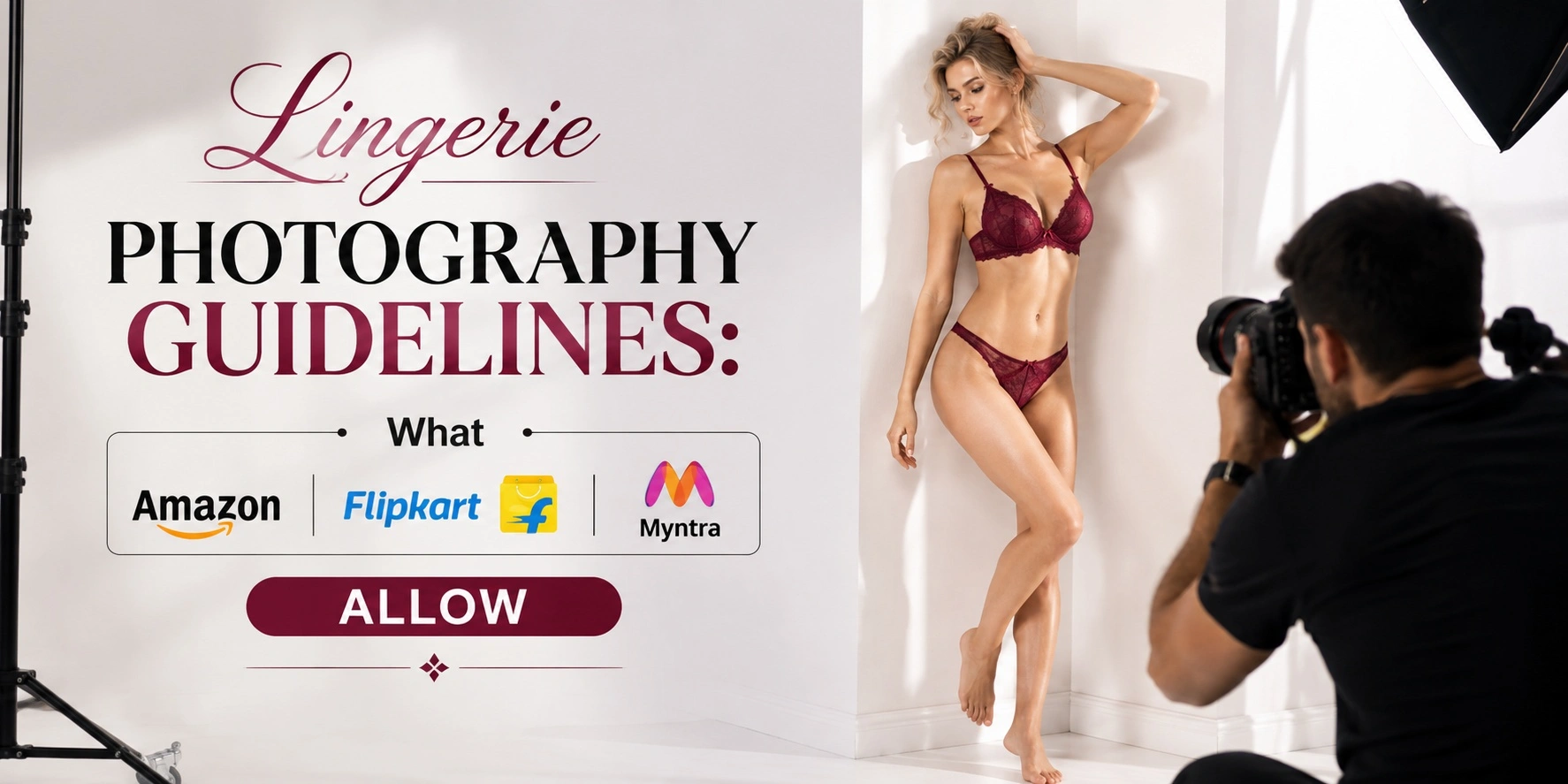



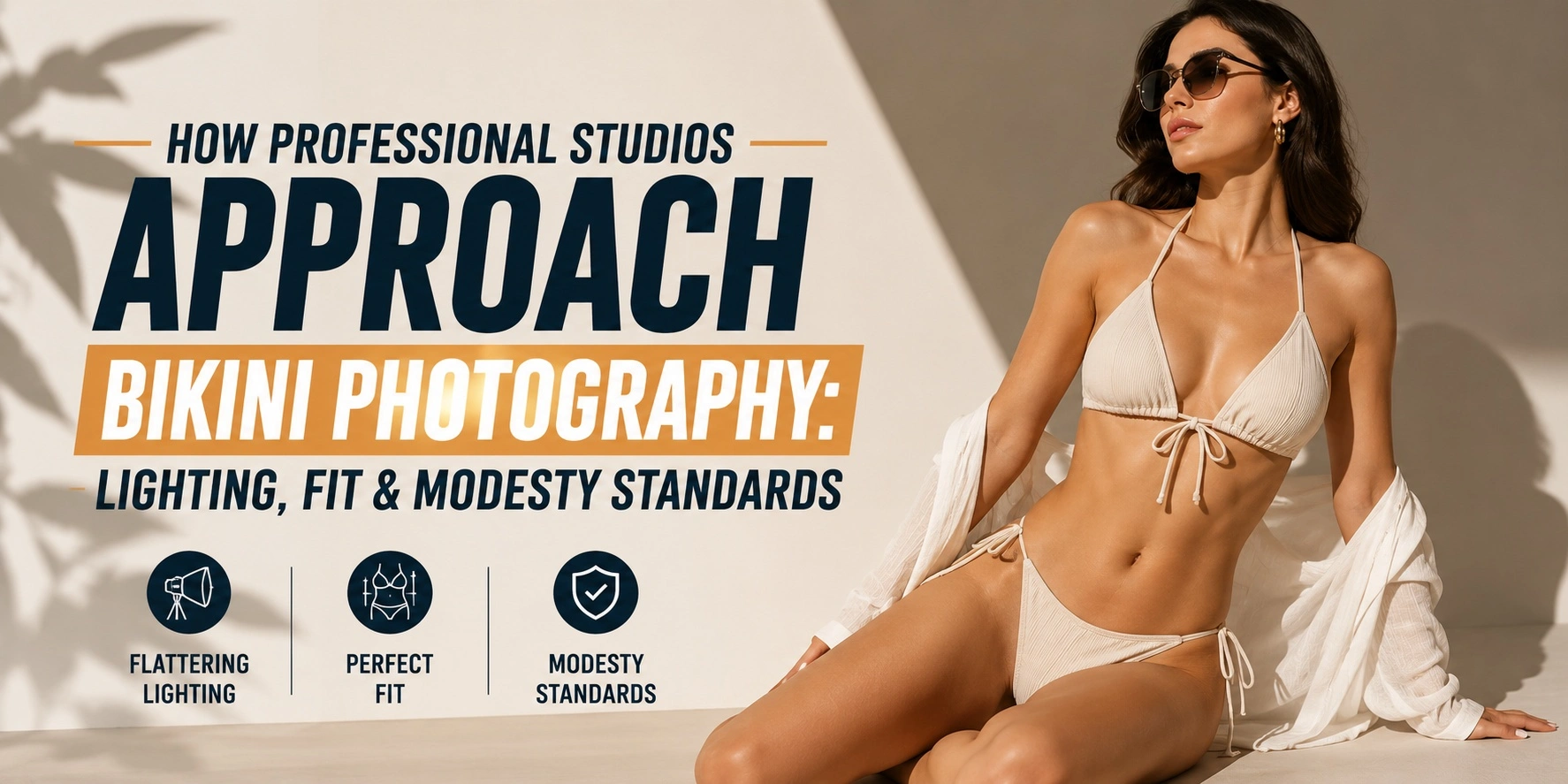
Quick Answer: Professional lingerie photography differs from standard apparel photography in three key ways: lighting must be soft and diffused to accurately capture delicate fabric texture without harsh shadows, fit representation typically needs a combination of ghost mannequin, flat lay, and model photography depending on the product, and studios follow strict modesty, model comfort, and marketplace compliance standards throughout the shoot. Getting these three elements right is what separates a trustworthy, conversion-ready catalog from one that increases returns and damages brand credibility.
If you're a lingerie or intimate apparel brand planning a shoot, here's how professional studios actually approach this category.
.webp)
.webp)
Why Lingerie Photography Requires a Different Approach
Intimate apparel photography is widely considered one of the more technically demanding categories in ecommerce photography, and for good reason. Unlike outerwear, there are no additional layers or accessories to distract from imperfections — fabric texture, seams, stitching, and fit are fully exposed to the camera, which means even small lighting or styling errors become immediately noticeable.
At the same time, this category carries a higher standard for professionalism and modesty than almost any other apparel type, given that it involves photographing the body in a state most other product categories don't. A studio's approach to lighting, styling, and shoot conduct all need to reflect that — balancing accurate product representation with a professional, respectful environment throughout.
Lighting Techniques for Intimate Apparel
Lighting is where lingerie photography differs most technically from standard apparel work.
Soft, diffused lighting is the standard approach. Harsh, direct lighting creates unflattering shadows and can distort how delicate fabrics like lace or mesh actually look. Diffused lighting — using softboxes or bounced light — produces a more even, natural result that represents the product accurately.
Texture emphasis matters more here than in most categories. Lace, silk, sheer mesh, and embroidery all behave differently under light, and professional studios adjust their lighting setup specifically to capture these textures clearly, since texture is often a key part of what a buyer is evaluating before purchase.
Color accuracy is critical for reducing returns. Because intimate apparel is a category where "different from photos" complaints are common, precise color calibration during the shoot — not just correction in editing — helps ensure what the customer sees online matches what arrives.
Bikini / Lingerie Photoshoot for Amazon
Sanjay Babu Lohar, founder of Lohar Studio Delhi, has been photographing fashion and intimate apparel for e-commerce sellers since...
Explore Bikini / Lingerie Photoshoot for Amazon
Fit Demonstration: Ghost Mannequin, Flat Lay, or Model — What Works for Lingerie
Choosing the right format for intimate apparel is more nuanced than for standard garments, since fabric behavior varies significantly by product type.
Flat lay works well for basics and simpler pieces, offering a clean, catalog-consistent presentation without the added complexity of styling a mannequin or model.
Ghost mannequin can work for structured pieces, but delicate fabrics like lace and sheer mesh are genuinely harder to shoot this way — the technique can distort how these materials fall or highlight, so it's not a universal solution for every product in this category.
Model photography is often the most accurate way to represent fit for structured or supportive pieces (bras, shapewear, bodysuits), since these products are specifically designed to interact with the body — something flat lay and ghost mannequin can't fully demonstrate.
Most intimate apparel catalogs benefit from a mix — flat lay for basics and detail shots, model photography for structured pieces where fit is the primary value proposition, and ghost mannequin selectively for pieces where it works well with the fabric.
Professional Modesty and Model Comfort Standards
Professional studios treat intimate apparel shoots with a higher standard of care around model comfort and modesty than standard fashion shoots, including:
- Minimal, professional crew presence on set, with only essential team members present during shooting
- Private changing and styling areas, ensuring models aren't required to change in shared or exposed spaces
- Clear communication and consent throughout the shoot, including model comfort with specific poses or angles before shooting begins
- Robes or cover-ups available between shots and setup changes, so models aren't exposed longer than necessary for the actual shot
- Product-first framing, keeping the garment as the visual focus rather than posing that shifts attention away from the product itself
These standards aren't just about professionalism for its own sake — they directly affect the quality and consistency of the shoot, since a comfortable, respected model typically delivers more natural, usable results.
Bikini Photography for Flipkart
Sanjay Babu Lohar, founder of Lohar Studio Delhi, has been photographing fashion and intimate apparel for e-commerce sellers since...
Explore Bikini Photography for FlipkartMarketplace Compliance for Intimate Apparel Photography
Amazon, Myntra, Flipkart, and most major marketplaces apply stricter image review standards to intimate apparel than to standard clothing categories. Before a shoot, professional studios account for:
- Coverage and framing requirements specific to intimate apparel listings, which are typically more conservative than what's allowed for swimwear or general fashion
- Product-focused posing rather than styling that could be flagged as overly suggestive during marketplace image review
- Consistent background and cropping standards across the catalog, since marketplace review teams often reject images that don't meet category-specific formatting rules
Planning for these requirements during the shoot — not fixing them in editing afterward — avoids delays from rejected marketplace listings later.
.webp)
.webp)
Common Challenges in Lingerie Photography
- Fabric behavior is harder to predict. Lace, mesh, and sheer fabrics don't behave like standard cotton or polyester under studio lighting, requiring more careful setup and testing before the actual shoot.
- Model availability and rates are typically higher. Intimate apparel work is a specialized category, and experienced models comfortable with this type of shoot are less widely available than for standard apparel, which affects both scheduling and cost.
- Retouching takes longer. With no additional layers to distract from imperfections, retouching for skin tone consistency, fabric detail, and color accuracy typically requires more careful, time-intensive editing than standard apparel.
- Sizing and fit representation across body types. Since fit is central to the buying decision in this category, catalogs that only show one body type often see higher return rates from customers whose body doesn't match what was shown.
What to Expect When Booking a Lingerie Shoot
- A pre-shoot discussion covering product types, formats needed (flat lay, ghost mannequin, model), and any specific modesty or styling preferences
- Confirmation of marketplace-specific requirements before the shoot, not after
- A studio environment with minimal crew and clear consent and comfort protocols throughout
- Realistic timeline expectations, since this category typically requires more careful lighting setup and longer retouching than standard apparel
Top 10 FAQs About Lingerie Product Photoshoot
Bikini / Lingerie Photography for Meesho
Sanjay Babu Lohar, founder of Lohar Studio Delhi, has been photographing fashion and intimate apparel for e-commerce sellers since...
Explore Bikini / Lingerie Photography for Meesho1. Why is lingerie photography considered more difficult than standard apparel photography?
Because there are no additional layers to distract from imperfections, and delicate fabrics like lace and mesh behave unpredictably under standard lighting, requiring more careful setup and editing.
2. What lighting works best for intimate apparel photography?
Soft, diffused lighting is standard, since it captures delicate fabric texture accurately while avoiding harsh shadows that direct lighting can create.
3. Should lingerie be shot on a model, flat lay, or ghost mannequin?
It depends on the product — flat lay works well for basics, model photography is usually best for structured or supportive pieces, and ghost mannequin works selectively, since it doesn't handle delicate fabrics like lace as well.
4. What modesty standards do professional studios follow for lingerie shoots?
Minimal crew presence, private changing areas, clear consent throughout the shoot, and product-focused framing are standard professional practices in this category.
5. Do marketplaces have different image requirements for intimate apparel?
Yes — Amazon, Myntra, and Flipkart typically apply stricter coverage and framing standards to intimate apparel than to standard apparel categories, and non-compliant images are often rejected during review.
6. Why does lingerie photography cost more than standard apparel photography?
Bikini / Lingerie Photography for Myntra
Sanjay Babu Lohar, founder of Lohar Studio Delhi, has been photographing fashion and intimate apparel for e-commerce sellers since...
Explore Bikini / Lingerie Photography for MyntraSpecialized model availability, longer lighting setup for delicate fabrics, and more time-intensive retouching all contribute to typically higher costs in this category.
7. Can lace and sheer fabrics be shot using ghost mannequin photography?
It's possible but more difficult — these fabrics can distort or fall unnaturally with ghost mannequin technique, which is why many studios use flat lay or model photography instead for these materials.
8. How does fit representation affect returns in this category?
Since fit is central to the buying decision, showing accurate fit — often across different body types — helps set correct expectations and reduces size-related returns.
9. What should I confirm before booking a lingerie photoshoot?
Confirm the format needed per product (flat lay, ghost mannequin, model), marketplace-specific requirements, and any styling or modesty preferences before the shoot begins.
10. Does color accuracy matter more for lingerie than other apparel?
Yes — because return complaints citing "different from photos" are common in this category, precise color calibration during the shoot helps reduce this specific return reason.
Planning a lingerie or intimate apparel catalog shoot?
[Discuss your requirements with Lohar Studio] — we'll walk you through the right format mix, marketplace compliance, and timeline for your specific product range.
If you're looking to enhance your brand’s presence on leading e-commerce platforms like Amazon, Flipkart, Myntra, Meesho, TataCliQ, Snapdeal, and Ajio, Lohar Studio is your go-to destination. Our team specializes in delivering high-quality images for fashion items, footwear, automotive products, medical photography, business headshots, and corporate shoots. We serve Delhi, Noida, Gurgaon, Faridabad, and Ghaziabad, offering professional results that boost conversions and elevate your brand’s image. Get in touch today at +91 9312070458 or visit us at A1/58, 1st Floor, Sector 6 Rd, Pocket 1, Sector 6A, Rohini, Delhi, 110085, to schedule your next shoot!

Written from hands-on experience shooting for 4000+ brands - practical, field-tested photography advice, not just theory.